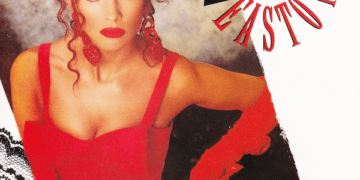




 If you’d been a fan of CHR in the mid-‘80s, especially if you were one of the people lured back to the format by its plethora of mass-appeal, up-tempo superstar product, 1989 was a definite shot across the bow. Pop/rock was Bon Jovi, not Bruce Springsteen, and not even the Bon Jovi that everybody liked. Hip-Hop was increasingly a factor at pop radio. R&B wasn’t Prince and Lionel Richie any longer. It was that jittery New Jack Swing or the “sneakers-in-the-washing-machine” beat of Go-Go.
Personally, I remember 1989 pretty fondly on the radio, in part because of the excitement surrounding the CHR and R&B radio of the time. If the late ‘80s were your coming-of-age time, you remember a lot of that music, too. In recent years, a number of songs from that era — particularly of the “Bust a Move”/”U Can’t Touch This” novelty rap variety — have become playable songs at the Classic Hits format. But there are still a lot of very “lost” hits from 1989, as evidenced by this look at the year through the prism of our formula for how “lost” songs have become over time.
With such songs as “Funky Cold Medina” finally having their moment again, you might think that recency plays a part in which songs endure at Classic Hits and other gold-based formats. Overall, however, 1989 looks a lot more like the doldrums of 1982 than the big CHR year of 1984. There are 44 songs with a “lost factor” of 1.0 or higher, similar to the 43 in 1982 and higher than the 27 in 1984. There are 26 songs from the year that got 10 spins or fewer in the week prior to my airplay calculations, vs. 23 in 1982 and only 12 in 1984.
Here are the 15 “most lost” hits of 1989, based on points for their standing for the year divided by the number of plays they receive now. In parenthesis is the “lost factor,” followed by the number of spins the songs received in the U.S. and Canada according to NielsenBDS in the week prior to my calculations.
- Sheena Easton, “The Lover in Me” (lost factor 60, spins last week 1)
- New Kids on the Block, “I’ll Be Loving You (Forever)” (38, 2)
- Prince, “Batdance” (29, 2)
- Milli Vanilli, “Girl I’m Gonna Miss You” (28, 3)
- Tiffany, “All This Time” (23, 0)
- Dino, “I Like It” (23, 2)
- Boys Club, “I Remember Holding You” (16, 0)
- Donny Osmond, “Soldier of Love” (15, 3)
- New Kids on the Block, “Cover Girl” (14, 2)
- White Lion, “When the Children Cry” (10, 4)
- Taylor Dayne, “Don’t Rush Me” (9, 7)
- Bangles, “In Your Room” (9, 4)
- Breathe, “How Can I Fall?” (7, 10)
- Milli Vanilli, “Baby Don’t Forget My Number” (7, 10)
- Samantha Fox, “I Wanna Have Some Fun” (7, 2)
The No. 16 song on this list deserves a mention, too. It’s Chicago’s “Look Away,” the 1988 holdover that became Billboard’s infamous No. 1 song of 1989, due to the timing of the chart year, and a soft pre-monitored airplay chart with a lot of weekly turnover at the top. I worked at Billboard at the time and still remember a roomful of people groaning as the year-end chart printed.
It’s been rare to see acts multiply represented in the top 15 most-lost songs, much less two of them, but New Kids on the Block and Milli Vanilli both became lightning rods for “what’s wrong with CHR” music. New Kids have been vindicated over the years, particularly when it was boy bands that fueled the next Top 40 comeback. They’re now represented at Adult Contemporary and Classic Hits by “You Got It (The Right Stuff),” which has a lost factor of only 0.2, compared to the double-digit songs represented here.
Similarly, Tiffany has been grudgingly allowed back on the radio with 1987’s remake of “I Think We’re Alone Now,” even before that song returned to current radio this month thanks to Billie Joe Armstrong’s version. “I Think We’re Alone Now” has only an 0.3 lost ratio. “All This Time” was an MOR-ish throwback that radio played only grudgingly as a current. It wouldn’t have sounded out of place among the lost hits of 1982.
Milli Vanilli is the most interesting case. A lot of 1989-90 Hip-Hop/pop is out of the penalty box now; “Bust a Move” is easy to find on the radio now, with only an 0.2 “lost factor.” I wouldn’t be surprised if at least one Milli song returns to the fore eventually. “Blame It on the Rain” was always thought of as the least goofy of the duo’s hits. That song has a lost factor of 2.6, still significant but only No. 31 for the year — it’s in the same neighborhood as other “oh wow” R&B/pop titles such as “Buffalo Stance” and “Secret Rendezvous.”
There are a few artists who have been recurring presences as we’ve worked our way through the decade — Ray Parker, Jr., Olivia Newton-John, and now Sheena Easton, who also put “You Could’ve Been With Me” in the 1982 top 15. Samantha Fox, who would become a surprise hitmaker in the late-‘80s with similarly flirty hits, is now one of the decade’s most-lost acts as well. In yet unpublished calculations, “Touch Me (I Want Your Body)” is the No. 27 most-lost hit of 1987, while “Naughty Girls (Need Love Too)” is No. 4 for 1988.
Conversely, these are the songs that punched above their weight with the most spins proportionate to their year-end placing:
- Soul II Soul, “Keep On Movin’” – It was actually the follow-up, “Back To Life (However Do You Want Me),” that became the enduring song at Adult R&B radio. This only gets a handful of spins, but since it was No. 100 for the year, that’s enough to keep the ratio low.
- Guns N’ Roses, “Paradise City”
- Michael Jackson, “Smooth Criminal”
- Guns N’ Roses, “Welcome to the Jungle”
- Bobby Brown, “Rock Wit’cha”
Having looked at the early, mid-, and late ‘80s, we’re going to return shortly with a look at the 50 most-“lost” songs of the decade overall. We’ll also publish a list of the top 15 most-lost songs for each year as well as a separate, behind-the-scenes look at the compiling of the list. Your comments are welcome.





 jaxxalude
  Sean Ross
  glenpwood75
  radiomatt1
  MediaFan85
  johndavis
  cartwright
  martybender
  jason steiner
  briancraig
  slimmons
  borderblaster
  Charles Everett
  jebsib





I was gonna post something about how, from the moment MTV came on the scene until about the turn of millennium, what did manage to endure with time was what they what they (MTV) would put on heavy rotation.
Then I got wind of MTV’s Top 100 of 1989: https://www.imdb.com/list/ls022380314/. While you do see a considerable number of disparaties, you’ll also notice how a good chunk of the “lost” hits are also prominently featured.
Like many, we could still beat the dead horse (i.e.: hip-hop, New Jack, teen-pop, hair metal, etc..). And granted, a good number of New Jack and pop metal hits seem to be permanently consigned to either specialty hours/channels (terrestial radio/satellite) or very specific, genre/mood-driven playlists (streaming); and that’s those lucky enough to even get there. But even the adult tunes (mostly the late-breaking veteran hits) seem to have been banished to the dustbin.
Which makes me wonder: is there something about the sonic texture of the late 80’s that might make a lot of these songs go puff in the night? Taking your 1982 comparison, might it be that while ’82’s “lost” hits sound like holdovers from the 70’s, ’89’s class of the dejected are precisely the opposite: too 80’s? Or, if you prefer, the 80’s so distilled in brush strokes (and for the 80’s, that’s saying something) that no one wants anything to with it? Like those really embarassing photos you either stash away or permanently destroy, just in case?
I’ll leave it to anyone to butt in on this one!
I think if anything, the ’90s really begin around 1988 and we have an era, lasting until 1995 or so, of the next generation’s pop music. It has fallen through the cracks at radio until now. Recently, a few of the novelty rap songs of that era–Bust A Move, U Can’t Touch This, Wild Thing, Ice Ice Baby–have begun to test. But it’s not a deep pool. Also, 1989 hits have no real second format to be played on, except for some of the Soft AC ballads. They’re too pop for Adult R&B and not eligible for Classic Rock.
I think if anything, the ’90s really begin around 1988 and we have an era, lasting until 1995 or so, of the next generation’s pop music-
That’s probably true when it comes to R&B or adjacent genres – but even around ’92, there were changes afoot. By then, Bobby Brown or Paula Abdul were already starting to feel like yesterday’s news. In fact, if you want me to draw a line, think of Teddy Riley. In 1989, there was Guy; by 1993, he had BLACKstreet. Granted, Guy never really crossed over and BLACKstreet, for all the mainstream pop world cares, are one-hit wonders. And yes, you could say Boyz II Men and TLC kind of managed to extend New Jack’s deadline in the pop culture when you think about all the groups that came in their wake until, like you said, 1995. But one gets the feeling that, in long run, Jodeci probably won this war in the long run, even if it’s not really acknowledged.
Can’t agree with you when it comes to rock music, though. If anything, when Nirvana came, it wasn’t just the pop metal acts that started going by the wayside. Even the acts that opened the doors for the Alternative moment (your Cures and Depeches and New Orders) started feeling the heat – not to mention how, before “Smells Like Teen Spirit”, it actually felt like the whole “baggy” thing (Jesus Jones, EMF, The Farm) would be the proper next big thing to cross over from Modern Rock. And give or take a few Tom Pettys or Aerosmith or the occasional John Mellencamp who managed to hang in there a little bit more, even the classic rockers felt the pinch. Some (Bryan Adamas, Bon Jovi, not many more) did weather the storm by going full-tilt AC. But let’s face it: it was a real damage for most of them!
Hi Sean,
Was very happy to learn that you were doing 1989 as that has been the year that always first to my mind when talking about lost hits as the general turnover itself at radio placed over 100 top tens in Billboard and there were a lot of hits that I never heard at all (Neneh Cherry’s Kisses On The Wind, Animotion’s Room To Move, Information Society’s Walking Away) during their chart runs or the second they peaked they totally disappeared (see Prince’s Batdance, Expose’s What You Don’t Know, the Tiffany & Bangles cuts on your chart, etc.)
Poor Sheena. TLIM was her one big hit post 1985 (without Prince) but perhaps radio ignores it because there is a glut of hit L.A. Reid/Babyface productions from 89 to 95 to pick from so this gets lost in the shuffle.
Some different problems affect a few of these listed artists giving me reason to expect to see them on the list.
Today, Donny Osmond still is perceived by most as a squeaky clean teen singing with his brothers or Marie not the George Michael Faith poseur image he took on during his brief 89-90 mild resurgence.
Tiffany & NKOTB just get generalized as teen pop outside of the hits you mentioned.
That Milli Vanilli has overcome it’s image vs. vocal scandal to get anything into recurrent airplay status show there are a few folks out there in the end who didn’t care who sang what – just that the songs were good. The same way C&C Music Factory’s Gonna Make You Sweat still endures despite the milder Martha Wash controversy.
Look forward to the decade recap!
Glen
Thanks, Glen. In those last days (or year or two anyway) before monitored airplay took hold, there were a lot of top 10s that really weren’t, and it says something that a song like “Walking Away,” which I remember as being a real hit in the Northeast, and at least played elsewhere, didn’t even make the year-end countdown. I think a lot of the rhythmic pop of that era is in a trick bag. It’s too much if you liked the Phil Collins/Bruce Springsteen mid-’80s CHR, but it’s a quaint placeholder for Dre/Biggie fans, (Similar, now that I think of it, as pre-Nirvana late ’80s/early ’90s Alternative being hard to hear now.)
Speaking not as a radio geek as I normally do, but instead as a high school student of the late 80s, 1989 was the year most of my high school friends abandoned CHR. The music felt either as if it was supposed to be relevant to us but wasn’t (Samantha Fox), or it felt like music for our parents (looking at you, Look Away).
Atlanta’s Power 99 tried tremendously to remain relevant, but by 1992, they acknowledged the cultural and generational shift when they became 99X, as the late Sean Demery later explained better than anyone. (It’s well worth your Google).
Ironically, for a generation so known for bashing Boomers, my Gen X friends primarily switched loyalties to Atlanta’s Z-93, which had just flipped from Churban to Classic Rock. For 1989 teens who didn’t have WLIR or CFNY in our lives, the best music of the Boomers felt a lot more relevant than the worst music of our own time.
Interesting to hear that, Matt. Teenagers listening to Classic Rock is a regular thing now, but it was more remarkable during the format’s first generation. I liked the music of ’89 just fine, partially because the radio was exciting, and I really liked Power 99 during that era, especially when they were finding their own records.
Sheena Easton has become a one or two-song artist with 1984’s “Strut” becoming her most enduring song, followed by 1980-81’s “Morning Train (Nine to Five)” as her second most enduring. Also throw in her duet with Prince, “U Got The Look.” (Her other duet with Prince, 1989’s “The Arms of Orion” has become another one of that year’s lost hit)
There is a huge batch of big hits from ’89 that are no longer on radio, except for the internet, specialty shows and weekends. Songs that went to #1 or #2 like “Rock On” from Michael Damian, “Toy Soldiers” from Martika, “When I’m With You” from Sheriff, “Wind Beneath My Wings” from Bette Midler, “Don’t Wanna Lose You” from Gloria Estefan, “Express Yourself” from Madonna (her offering from “Like A Prayer” is reduced now to the title track), and pretty much anything from Milli Vanilli. You don’t hear much from Samantha Fox anymore either.
’89 was also the beginning of artists like Technotronic and Blackbox. Both of whom had their performances mimed in video, and on stage that year, most often in the UK. Also in the UK in ’89 was the invasion of hits that were produced by the team of Stock Aitken Waterman, to which a lot of insiders and the public were annoyed.
“Morning Train (9 To 5)” got about 60 spins in the week I looked at. “Strut” got 18, so even those songs aren’t on the radio much. It’s interesting that of those female AC artists who reinvented themselves throughout the decade are so often the ones with the lost hits–ONJ, Melissa Manchester, Sheena. And yet “Bette Davis Eyes” (which doesn’t just fit the profile but almost invents it) endures. So does “Gloria.”
Interesting to see “Bette Davis Eyes” and “Gloria” endure more than other songs from the decade.
Speaking of “Gloria,” Laura Branigan sort of reinvented herself after her first two albums (Branigan, Branigan 2) with the Self Control album in 1984 (the big CHR year), and the title track was a huge hit, even charting higher than 1983’s “Solitaire.” (“Self Control” peaked at #4 in the US Hot 100, while “Solitaire” peaked at #7) After “Self Control,” Laura slowly started falling off the radar when her follow-up albums and singles failed to be as successful as her three big hits. “Gloria” is now the only Laura song that gets radio play, with the occasional “Self Control” thrown in.
As for “Morning Train” and “Strut,” at least they are getting more spins than “The Lover In Me.”
And back to Sheena, I actually heard “For Your Eyes Only” over the weekend on WAKR 93.5/1590 out of Akron. It was nice to hear a “lost” song from her get some love for a change. That song was a nighttime staple for a while on WDOK 102.1 in Cleveland during its “Soft Favorites” years, and the beginning of its “Soft Rock” period.
Soft spot for “The Lover In Me” as the first cart I ever fired on air back in the day. It was a LA Reid/Babyface record that happened to be sung by Sheena Easton. That’s probably why it won’t get Urban AC play today, and classic hits isn’t ready to play Babyface… but I love all of those records.
I have been faithfully listening to the 80s replays of AT40 for years now I really have enjoyed going back and really analyzing these old shows and hearing the difference in the years. That said, August of 1988 is when Shadoe Stevens took over and January of 1989 is when Casey started “Casey’s Top 40” so no shows from 1989 air. Therefore I almost forget anything after August of 88 since so much of my relistening to the decade comes from the old Casey AT40 shows.
Excellent point, thanks.
You mentioned “You Could’ve Been With Me” by Sheena Easton.
Stunning song.
Still…
A favorite of mine, too. I really didn’t like “Morning Train” and “Modern Girl,” so there was also the pleasant surprise of liking a Sheena Easton record, although that didn’t happen again until “Telephone.”
Wasn’t “Telefone” the start of Sheena’s reinvention, even before she started working with Prince?
Whem I think of 1989 I think of songs from the early 80s that got re-released. Some became a bigger hit the second time around like Sheriff-When I’m With You. My favorite was Q Feel-Dancing In Heaven.
There’s also “Into The Night” by Benny Mardones and the new ’89 version of Real Life’s “Send Me An Angel.”
The “bringbacks” were definitely part of what made CHR fun in 1989. A lot of them weren’t chart hits the second time either (e.g., Q-Feel) and some that were radio hits were never reissued, just played anyway (Madonna/Burning Up, Romantics/What I Like, which I remember some stations playing instead of Michael Morales). For anybody who missed it, here’s my recap of radio that year and where it had brought us to by year’s end. https://radioinsight.com/ross/183901/music-on-the-zeros-what-the-first-year-of-each-decade-says-about-pop-part-iii-1990-the-year-of-the-pig/
Don’t forget that “What I Like About You” also got a boost from those beer commercials the song was featured in. Originally in 1980, it peaked at #49 in the Hot 100.
Yet, it’s funny how Michael Morales’ version cracked the Top 40, but is now “lost” along with his other single “Who Do You Give Your Love To.”
I can remember thinking at the time that pop music sure had declined in the last couple of years. At the same time, I thought country was sounding a lot better than it did in the mid 1980s.
Graduated high school in 1984, so I thought maybe I was just already aging at 24 out of the CHR demographic but looking back I really think too 40 was way better from late 1982 thru 1985 then it was over the next 4 years.
Can anyone think of one pop music star of the 1980s, where you would say their late 1980s release is better than their earlier one. Madonna, Michael Jackson, Prince, Lionel Richie, Cyndi Lauper, Huey Lewis and the News, Tina Turner, Duran Duran, Phil Collins, Bruce Springsteen etc. I would argue that their 1982-1985 albums are far better loved and remembered than their late 1980s hits.
Part of what happened with CHR in the ’80s is that a lot of acts released so-so follow-up albums by 1986-87. There were new stars in 1989-90 or non-stars and they weren’t making the same type of record. Only exception I can think of is INXS, who made good records consistently in the mid-’80s but hit their stride in ’87-88.
I’m surprised by the high ranking of “Soldier of Love.” It seems to pop up with some regularity on the average Bob/Jack type of station. I also thought Tiffany and Boys Club would have received at least one stray spin from one of the Soft ACs.
I think the issue with Tiffany and Boys Club is that they were never real enough hits at the time for anybody to want to go back to them. Plus, if you’re playing “Careless Whisper,” which is a trademark song for those new Soft ACs, there’s not the need to go back for a lesser record with the same feel.
1989 was an interesting year for me personally when it comes to music. In March I started at an upstart Classic Hits (as it was defined in 1989, with a small current and re-current list, mostly AOR focused). That was a part time job, but my full time job was in an office where the top 40 station was playing for 8 hours. We had repositioned the top 40 as “Disco 97″…..even as many years as had passed from Disco Demolition, the term still had a negative with rock fans. Some of the lost hits I remember, a lot I don’t. I remember new tracks from Eric Clapton, Fleetwood Mac and Stevie Nicks solo. I do consider “Runnin’ Down A Dream” to be the last great driving song.
There were definitely two CHRs at the time–the smaller-market stations that still played “Rooms On Fire” or Poco/”Call It Love” and the larger rhythmic-leaning stations that never even played “I Won’t Back Down” or “Running Down A Dream.” (They grudgingly played “Free Fallin'” for 6-8 weeks because it was too big to deny.) That’s probably part of the issue. Not enough songs were ratified by every single station.
There were a lot of those smaller-market-type songs that year. “Pop Singer”, “The Doctor”, “My Brave Face”, “It’s Not Enough”. They all appeared to be bigger hits than they actually were.
As always, the chart freaks come out at night (and during the day too). 1989 turned out to be so polarized that you have to look away from the CHR format to find most of the enduring songs.
And since Sean brought up Billboard’s infamous #1 for 1989, I dived into the R&R year-end surveys. R&R’s #1 CHR hit for 1989 is by Janet Jackson, “Miss You Much”. The Chicago song didn’t even make the top 89.
I just looked up the 1988 R&R top 100–“Look Away” isn’t on there either, perhaps a victim of falling between the years. Not like it wasn’t a hit there. By year’s end, it had gotten up to at least #2, while “I Don’t Wanna Live Without Your Love,” which did make the countdown, peaked at #3.
I preferred the Rhythmic stuff that year, but you couldn’t move an inch without encountering copious amount of pop metal in 1989. And I don’t mean just GnR, the power-ballads and whatever Bon Jovi had morphed into; There were weirdly hard songs being played in the Top 10 (Skid Row, Motley Crue, Alice Cooper), with lots of Living Colours and Wingers at the gate. It was about a year before that genre (not yet labeled ‘Hair Metal’) was banished from the culture.
I liked the rock and R&B together, especially when WHYT Detroit went in that direction. But, yeah, it’s interesting to look back and realize that Living Colour/”Cult of Personality” was a hit single, while “Glamor Boys” (which sounded more like a radio record) was not.