• Latest
It Was The Summer, The Summer Of ’83

It Was The Summer, The Summer Of ’83

6 years ago
Terry Boers Dan Bernstein 670 The Score WSCR Chicago

Radio Remembers Terry Boers

14 hours ago
101.5 Lite-FM WLYF Miami Christmas Music

Jess Bonilla Adds Afternoons At WLYF

17 hours ago
Nielsen Audio Arbitron

Nielsen Fall & December 2025 Ratings Releases 1/23

18 hours ago
ADVERTISEMENT
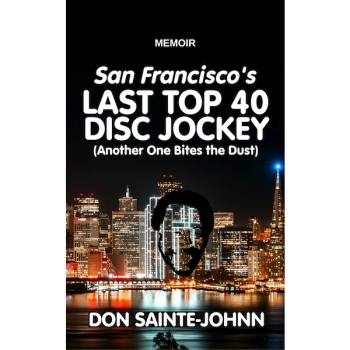
Don Sainte-Johnn Saint John KFRC

Magic Mist: My First Shift On KFRC

21 hours ago
Kool 105 KXKL Denver

Dom Testa Departs Mornings At Kool 105 Denver

21 hours ago
Full Metal Jackie

Full Metal Jackie Grows

23 hours ago
Elkhorn Media Group

Station Sales Week Of 1/23

1 day ago
94.5 The Bay Country KBAY Gilroy San Jose

Bay Country Promotes Emily Harlan To Music Director

1 day ago
Q99.7 99.7 WWWQ Q100 Atlanta Bert Show

Ethan Cole Joins Q99.7 To Co-Host The Kristin Show

1 day ago
WSRB Soul 106.3 Chicago

Deja Vu Show Joins WSRB In Middays

2 days ago
Got News? Let us know at News@RadioInsight.com
RadioInsight
No Result
View All Result
  • Login
  • Register
  • Headlines
    • Format Changes
    • People & Places
    • Station Sales
    • FCC Applications
    • Domain Insight
  • Ratings
    • Nielsen Audio
    • Eastlan Ratings
  • Jobs
    • View Jobs
    • Submit A Job
    • Job Dashboard
  • Sean Ross
  • Subscriptions
    • Subscription Info
  • Contact Us
SUBSCRIBE
NEWSLETTER
RadioInsight
  • Headlines
    • Format Changes
    • People & Places
    • Station Sales
    • FCC Applications
    • Domain Insight
  • Ratings
    • Nielsen Audio
    • Eastlan Ratings
  • Jobs
    • View Jobs
    • Submit A Job
    • Job Dashboard
  • Sean Ross
  • Subscriptions
    • Subscription Info
  • Contact Us
No Result
View All Result
RadioInsight
No Result
View All Result

It Was The Summer, The Summer Of ’83

Sean Rossby Sean Ross
July 8, 2020

This article was first published in February 2017.

In 1983, five weeks out of college, I arrived in Los Angeles by bus and plane. The Greyhound ride was between Washington, D.C., and Houston. The plane was because my concerned grandparents prevailed on me to accept a plane ticket for the rest of the trip. I probably could’ve managed a plane ticket for the entire trip. I just wanted to hear more radio. Because it was early June 1983 and radio was awesome.

The Detroit radio I’d just left had been particularly awesome. Detroit in the early ‘80s was one of the great radio markets in one of its greatest moments: WHYT in its first six months with consultant Mike Joseph’s “Hot Hits”; WABX’s unusual CHR/new wave hybrid where “Save It For Later” by the English Beat was what it should have been everywhere else in the U.S.—a pop smash. CKLW was in its last throes of Top 40 on AM and playing its old jingles. WDRQ was galvanizing the market with Urban, fueled by and fueling the ascents of Michael Jackson, Prince, and what would be the roots of Detroit techno.

I often wonder if I was at an age where I was inclined to like radio uncritically, (or maybe I’ve now reached the age where I remember it that way), but I don’t think so. For one thing, I was at the age where I knew everything, exacerbated by having read “The Fountainhead” seven months earlier. (Ask me about the parallels between Howard Roark and Mike Joseph sometime.) And as I rode across the country, I heard a lot of so-so stations badly in need of my rookie advice.

For starters, there was a lot of “Hot Hits Lite.” Joseph’s galvanizing all-currents format that had revitalized Top 40 over the previous 21 months had been recast in most places as “Hitradio” (no “Hot Hits” trademark to purchase that way). Those stations played recurrents and perhaps one gold (then defined as last three years) every hour. They didn’t have the extreme regimentation of WHYT and its ilk, but they didn’t seem quite as jet propelled either.

But it didn’t matter. The Police had released “Every Breath You Take” about 10 days earlier. What CHR stations were doing was universally more exciting than what most of them were doing eighteen months earlier (and back then, there was a pretty good chance of the format disappearing, or being subsumed into Hot AC and AOR). And given the excitement about CHR music that had started to turbo about nine months earlier, the format was still absolved of minor sins. And that was the first lesson of that summer.

It Wasn’t Just Michael and Prince: Although the topspin from “Billie Jean” to “Beat It” to “Wanna Be Startin’ Something” was pretty exciting. It was Rick Springfield—and any other consistent hitmaker of the time. He may be reduced to just “Jesse’s Girl” on the radio now, but in spring 1983 “Affair of the Heart” was another driving, uptempo top 40 hit of what seemed like the same magnitude. It was also Duran Duran, just unleashing “Is There Something I Should Know.” My soon-to-be-boss, R&R’s Ken Barnes, would later note that “for a moment, they sure seemed like the next Beatles.” And that was the moment.

It Wasn’t Just That Core Artists Were In Abundance: The excitement of the summer of 1983 was hearing artists like The Fixx saunter in after a few close calls with “One Thing Leads to Another”—not even the first single from the album, but an effortlessly perfect radio record. And when the follow-up, “The Sign of Fire,” brought them back to near-miss territory, it didn’t matter because somebody new had a record of equal magnitude. Same with Eddy Grant. A consistent UK hitmaker already, he deserved more of a U.S. career than 2-1/2 hits. But none of that diminishes “Electric Avenue” and its moment.

It Wasn’t Even Just The Hits: The health of any explosive moment in music is defined by an abundance of riches. Why are there ‘60s garage rock or “Northern Soul” records worth collecting? Because there were too many good ones for them to all be hits. And like Country and Alternative a decade later, CHR in 1983 was in a place where even the songs that peaked at No. 25 were pretty good. For about a month, there was no reason to think that the propulsive “So Wrong” by Patrick Simmons wasn’t going to be as big a hit as anything else on the charts. I wasn’t similarly fooled about the hit potential of “I Couldn’t Say No” by Robert Ellis Orrall, but I enjoyed it finding its unlikely place on pop radio for a minute anyway.

Copycatting Was Good: The averaging out of new wave, corporate rock and R&B brought a lot of artists to great places (think Stevie Nicks’ “Stand Back”) and sometimes-uncharacteristic ones (yes, “Owner of a Lonely Heart”). In the mid-2010s [when this article was originally published], the averaging out of new wave, R&B and pop has brought us a dozen lilting, midtempo trop-house records. And the current ratings travails of CHR support this as more than a cranky old guy comment.

Radio Got Its MTV And Ran With It: If every house had cable, or if you could listen to MTV in the car, 1982-83 might have been the moment where radio lost its hegemony over new music, such was the excitement over new-wave-inflected-pop that MTV is credited with helping foster in the U.S. But MTV was further limited by available videos and the last of its rock radio mentality. Radio ran with the new music explosion of the time, so successfully co-opting it that you can see how radio minimized some later threats, when it shouldn’t have.

There Was Still More Than One Way To Do CHR: Not everybody had turfed out all the oldies. KKBQ (79Q/93Q) Houston, which I finally got to hear live, was more aggressive on new music and reaction records than anybody, but their gold library also contained “Seasons In The Sun” because, hey, it was a reaction record, too. KFRC San Francisco  could still play “Jumpin’ Jack Flash” at :00 (if the jock felt like it). I remember all the nearly identical “Hitradios” from my bus trip, but hearing KMCK (K106) Fayetteville, Ark., playing “Spaceman” by Nilsson in the middle of the night stuck with me.

There Was Still Music on AM: For the most part, there was still a migration away from CHR on AM, especially as most markets finally got a successful CHR FM for the first time in several years, or ever. CKLW was just leaving the format. KFRC, which did nothing wrong, was about to be fragmented by KITS. 79Q had found an FM, while its short-lived rival KYST had gone to all-Beatles as “Beatleradio No. 9.” Southern California’s AM powerhouse, “The Mighty 690,” was about to lose its format monopoly in San Diego to KS103. But there were also AM CHRs, often in unlikely places, that in CHR’s renaissance found vindication for the original hit radio template—KSTN Stockton, Calif., KRGV McAllen, Texas. And when I got to Los Angeles, I spent as much time with R&B KDAY as anybody.

Adult Contemporary Was Still Contemporary: WLTW (Lite FM) New York was still a year away from making AC a softer, mostly library-driven format. In 1982, AC still played currents and still sounded pretty close to Top 40 presentationally, although by summer ’83, CHR was peeling away. As exciting as any CHR for me was the visit that a family friend arranged to KVIL Dallas and the tour that Larry Dixon gave me. KVIL had been hot enough to report CHR for a brief period during the top 40 doldrums. (That said, I also remember the feature where they played listeners’ “oh wow” submissions, which, in that case, was the theme from “Exodus” by Ferrante and Teicher.)

Jocks (And Jingles) Did The Work: Sweepers had been taking a more prominent place at Top 40 radio for a few years at this point, but in the shadow of the Hot Hits format, it was the jingles that provided the excitement. And nobody thought that jocks should be relegated to four breaks an hour. KFRC in 1983 had only one sweeper, an offhand (almost desultory) “KFRC” that played at :30. All the imaging magic was saved for the contest promos (of which there were several an hour).

Bigger Markets Aren’t Always Better, But In This Case . . .  Even in the early years of my radio education, it was a truism that New York didn’t quite live up to its status as market No. 1. Los Angeles, on the other hand, was amazing. KROQ didn’t quite have the shock-of-the-new it had a year or so earlier, but it was still new to me. CBS’ “Hitradio” KKHR (Hitradio 93) had just launched. KIQQ, with its unusual throwback presentation and aggressive new music stance, hadn’t been forced out of the CHR format yet. KGGI Riverside, audible from most of the market, had started to blend Hot AC and Urban into something unusual under consultant Jerry Clifton. KDAY was just starting to evolve into the cradle of West Coast Hip-Hop. And then KIIS hit a ten-share.

Two months after I got to L.A., WHTZ (Z100) New York’s top 40 format signed on. More than a decade before streaming, and with the listen-line something that only industry heavies would have access to, I got to hear it only by calling the jock on the air and asking to let me listen to a few breaks, something that could still happen in that more collegial (and fully staffed) era. I told her I had come to L.A. to write for a trade publication. “What one?” she asked. “I’m hoping to get hired by R&R,” I said—feeling instantly less heavy. About 10 days later, after weeks of sitting on their doorstep, it finally happened.

So what are your radio memories (or, for those who don’t remember it, impressions) of 1983?

Share This:

  • Share on LinkedIn (Opens in new window) LinkedIn
  • Share on Facebook (Opens in new window) Facebook
  • Share on X (Opens in new window) X
  • Share on Threads (Opens in new window) Threads
  • Share on Reddit (Opens in new window) Reddit
  • Print (Opens in new window) Print
  • Email a link to a friend (Opens in new window) Email
  • More
  • Share on Mastodon (Opens in new window) Mastodon
  • Share on Bluesky (Opens in new window) Bluesky
  • Share on Telegram (Opens in new window) Telegram
  • Share on WhatsApp (Opens in new window) WhatsApp
  • Share on Pocket (Opens in new window) Pocket
Sean Ross

Sean Ross

Sean Ross is a radio business researcher, programming consultant, conference speaker, and a veteran of radio trade journalism at Billboard, Radio & Records, M Street Journal, and others. For more than a decade, his weekly writings have been collected in the Ross On Radio newsletter; subscribe for free here. https://tinyurl.com/mhcnx4u

Comments

Log In

Join Now | Lost Password?

Comments 2

  1. borderblaster's avatar borderblaster says:
    6 years ago

    1983, I was between gigs and still living in Ohio, within daytime range of CKLW. I remember Pat Holiday’s last kamikaze run as a full-on CHR, after years of A/C. I spent time listening to WMEE, which had flipped from AM to FM in 1979, and the newly A/C , WFWQ, Fort Wayne. We had a local AOR which became one of the first Transtar A/C affiliates that year. The Disco Sucks thing was still very real, people in my town didn’t want to hear much R&B.

    It was a great summer for music and radio…..I’d land in Central Indiana by the end of the year, able to hear the Indianapolis market and some of the smaller markets that surrounded it

    Loading...
    Reply
  2. rickalexander's avatar rickalexander says:
    5 years ago

    It was May of 1983 that I joined CHR WIKZ as 7-midnight jock. Interestingly, I had been offered the same position in June of 1980, but I turned it down. I had worked at CHR WQVE (QV93) in Harrisburg, PA from June of 1979 to August of 1982, where I effectively witnessed Top 40’s transition from disco extremes to the AC/AOR schizophrenia of the early 80s. I was on the beach, doing swing at WKBO AM, when I got the offer from WIKZ.
    It was an amazing time! Hits popped out of the woodwork every week. Radio was sounding so fresh! I was really energized to get back to Top 40 radio. My then-girlfriend had been a student at Villanova, so I had a ringside seat to the WCAU-FM/WIFI battle, perhaps the only Top 40 war going on in 1981-early 1982 . We even had our Hot Hits knockoff in Harrisburg on AM with WFEC.
    What an exciting era! It seemed that every week during the summer of 1983, there was a format flip to Top 40; WPLJ, Z100, WAVA, and WMAR, just to name a few. One great thing is those pre-streaming times was that our local cable company offered FM cable. So by hooking up coax to the stereo in my office, I could listen to Baltimore and Washington DC stations. I could get inspired by keeping tabs on the battle between WBSB and WMAR or WRQX, WAVA and for a season, WASH.
    We caught the bug, and in January of 1984, WIKZ-95 (pronounced wick-sea) re-imaged as Z-95, complete with Jam’s “Hitradio” package and reverb. We stayed in the format until 1992, when a lot of stations dropped out. Today I am OM and doing mornings with my wife on the same frequency, now know as MIX95.1, over thirty seven years later. In my opinion, there has never been a more prolific time for true pop hits than 1983-85.

    Loading...
    Reply

Leave a ReplyCancel reply

Recent Headlines

Terry Boers Dan Bernstein 670 The Score WSCR Chicago

Radio Remembers Terry Boers

January 23, 2026
101.5 Lite-FM WLYF Miami Christmas Music

Jess Bonilla Adds Afternoons At WLYF

January 23, 2026
Nielsen Audio Arbitron

Nielsen Fall & December 2025 Ratings Releases 1/23

January 23, 2026
Don Sainte-Johnn Saint John KFRC

Magic Mist: My First Shift On KFRC

January 23, 2026
Kool 105 KXKL Denver

Dom Testa Departs Mornings At Kool 105 Denver

January 23, 2026
Full Metal Jackie

Full Metal Jackie Grows

January 23, 2026
Load More

RadioInsight Daily

RadioInsight Daily

Get RadioInsight Headlines Direct To Your Inbox At 8pm Eastern Daily.

Please wait...

Thank you for sign up!

It Was The Summer, The Summer Of ’83

Sean Rossby Sean Ross
July 8, 2020

This article was first published in February 2017.

In 1983, five weeks out of college, I arrived in Los Angeles by bus and plane. The Greyhound ride was between Washington, D.C., and Houston. The plane was because my concerned grandparents prevailed on me to accept a plane ticket for the rest of the trip. I probably could’ve managed a plane ticket for the entire trip. I just wanted to hear more radio. Because it was early June 1983 and radio was awesome.

The Detroit radio I’d just left had been particularly awesome. Detroit in the early ‘80s was one of the great radio markets in one of its greatest moments: WHYT in its first six months with consultant Mike Joseph’s “Hot Hits”; WABX’s unusual CHR/new wave hybrid where “Save It For Later” by the English Beat was what it should have been everywhere else in the U.S.—a pop smash. CKLW was in its last throes of Top 40 on AM and playing its old jingles. WDRQ was galvanizing the market with Urban, fueled by and fueling the ascents of Michael Jackson, Prince, and what would be the roots of Detroit techno.

I often wonder if I was at an age where I was inclined to like radio uncritically, (or maybe I’ve now reached the age where I remember it that way), but I don’t think so. For one thing, I was at the age where I knew everything, exacerbated by having read “The Fountainhead” seven months earlier. (Ask me about the parallels between Howard Roark and Mike Joseph sometime.) And as I rode across the country, I heard a lot of so-so stations badly in need of my rookie advice.

For starters, there was a lot of “Hot Hits Lite.” Joseph’s galvanizing all-currents format that had revitalized Top 40 over the previous 21 months had been recast in most places as “Hitradio” (no “Hot Hits” trademark to purchase that way). Those stations played recurrents and perhaps one gold (then defined as last three years) every hour. They didn’t have the extreme regimentation of WHYT and its ilk, but they didn’t seem quite as jet propelled either.

But it didn’t matter. The Police had released “Every Breath You Take” about 10 days earlier. What CHR stations were doing was universally more exciting than what most of them were doing eighteen months earlier (and back then, there was a pretty good chance of the format disappearing, or being subsumed into Hot AC and AOR). And given the excitement about CHR music that had started to turbo about nine months earlier, the format was still absolved of minor sins. And that was the first lesson of that summer.

It Wasn’t Just Michael and Prince: Although the topspin from “Billie Jean” to “Beat It” to “Wanna Be Startin’ Something” was pretty exciting. It was Rick Springfield—and any other consistent hitmaker of the time. He may be reduced to just “Jesse’s Girl” on the radio now, but in spring 1983 “Affair of the Heart” was another driving, uptempo top 40 hit of what seemed like the same magnitude. It was also Duran Duran, just unleashing “Is There Something I Should Know.” My soon-to-be-boss, R&R’s Ken Barnes, would later note that “for a moment, they sure seemed like the next Beatles.” And that was the moment.

It Wasn’t Just That Core Artists Were In Abundance: The excitement of the summer of 1983 was hearing artists like The Fixx saunter in after a few close calls with “One Thing Leads to Another”—not even the first single from the album, but an effortlessly perfect radio record. And when the follow-up, “The Sign of Fire,” brought them back to near-miss territory, it didn’t matter because somebody new had a record of equal magnitude. Same with Eddy Grant. A consistent UK hitmaker already, he deserved more of a U.S. career than 2-1/2 hits. But none of that diminishes “Electric Avenue” and its moment.

It Wasn’t Even Just The Hits: The health of any explosive moment in music is defined by an abundance of riches. Why are there ‘60s garage rock or “Northern Soul” records worth collecting? Because there were too many good ones for them to all be hits. And like Country and Alternative a decade later, CHR in 1983 was in a place where even the songs that peaked at No. 25 were pretty good. For about a month, there was no reason to think that the propulsive “So Wrong” by Patrick Simmons wasn’t going to be as big a hit as anything else on the charts. I wasn’t similarly fooled about the hit potential of “I Couldn’t Say No” by Robert Ellis Orrall, but I enjoyed it finding its unlikely place on pop radio for a minute anyway.

Copycatting Was Good: The averaging out of new wave, corporate rock and R&B brought a lot of artists to great places (think Stevie Nicks’ “Stand Back”) and sometimes-uncharacteristic ones (yes, “Owner of a Lonely Heart”). In the mid-2010s [when this article was originally published], the averaging out of new wave, R&B and pop has brought us a dozen lilting, midtempo trop-house records. And the current ratings travails of CHR support this as more than a cranky old guy comment.

Radio Got Its MTV And Ran With It: If every house had cable, or if you could listen to MTV in the car, 1982-83 might have been the moment where radio lost its hegemony over new music, such was the excitement over new-wave-inflected-pop that MTV is credited with helping foster in the U.S. But MTV was further limited by available videos and the last of its rock radio mentality. Radio ran with the new music explosion of the time, so successfully co-opting it that you can see how radio minimized some later threats, when it shouldn’t have.

There Was Still More Than One Way To Do CHR: Not everybody had turfed out all the oldies. KKBQ (79Q/93Q) Houston, which I finally got to hear live, was more aggressive on new music and reaction records than anybody, but their gold library also contained “Seasons In The Sun” because, hey, it was a reaction record, too. KFRC San Francisco  could still play “Jumpin’ Jack Flash” at :00 (if the jock felt like it). I remember all the nearly identical “Hitradios” from my bus trip, but hearing KMCK (K106) Fayetteville, Ark., playing “Spaceman” by Nilsson in the middle of the night stuck with me.

There Was Still Music on AM: For the most part, there was still a migration away from CHR on AM, especially as most markets finally got a successful CHR FM for the first time in several years, or ever. CKLW was just leaving the format. KFRC, which did nothing wrong, was about to be fragmented by KITS. 79Q had found an FM, while its short-lived rival KYST had gone to all-Beatles as “Beatleradio No. 9.” Southern California’s AM powerhouse, “The Mighty 690,” was about to lose its format monopoly in San Diego to KS103. But there were also AM CHRs, often in unlikely places, that in CHR’s renaissance found vindication for the original hit radio template—KSTN Stockton, Calif., KRGV McAllen, Texas. And when I got to Los Angeles, I spent as much time with R&B KDAY as anybody.

Adult Contemporary Was Still Contemporary: WLTW (Lite FM) New York was still a year away from making AC a softer, mostly library-driven format. In 1982, AC still played currents and still sounded pretty close to Top 40 presentationally, although by summer ’83, CHR was peeling away. As exciting as any CHR for me was the visit that a family friend arranged to KVIL Dallas and the tour that Larry Dixon gave me. KVIL had been hot enough to report CHR for a brief period during the top 40 doldrums. (That said, I also remember the feature where they played listeners’ “oh wow” submissions, which, in that case, was the theme from “Exodus” by Ferrante and Teicher.)

Jocks (And Jingles) Did The Work: Sweepers had been taking a more prominent place at Top 40 radio for a few years at this point, but in the shadow of the Hot Hits format, it was the jingles that provided the excitement. And nobody thought that jocks should be relegated to four breaks an hour. KFRC in 1983 had only one sweeper, an offhand (almost desultory) “KFRC” that played at :30. All the imaging magic was saved for the contest promos (of which there were several an hour).

Bigger Markets Aren’t Always Better, But In This Case . . .  Even in the early years of my radio education, it was a truism that New York didn’t quite live up to its status as market No. 1. Los Angeles, on the other hand, was amazing. KROQ didn’t quite have the shock-of-the-new it had a year or so earlier, but it was still new to me. CBS’ “Hitradio” KKHR (Hitradio 93) had just launched. KIQQ, with its unusual throwback presentation and aggressive new music stance, hadn’t been forced out of the CHR format yet. KGGI Riverside, audible from most of the market, had started to blend Hot AC and Urban into something unusual under consultant Jerry Clifton. KDAY was just starting to evolve into the cradle of West Coast Hip-Hop. And then KIIS hit a ten-share.

Two months after I got to L.A., WHTZ (Z100) New York’s top 40 format signed on. More than a decade before streaming, and with the listen-line something that only industry heavies would have access to, I got to hear it only by calling the jock on the air and asking to let me listen to a few breaks, something that could still happen in that more collegial (and fully staffed) era. I told her I had come to L.A. to write for a trade publication. “What one?” she asked. “I’m hoping to get hired by R&R,” I said—feeling instantly less heavy. About 10 days later, after weeks of sitting on their doorstep, it finally happened.

So what are your radio memories (or, for those who don’t remember it, impressions) of 1983?

Share This:

  • Share on LinkedIn (Opens in new window) LinkedIn
  • Share on Facebook (Opens in new window) Facebook
  • Share on X (Opens in new window) X
  • Share on Threads (Opens in new window) Threads
  • Share on Reddit (Opens in new window) Reddit
  • Print (Opens in new window) Print
  • Email a link to a friend (Opens in new window) Email
  • More
  • Share on Mastodon (Opens in new window) Mastodon
  • Share on Bluesky (Opens in new window) Bluesky
  • Share on Telegram (Opens in new window) Telegram
  • Share on WhatsApp (Opens in new window) WhatsApp
  • Share on Pocket (Opens in new window) Pocket
Sean Ross

Sean Ross

Sean Ross is a radio business researcher, programming consultant, conference speaker, and a veteran of radio trade journalism at Billboard, Radio & Records, M Street Journal, and others. For more than a decade, his weekly writings have been collected in the Ross On Radio newsletter; subscribe for free here. https://tinyurl.com/mhcnx4u

Log In

Join Now | Lost Password?

Comments

Comments 2

  1. borderblaster's avatar borderblaster says:
    6 years ago

    1983, I was between gigs and still living in Ohio, within daytime range of CKLW. I remember Pat Holiday’s last kamikaze run as a full-on CHR, after years of A/C. I spent time listening to WMEE, which had flipped from AM to FM in 1979, and the newly A/C , WFWQ, Fort Wayne. We had a local AOR which became one of the first Transtar A/C affiliates that year. The Disco Sucks thing was still very real, people in my town didn’t want to hear much R&B.

    It was a great summer for music and radio…..I’d land in Central Indiana by the end of the year, able to hear the Indianapolis market and some of the smaller markets that surrounded it

    Loading...
    Reply
  2. rickalexander's avatar rickalexander says:
    5 years ago

    It was May of 1983 that I joined CHR WIKZ as 7-midnight jock. Interestingly, I had been offered the same position in June of 1980, but I turned it down. I had worked at CHR WQVE (QV93) in Harrisburg, PA from June of 1979 to August of 1982, where I effectively witnessed Top 40’s transition from disco extremes to the AC/AOR schizophrenia of the early 80s. I was on the beach, doing swing at WKBO AM, when I got the offer from WIKZ.
    It was an amazing time! Hits popped out of the woodwork every week. Radio was sounding so fresh! I was really energized to get back to Top 40 radio. My then-girlfriend had been a student at Villanova, so I had a ringside seat to the WCAU-FM/WIFI battle, perhaps the only Top 40 war going on in 1981-early 1982 . We even had our Hot Hits knockoff in Harrisburg on AM with WFEC.
    What an exciting era! It seemed that every week during the summer of 1983, there was a format flip to Top 40; WPLJ, Z100, WAVA, and WMAR, just to name a few. One great thing is those pre-streaming times was that our local cable company offered FM cable. So by hooking up coax to the stereo in my office, I could listen to Baltimore and Washington DC stations. I could get inspired by keeping tabs on the battle between WBSB and WMAR or WRQX, WAVA and for a season, WASH.
    We caught the bug, and in January of 1984, WIKZ-95 (pronounced wick-sea) re-imaged as Z-95, complete with Jam’s “Hitradio” package and reverb. We stayed in the format until 1992, when a lot of stations dropped out. Today I am OM and doing mornings with my wife on the same frequency, now know as MIX95.1, over thirty seven years later. In my opinion, there has never been a more prolific time for true pop hits than 1983-85.

    Loading...
    Reply

Leave a ReplyCancel reply

Recent Headlines

Terry Boers Dan Bernstein 670 The Score WSCR Chicago

Radio Remembers Terry Boers

January 23, 2026
101.5 Lite-FM WLYF Miami Christmas Music

Jess Bonilla Adds Afternoons At WLYF

January 23, 2026
Nielsen Audio Arbitron

Nielsen Fall & December 2025 Ratings Releases 1/23

January 23, 2026
Don Sainte-Johnn Saint John KFRC

Magic Mist: My First Shift On KFRC

January 23, 2026
Kool 105 KXKL Denver

Dom Testa Departs Mornings At Kool 105 Denver

January 23, 2026
Full Metal Jackie

Full Metal Jackie Grows

January 23, 2026
Load More
  • Seven Mountains Media

    Multimedia Sales Specialist

    Seven Mountains Media
    Meadville/Franklin, PA
    • Full Time
  • Milner Media Partners

    Part Time On-Air Talent

    Milner Media Partners
    Kankakee, IL
    • Part Time
  • Vox AM/FM

    Midday Host on #1 AC

    Vox AM/FM
    Burlington, VT
    • Full Time
  • Taylor University Broadcasting, Inc.

    Afternoon Drive Show Co-Host and Assistant Production Director 

    Taylor University Broadcasting, Inc.
    Fort Wayne, IN
    • Full Time
  • Eagle Communications, Inc.

    Sports and Production Director

    Eagle Communications, Inc.
    North Platte, NE
    • Full Time
  • Kansas Broadcast Company

    Morning Show Host / News Anchor/Sales

    Kansas Broadcast Company
    Goodland, KS
    • Full Time
  • About RadioInsight
  • Privacy Policy
  • Terms of Service

Copyright ©2025 RadioInsight / RadioBB Networks

Welcome Back!

Login to your account below

Forgotten Password? Sign Up

Create New Account!

Fill the forms below to register

*By registering into our website, you agree to the Terms & Conditions and Privacy Policy.
All fields are required. Log In

Retrieve your password

Please enter your username or email address to reset your password.

Log In
No Result
View All Result
  • Headlines
    • Format Changes
    • People & Places
    • Station Sales
    • FCC Applications
    • Domain Insight
  • Ratings
    • Nielsen Audio
    • Eastlan Ratings
  • Jobs
    • View Jobs
    • Submit A Job
    • Job Dashboard
  • Sean Ross
  • Subscriptions
    • Subscription Info
  • Contact Us
  • Login
  • Sign Up

Copyright ©2025 RadioInsight / RadioBB Networks

This website uses cookies. By continuing to use this website you are giving consent to cookies being used. Visit our Privacy Policy.
%d