




 How quickly can the pop-music landscape change?
Consider the first six months of 1982. The first six months (or so) were Top 40 radio’s worst doldrums up to that time. The last six months were the beginning of a golden age of the format, filled with such still-unavoidable titles as “Eye of the Tiger” and “Jack and Diane.” The first six months have enduring songs, too, but they are also the time of “Pac-Man Fever” and “I’ve Never Been to Me.”
Four years ago, we started one of Ross On Radio’s most popular series of stories with a look at “The Lost Factor” of the hits of 1982. Specifically, we derived a formula for measuring those songs with the greatest trajectory between hits at the time (position on Billboard’s year-end chart) and obscurity now (number of airplay spins, or lack thereof). Early 1982 accounted for the bulk of the most “lost” songs then; now, it’s 14 out of the top 15 forgotten onetime favorites.
The Lost Factor began as a distraction for author and audience during COVID. With your encouragement, it eventually covered the years between 1960-2009. I chose that as an ending point just as the former Broadcast Data Systems (now Luminate) was leaving the business of monitoring radio, making further direct comparisons difficult.
Or so I thought. Occasionally, I would look at Mediabase, BDS’s competitor and now Billboard’s source of monitored airplay, and be surprised at how similar the numbers often were, despite a different panel of monitored radio stations. This week, as a holiday season gift to ROR readers, the Lost Factor returns to 1982, where it all began. And we have a new champion.
In my original look at 1982, the song with the highest Lost Factor was Buckner & Garcia’s “Pac-Man Fever,” which as the No. 42 song of the year (and thus 59 chart points) was now receiving no airplay at the BDS monitored panel. That gave it a Lost Factor of 59. “Pac-Man Fever” received no airplay at Mediabase stations last week, either. Its lost factor is still 59, but it has now been passed by three other songs.
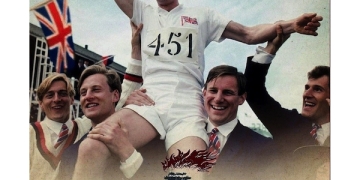
On the week we initially examined, “Chariots of Fire” by Vangelis, the No. 12 song of 1982, had all of three spins, giving it a Lost Factor of 30, still considerable. This year, it received only one spin, raising its Lost Factor to 89. That would have put it just outside the top 10 on our all-time Lost Factor Top 100. Both the old champion (a novelty song) and the new (an instrumental) are from genres often likely to end up “lost.”
It’s important to point out that both BDS and Mediabase reflected or reflect primarily mainstream commercial outlets in the top 150 markets. They don’t include SiriusXM’s decade channels. You may recently have encountered “Chariots of Fire” on the ’80s at 8 channel, or in a retail establishment. It’s still “lost” to somebody whose ’80s listening is shaped mostly by today’s Classic Hits radio. And however radio’s influence might have changed, it still largely controls the agenda for which songs are remembered now.
Here are the new top 15 Lost Factor songs of 1982:
- Vangelis, “Chariots of Fire” (2020 ranking #6, current LF 89)
- Air Supply, “Sweet Dreams” (#4, 73)
- Charlene, “I’ve Never Been to Me” (#5, 63)
- Buckner & Garcia, “Pac-Man Fever” (#1, 59)
- Roberta Flack, “Making Love” (#13, 55)
- Diana Ross, “Why Do Fools Fall in Love” (#19, 47)
- Royal Philharmonic Orchestra, “Hooked on Classics” (#2, 45)
- Karla Bonoff, “Personally” (#21, 41)
- Juice Newton, “The Sweetest Thing (I’ve Ever Known)” (#25, 40)
- Sheena Easton, “You Could Have Been With Me” (#15, 37)
- Dan Fogelberg, “Leader of the Band” (#18, 33)
- Paul McCartney & Stevie Wonder, “Ebony and Ivory” (#23, 32)
- Barbra Streisand, “Comin’ In and Out of Your Life” (#16, 27)
- Elton John, “Empty Garden (Hey, Hey Johnny)” (#29, 25)
- Paul McCartney, “Take It Away” (#9, 16)
With the exception of “Take It Away,” which first charted in July, the top 15 here are songs that came out in late 1981 but were part of the following year’s Billboard Top 100, or winter/spring 1982. They are thought of as the pre-MTV sound of pop music, although all of them actually became hits at a time that MTV existed, even if the channel wasn’t yet available everywhere or as influential as it would become quickly.
None of the top 15 songs received more than three monitored radio spins in the previous week. In some cases, there are big Lost Factor jumps due to losing a small number of spins. In 2020, a commenter asked how Charlene’s “I’ve Never Been to Me” could have been played even twice. Last week, it wasn’t played at all.
Even as somebody who enjoys coming across “lost” songs on Classic Hits radio, there aren’t a lot in the top 15 that I’m pining to hear again. “Pac-Man Fever” was a solid power-pop/bubblegum moment in the last year of “yacht rock” dominance. “Take It Away” was a return to form for McCartney after “Ebony and Ivory.” I love Sheena’s ballad inexplicably more than I like anything else from her first three years of MOR hits. I like Karla Bonoff, and I like the ’70s R&B artist Paul Kelly who wrote “Personally.” But reaction to “The Lost Factor” the first time made it clear that every song here will be someone’s favorite.
The original look at 1982 came with a footnote that affected two songs. Both “Through the Years” and “Love Will Turn You Around” had seemingly elevated spins as a result of Kenny Rogers’ death the week before. While both songs had more airplay in 2020 than they did last week, both have LF scores under 1.0 — meaning that they are still receiving a proportionate amount of airplay to their prominence at the time.
The inverse is that last week’s death of legendary artist/producer Quincy Jones led to a boost in airplay for “One Hundred Ways” (featuring James Ingram) that brought that song’s LF from 1.3 to 0.6. Donna Summer’s Jones-produced “Love Is in Control (Finger on the Trigger)” got enough spins to take it from a 42 LF to 6.0 — not quite out of the land of the lost.
In general, the Lost Factor formula (and the dividing line of 1.0) still works well with Mediabase data. In 2020, there were 44 songs that could be considered “lost” based on BDS data. This time, there are 45. (1982 was a year particularly robust in songs missing from the radio now, and I don’t doubt that will be the case even if this exercise moves on to include other years of the decade.)
The songs that became the most “lost” outside the top 15 were:
- Diana Ross, “Mirror Mirror” (LF 2 to LF 15)
- Elton John, “Blue Eyes” (LF 3 to LF 13)
- Neil Diamond, “Yesterday’s Songs” (LF 2 to LF 12)
- Lindsey Buckingham, “Trouble” (LF 2 to LF 6)
- Paul Davis, “’65 Love Affair” (LF 2 to LF 6)
Songs that crossed the 1.0 threshold into becoming “lost” this year were America, “You Can Do Magic”; George Benson, “Turn Your Love Around”; and Willie Nelson, “Always on My Mind.” Besides “One Hundred Ways,” the only song that returned from being “lost” was “Love in the First Degree” by Alabama. Given that we’re dealing with songs that have crossed the 40-year-old mark since our first computations, it’s actually a surprisingly small list (although there are lots of songs below the 1.0 mark that you don’t regularly hear).
Finally, there are those songs that are the opposite of “lost.” The songs with the five lowest LF scores aren’t necessarily the songs that receive the most airplay, but the ones most played proportionately to where they ended up on 1982’s Top 100:
- Stevie Nicks, “Edge of Seventeen” — she’s coming off a barrage of recent publicity, but her “Leather and Lace” was down
- Loverboy, “Working for the Weekend” — punches above its weight because it was the #95 song of the year.
- Journey, “Don’t Stop Believin’” — it was the disproportionate airplay on this song (and the inverse for Olivia Newton-John’s much-bigger-at-the-time “Physical”) that helped prompt this story to begin with. In case you’re wondering, “Physical” saw a slight increase in LF from 2.9 to 3.7.
- Van Halen, “(Oh) Pretty Woman”
- Police, “Every Little Thing She Does Is Magic”
- A Flock of Seagulls, “I Ran (So Far Away)”
- Joan Jett & Blackhearts, “I Love Rock ’n’ Roll”
- John [Cougar] Mellencamp, “Jack and Diane”
- Stevie Wonder, “Do I Do” — the only one in the top 10 that gets the bulk of its 2024 spins from Adult R&B, not Classic Hits
I’m hoping to revisit the Lost Factor at least a time or two more. I’m inviting readers’ guidance on what they’d like to see next. Later years of the CHR boom such as 1983-85 may be more top-of-mind for readers, but the LFs are relatively low, because more songs are radio mainstays now. I’m looking forward to your feedback.







How about one of the Disco heavy years? Lets see which of those songs have endured.
The US/UK divide is interesting re. the mid-1982 turning point, because over here the first half of the year was a pinnacle of aesthetically European music (the Mobiles’ “Drowning in Berlin”, Japan’s “Ghosts” whose lyrics were unintentionally predictive of how British imperialism was about to resurge, the Associates’ “Party Fears Two”, Kraftwerk getting a number one with a 1978 track which had been much more “outside the mainstream” before) at a time when the explicitly Europeanist SDP seemed poised for power and the pro-EEC faction in the Conservative Party seemingly poised for an internal coup. After the Falklands, of course, the entire context and atmosphere of British life changed, both those wings became much weaker and Anglospherism became much stronger, and British pop moved away from that, although what followed was (naturally) far more appealing abroad, especially in the United States.
The thing that always upset me about “I’ve Never Been to Me” being the only UK number one by a white artist on Motown is that R. Dean Taylor’s “Indiana Wants Me” peaked at number two here, and that would have been a far more deserving song to take such a niche in UK chart history (especially because it was kept out by the horrible “Knock Three Times”).
The actual film of ‘Chariots of Fire’, just like Charles & Diana’s wedding and the ‘Brideshead Revisited’ TV series, is interesting because they all seem to preempt something that would happen in the broader society here on a much greater scale post-Falklands, but they all happened the year before – very much the equivalent of much of the old European order already crumbling in 1913, so no doubt the whole Sloane Ranger cult, while it lasted, and the much longer-lasting backlash against concrete/brutalist redevelopment would have happened anyway. Both the title tune and the soundtrack album failed to reach number one here as they did in the US – it would have been interesting to see how Tom Ewing and/or Marcello Carlin dealt with the related politics (although Marcello did get to do that, sort of, with an album of the royal wedding which made number one when home video was at a very embryonic stage).
I remember, maybe about a decade ago, hearing Dan Fogelberg’s “Leader of the Band” – even though it was never a UK hit (only “Longer” even made the Top 75, and even that never the Top 40 though it did make a London-only Top 40 on Capital Radio compiled by other hands) – on Steve Wright’s Radio 2 show (I can clearly place it while I was in the toilets at the dentist). Scott Mills, in the same slot now, would be no more likely to play it than he would George Formby or Gracie Fields.
I wish there was some way to tease out “work” records that weren’t “real” hits and correlate them with Lost Factor. I’m sure the correlation is high. I note on your 1982 list you have two records by superstar acts that peaked at #10 (after arduous promo effort managed to nudge them just inside the Top 10) and two that peaked at #11 (after arduous promo effort just missed getting them into the top 10). I’m referring to the McCartney, Donna Summer, Streisand, and Neil Diamond records. These were all records that would have peaked much lower on the chart had the teams not felt compelled to try and squeeze them into the Top 10. I wonder how many other lost factor records fit this category?
Sean frequently made the point that a lot of “work” records had high Lost Factors during the original series of articles, especially with regard to the less reliable, often heavily-hyped nature of the Billboard charts pre-1991.
Sean, two 1982 songs I’m curious about regarding their lost factors:
“You Should Hear How She Talks About You” – #18 for the year and the song that, in my opinion, suffers more from being pre-1983 than any song of the decade.
“Keep the Fire Burnin'” – #50 for the year and a song that virtually disappeared after its chart run while finishing ’82 ranked higher than many in the Lost top 15.
It’s interesting that “Bette Davis Eyes” has endured more than “You Should Hear How She Talks About You,” but it’s also the first and biggest of that category. You don’t hear the Sheena Easton songs in that category–female MOR acts who went new waveish–or Olivia’s “Twist of Fate” either. I also think that “You Should Hear,” with its cheerleader bridge, might have been Clive Davis’ attempt to cut “Mickey” off at the pass during the time between when it was a hit in the UK and here.
“Keep the Fire Burning” just wasn’t a real hit. It got as far as it did by being the first single from a follow-up to one of the biggest albums of the era. But it was gone from the radio quickly; seemingly, it just wasn’t as exciting as the other things that were happening. Or people wanted REO to lead with the ballad. (But when “Sweet Time” came out, they didn’t want that either.)
re. my “abroad” comment above, I should note that OMD’s “Maid of Orléans (The Waltz Joan of Arc)” – another of the aesthetically European UK hits of early 1982 – actually far outstripped its UK performance to become that year’s biggest hit in Germany, one of the very, very few occasions when the UK has exported aesthetically European music to mainland Europe, rather than the success of British music in non-Anglosphere territories pandering to wannabe-Anglospherism as has usually been the case. But yes, obviously, they only cracked America when they had come to sound mid-Atlantic – “If You Leave” was never a UK Top 40 hit.
Must also note that the late Victor Lewis-Smith – a prankster/controversialist once very prominent in the UK media – always used to miscredit “I’ve Never Been to Me” to Tammy Wynette, and it does have a lot of the sentimentalism of that era and style of country music which remained the genre’s albatross in the UK until very recently. “Indiana Wants Me” also has country elements, but then so did a lot of Southern soul by Black artists and it feels much more in line with what we usually think of as Motown.
I believe R. Dean Taylor’s other UK Top 3 hit “There’s a Ghost in My House” – which doesn’t have those country elements – is much more obscure in the US, having been picked up here in clubs in the North of England and having crossed over from there, like a lot of previous obscurities which tended to remain so in their homeland.
I don’t think I would ever see the day where the “Chariots of Fire” theme song would go straight to the Lost bin. But here we are, I guess. I mean, it shouldn’t surprise me one bit, given how the movie is all but a smidgen of a memory, even among Oscar trivia buffs and stuff. Still, the song far outweighed the movie’s impact, even in real time.
But then, one of the possible’s clues is in the “40-year-old mark” remark in the article. Unless we’re talking RRHOF alumni or something like that, it will be extra-hard for any song to remain at seemingly permanent rotation on the infinite dial. Vangelis himself is quite an important artist in his own terms – «Blade Runner» soundtrack, anyone? But he’s still, relatively speaking, a niche interest artist who only had one or two real hit songs in his whole career – “Conquest of Paradise” is his other big one in Europe, and also from an all but forgotten movie («1492», in case you’re wondering). All in all, the pieces fit for this one, despite my earlier assessment.
I think the film was something of an event in the UK in terms of the early Thatcher, “fightback against the 60s” cultural moment, and it has retained some currency here with people who think like that. But elsewhere, probably yes.
OK, now how about gauging the Lost Factor based on Spotify streams? Inspired by you, I’ve done that! Here’s my top 10 (the set includes only significant hits at the time, and all peaking within 1982):
10. Diana Ross – Muscles
9. Buckner & Garcia – Pac-Man Fever
8. Paul McCartney – Take It Away
7. Olivia Newton-John – Make a Move on Me
6. Roberta Flack – Making Love
5. Sheena Easton – You Could Have Been with Me
4. Neil Diamond – Yesterday’s Songs
3. Barbra Streisand – Comin’ In and Out of Your Life
2. Olivia Newton-John – Heart Attack
1. Diana Ross – Mirror, Mirror
How about 1987-89? Considered a nadir by many, I personally love that era and think there are lots of stellar songs from that era that don’t get play. Thus they are fresher to my ears because they don’t suffer from the overplay associated with 1983-85 songs.
Sean covered the late 80s extensively the first time round, and made that point quite often. It would be interesting to see if recent exposure has reduced Milli Vanilli’s Lost Factors …
Sean Combs had lost hits already, but redoing the late *90s* might be interesting to see if he has more now.
One thing worth mentioning on “Chariots of Fire” by Vangelis” is that it is played on Adult Standards Stations. When AM1490 was still be run by Townsquare up here in Waterville Maine, that song came on sometimes. The only reason I used to hear that station was at a local restaurant called The Villager, they used to run that station till it signed off. Now they run BIG 104.
I would agree on a revisit to some years of the 1990s, as some classic hits stations have adjusted their timelines over the last five years.