




 In January 1986, in the days just before KPWR (Power 106) signed on and galvanized Los Angeles, I remember feeling that Top 40 radio was losing some of its excitement:
- The No. 1 song on KIIS was Lionel Richie’s “Say You, Say Me,” pushing out the admirable-but-stately “That’s What Friends Are For” by Dionne Warwick & Friends.
- Mr. Mister’s “Broken Wings,” a song I know many of you still love, had been followed up by the less enduring but even more stolid “Kyrie.”
- Mike + the Mechanics’ “Silent Running” sounded like it could have been Mr. Mister’s follow-up as well. So did Starship’s “Sara,” which irked me more at the time than “We Built This City” ever had.
- Heart was in its label-enforced period of corporate balladry, with “Never” giving way to “These Dreams” (in turn, both of those could have been Starship records).
There was, in short, a lot of music that felt to me like it could have easily come from the sleepy summer/fall of 1981. The difference was that uptempo R&B and dance hadn’t been pushed off the radio. In fact, many of those songs that still made KIIS exciting were about to be Power’s power rotation songs upon its launch: Starpoint’s “Object of My Desire,” Whitney Houston’s “How Will I Know,” Sheila E.’s “A Love Bizarre,” plus all the R&B that hadn’t found a home on a full-power L.A. signal yet. (And Janet Jackson’s “What Have You Done for Me Lately” was imminent.)
Power 106 exploded almost immediately, and along with the already launched WHQT (Hot 105) Miami, helped what is now known as Rhythmic Top 40 splinter into a separate format, especially in heavily Hispanic markets. Sometimes that format was a natural evolution for the second (or third, or fourth) CHR that had come to town a few years earlier during the 1983-84 format boom, but some of those stations were just going away outright.
Rock radio had been taking its cues from Top 40 and MTV for several years, playing much poppier music. That opened the door for the advent of Classic Rock, in turn prompting radio in a much more adult direction. Rock radio was “Alone,” “Silent Running,” and “Sara,” too, and Dream Academy’s “Life in a Northern Town” was on its way from there to Top 40. (Again, I know many readers love that song.)
For the last three-and-a-half years, CHR radio had been where the excitement was. When an occasional 1981-type ballad snuck through, it didn’t matter. In spring/summer ’83, “Never Gonna Let You Go” would be followed by Prince or the Police or Michael Jackson or “Safety Dance” soon enough, and it was sort of cool having Sergio Mendes back anyway. Within six months, Gloria Loring & Carl Anderson’s “Friends & Lovers” were bringing a slowdown to a screeching halt, and with it, Top 40’s golden years.
It has been suggested to me that the Top 40 hits were already on the decline in late 1984, but I remember driving around the Bay Area that November, hearing “Strut” into “I Feel for You” into “Like a Virgin” into “Out of Touch” and thinking we were still in a really good place.
Even October/November 1985 sounds pretty good on Richard Phelps’ “KKHV-FM Hill Valley,” the Australian programmer’s tribute to the radio station referenced in Back to the Future, Part II. In the first stage of his re-creation, Phelps is playing the currents and gold that would have been on an adult-leaning CHR of the time, and I’m enjoying hearing “Lay Your Hands on Me” by the Thompson Twins and various recurrents again.
Judging a good or bad time in pop music is always influenced by what was happening around you. I was entering my third year at the trade publication Radio & Records, and still ecstatic at being part of the business. My exact purview at the moment was as Walt Love’s associate R&B editor, so I drew on the best of both formats. In the moments before Power 106, KDAY Los Angeles was starting to get attention as an Urban station that played more Hip-Hop than anybody else. KDAY was already my favorite station by then, but most agree there was still bustle and excitement in Top 40, just not as much as 1983-84.
It’s hard to think of “We Are the World” as exciting now, but in 1985, the event factor of that song and Live Aid were confirmation of pop music’s place in the firmament. And in the first nine months of 1985, there had certainly been other highlights:
- Madonna’s ascent to superstardom, with multiple hits at once, including one that didn’t even exist on record, sending American programmers to tape “Into the Groove” off MTV.
- A great year for Phil Collins, even after he led No Jacket Required with “One More Night.”
- A great year for Bryan Adams and one of the all-time enduring songs in “Summer of ’69.”
- The breakthrough of Simple Minds and another one of the all-time enduring songs.
- The excitement of Wham’s American breakthrough, even with the edges of their earlier UK hits smoothed off.
- Back to the Future itself gave us a quintessential radio record in “The Power of Love,” as well as a from-strength-to-strength moment for Huey Lewis & the News.
- Aretha Franklin’s comeback, still in progress that fall with “Who’s Zoomin’ Who.”
- The combination of Beverly Hills Cop and Miami Vice at a time when soundtrack pop was supercharged, not sterile. (For the subset of music junkies who most care about that thing, it was also a good year for the instrumental.)
- Lisa-Lisa & Cult Jam w/Full Force’s “I Wonder If I Take You Home.” That one didn’t cross to pop everywhere, but that song and Madonna’s stardom were the catalysts for the coming explosion of dance-pop and freestyle. Again, that would be better for Power than Kiss.
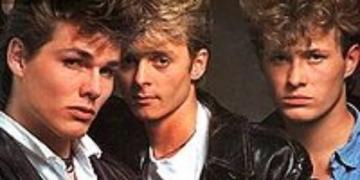
You can find enough great songs to write a brief for almost any time in music history, even if you weren’t a high-school senior that year. “Take On Me” by a-Ha — another of Classic Hits’ most enduring titles – is from Fall ’85. So was Kate Bush’s “Running Up That Hill,” which achieved “breaker” status at R&R that week. So are the less-enduring “Be Near Me” by ABC and “Perfect Way” by Scritti Politti. In general, Top 40 was even better in Los Angeles in 1983-85 because KIIS was faster on both Alternative and R&B crossovers. OMD’s “So in Love” and Oingo Boingo’s “Weird Science” were bigger L.A. records that fall, too. Here’s its playlist for that week.
On Nov 1, 1985, it was “We Built This City,” not “Sara” that was Starship’s hit. In the years after “Jane,” Starship consistently supplied likable but not world-beating top-30 hits. At this moment, there was some excitement in seeing a beloved ’60s act roar back once again (not like Aretha Franklin’s comeback, but still). “We Built This City” was a No. 1 hit about a zoning and permit dispute, but I don’t remember finding it either as pretentious or risible as people do now. The song I felt that way about in fall ’85 was Survivor’s “Burning Heart” from Rocky IV. Nobody remembers to be mad about that one now, and I still can’t be bothered to be bothered about “We Built This City.”
If there were any warning signs that fall, they were these:
- We were just starting to get the follow-up records from the class of ’83-84 that, even when good, weren’t quite as exciting as what had preceded them:
- Prince had followed “Raspberry Beret” (people liked it) with “Pop Life” (people tried to like it) and the current “America,” his first stiff since before “1999.” Prince’s “Kiss” was on the way, but the “can do no wrong” period was winding down.
- ZZ Top’s Eliminator formula sounded fine, but not as fresh, on “Sleeping Bag.”
- Lionel Richie was about to release the good-but-not-as-good Dancing on the Ceiling, and the sneak preview was one of two ballads from White Nights, “Say You, Say Me.” The other one, Phil Collins & Marilyn Martin’s “Separate Lives,” was initially sort of moody/interesting, but also another dirge as the format’s tempo dropped.
- New Wave morphed into something more AC-flavored. KROQ Los Angeles and 91X San Diego never fully spawned a format boom. Instead, Howard Jones, the Thompson Twins, and even Sting took their cues from MTV, CHR, and that more adult-leaning AOR format. Tears for Fears flanked one characteristically dark single (“Shout”) with two sunnier ones. You may still love “Everybody Wants to Rule the World,” especially in this year of T4F’s surprise comeback. But it was a different experience than hearing “Goody Two Shoes” and “Rock the Casbah” within a few minutes of each other in 1982.
Unlike the early ’80s (or mid-’90s), Top 40’s place in the radio industry firmament was never challenged in 1986. Some of that was the influence of independent promotion, which kept the Top 40 chart game front-and-center, although it was about to receive more public scrutiny in 1986. In markets without a Power-vs.-KIIS-type battle, there wasn’t an obvious ratings crisis, although we did see the third and fourth CHRs in the market fall away. Also, radio’s new boom formats – Classic Rock, then Oldies – were not current-based and as such never got quite the same industry attention as formats that were.
The next phase of Top 40 would begin in 1986, propelled by the breakthrough songs of Hip-Hop crossover (Run-D.M.C.’s “Walk This Way”) and hair-band pop (“You Give Love a Bad Name”). If you were an adult who had come back to Top 40 in the mid-’80s for Daryl Hall & John Oates, Bruce Springsteen, and Cyndi Lauper, what followed sounded harsh. Perhaps it sounded harsh even to radio programmers, because they went looking for early-’80s ballads to bring back (“When I’m With You,” “What About Me,” “Into the Night”). Now, of course, it is the Bon Jovi/Poison late-’80s generation that fuels Classic Hits radio.
Over the last few years, I’ve shared playlists with slightly revisionist versions of 1980 and 1981. 1985 doesn’t take quite as much reconfiguring, but since Phelps’ station will briefly return to 1955 around the time you read this, here’s my take on 1985.






Thanks for defending “We Built This City”. I was a New Yorker visiting SF (my current home) as it was climbing the charts in ’85 and it has always had meaning for me (I’ve never understood the hate, and yes I know it’s technically about LA). But “Sara” is one of the worst power-ballads of that era IMHO (2nd only to “Amanda”). ’85 was a glorious musical time.
Sean,
Remember that era well and I’ve always thought the same thing, that the fall of 1985 was the end of the 1983-85 golden era. I have a unique perspective. I started at WIKZ in May of 1983 and if I make it another six months, I will have been on-air at the same station for forty years! In the fall of 1985 I was made PD and morning host. I also had been Music Director for two years prior and I kept that title as well. I had complete autonomy on the playlist. The music that fall was definitely in the dolldrums and our fall of 1985 Birch numbers were softer than they had been. I feel that things had bounced back by the summer of 1986, but not to the level of 83-85. I remember thinking that Janet Jackson’s “Nasty” signified its return. One of the issues of 1986-87, I think, was the music was not only not the same level of quality, but the quantity of hits was lower too. Too many stations were still playing 40+ songs with extras and moving songs too quickly for what was available. All said, I think 86-87 was not a bad era. Then when rock got hot in 1988, Top 40 had achieved a balance it hadn’t had since 1983 and things gotten markedly better until going down for the count in 1989.