




 I’ve always been a big proponent of tempo at contemporary formats. The morass that was the late ’10s at Top 40 radio was full of songs that, on a 1-5 tempo scale, I called “angry 3s,” songs that were slow-to-midtempo, but sonically aggressive. I don’t miss that time. When Top 40 PDs went looking for throwbacks, they mostly skipped that era, although Alex Cooper’s new Unwell Radio does delve more into that era than anybody else so far.
Part of the buzz surrounding Top 40 as summer 2024 began was the excitement of songs like “Espresso,” “I Had Some Help,” “A Bar Song (Tipsy),” “Too Sweet,” and eventually “Not Like Us” and “Hot to Go!!” that were at least mid-to-up with some intensity. After a month or two of promising ratings, the quantity of new music slowed dramatically by summer’s end, and the next major hit that emerged, “Die With a Smile,” was a waltz.
“Die With a Smile” felt to me like a late-’10s holdover, or maybe a song written during the first year of COVID. But it was undeniable to many. I’ve also been forced to acknowledge that Riley Green’s “Damn Good Day to Leave,” a song I really liked and thought of as good for radio, was upstaged both by Ella Langley & Green’s loping “You Look Like You Love Me” and the doo-wop ballad “Worst Way.”
Streaming, regarded by many in our businesses as the most democratic indicator of a hit, sometimes leads firmly away from tempo. The songs at the center of Country’s streaming discussions are Zach Bryan’s unsparing trio of “Something in the Orange,” “I Remember Everything,” and “Pink Skies.”
The Riley Green singles prompted me to look again at Country, Top 40, Hip-Hop/R&B, and Alternative radio with an eye toward who had tempo right now. As with all discussions involving the coding of music, tempo is subjective and has also been confused by a greater airiness/lesser intensity among those songs that are uptempo. Songs that might have been easily called midtempo years ago now fall on a continued mid-to-up continuum.
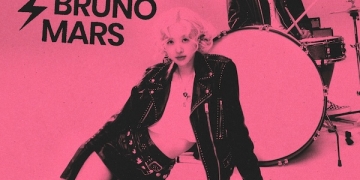
At CHR now, only Rosé & Bruno Mars’ “APT” is uptempo and driving. I’d put four others (“That’s So True,” “Taste,” “BMF,” and “Pink Pony Club”) in the mid-to-up range. Sabrina Carpenter’s “Bed Chem” is true midtempo. “Diet Pepsi,” “Luther,” and “Timeless” are my slow-but-intense “angry 3s,” while “Die With a Smile” is the only hit that I’d classify as slow (and even then, it would be a 2 on that 1-5 scale, not a 1).
 At Country, there’s a lot that is up but not quite driving in the “APT” way. At least half of the top 10 — “Liar,” “Love Somebody,” “I Ain’t Sayin’,” “Guy For That,” and “Texas” — goes into the mid-to-up place. There are three slow-but-pulsating songs (“4X4XU,” “Hometown Home,” and “This Town’s Been Good to Us,” not quite “angry 3s” because they’re not busily produced) and two ballads (“I’m Gonna Love You” and “Forever to Me”).
Hip-Hop and R&B are still composed mostly of songs that do fit the slow-but-busy category, seven out of 10 (“The Largest,” “Whatchu Kno About Me,” “Luther,” “Help Me,” “TGIF,” “Brokey,” and “Sticky”). Only Kendrick Lamar’s “TV Off” is in any way uptempo. Two other hits, “Residuals” and “Heart of a Woman,” are slow.
Surprisingly, Alternative is the format with the most undeniable tempo right now, with the Offspring’s “OK, but This Is the Last Time” leading a field of songs that are uptempo, although of varying intensities. There’s only one song that I’d even call mid-to-up, Lola Young’s “Messy,” and one slow/busy title, “The Line” by Twenty One Pilots.
If tempo matters, shouldn’t Alternative do better as a format these days? The caveat here is that those currents play a less prominent role in a format that often plays no more than 1-2 an hour at most major-market outlets.
I do believe that a lack of tempo has been one of the ratings issues for Hip-Hop radio. Lamar’s “Not Like Us” was phenomenal for numerous reasons, but don’t forget that it was also a club banger of a sort that we haven’t heard much lately.
In some regards, streaming is a funhouse mirror of popularity, particularly when it comes to translating it to what should be acknowledged on radio. The song whose purchase counted once 20 years ago now gets chart points for every spin. Younger listeners have shown they want their own chillout music. The song that works after dinner at home isn’t necessarily the song that translates to afternoon drive.
In general, I still believe that tempo is an indicator of a healthy format. So is variety. So are outliers that remain outliers. The neo-doo-wop genre that has been a regular trope in recent years — Ed Sheeran’s “Perfect,” Rihanna’s “Love on the Brain,” Stephen Sanchez’s “Until I Found You” — works better as a unicorn for me. For a while, we were seeing a few such songs in play at a time as well. There is always a hit song that works because it brings things to a halt. It only works if there are other songs that don’t.






You’re right that tempo and intensity get confused sometimes. Then there’s the major key/minor key issue to think about. I still confuse them myself sometimes. But the listener doesn’t think about that these qualities. They’re all lumped together into one “sound,” if they even think about at all. Perhaps that’s the trick to coding today? Think about it like a listener. Code by taking all the qualities into account and come up with an “absolute” code that works for your station’s overall sound. Damn, Sean. I wish you were around to provoke these thoughts back when I was programming…
Great article Sean. Our small market station has the ability to delve into a variety of areas to find the best country music tailored for our listeners. We even play music from our local artists.
Here is the think. Unlike other formats, a lot of stations get lumped into Alternative. iHeart’s Alt Nation Feed that most iHeart Alternatives run off of is actually a true Alternative Format. You have up here in Maine, Portland’s Rock Alternative WCYY that has always been Alternative, but they are more Modern Rock and play a number of Active Rock titles due to the nature of the market where they compete with 106.3 The Bone, which is Active Rock and 98.9 WCLZ which is AAA. Then you have Cumulus that basically has a lot of the same stuff on their Active Rock Stations (WQXA Harrisburg), and where they have Alternative Stations (I clicked on one from an article on time), and it is a somewhat similar mix of music that you would hear on Townsquare’s WCYY Portland. There is no Modern Rock Chart, which would position differently than Active Rock and Alternative Rock. Where I am going with this is what gets pushed up the chart is not always what truly represents that format.
Hi Sean. I was surprised you didn’t mention “Abracadabra” by Lady Gaga. Talk about tempo! It has her trademark dance-rock energy and there’s Latin in that crazy chorus.
Hi, Brian – I was only focusing on songs in the top 10. Definitely happy to have “Abracadabra” after Gaga waltzing her way through radio for six months.