




 In recent weeks, I’ve had a lot of conversations about the ’90s at Classic Hits, particularly in the music tests I’ve seen for clients or discussed with other programmers. Some involved stations where listeners had cheerfully resisted modernization, until now.
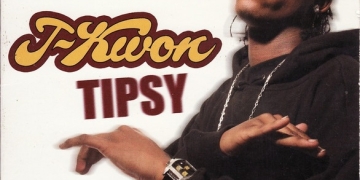
Then there are the titles from the late ’90s and early ’00s that were featured in “What Classic Hits Added in 2025.” Several Audacy stations had followed KRTH (K-Earth 101) Los Angeles’s foray into old-school Hip-Hop with a few titles here and there. Shortly after publication, WOGL (Big 98.1) Philadelphia went further, adding several dozen ’90s/’00s Hip-Hop titles more associated with the Throwback R&B or CHR formats, including J-Kwon’s 2004 “Tipsy.”
As the ’70s dwindle at Classic Hits, ’90s songs are increasingly the chronological center, if not the average era. Even stations that have used newer titles to make a statement are, by and large, still playing only a few ’90s+ titles per hour. In the 2-3pm hours on May 13, Mediabase shows KRTH, KQQL (Kool 108) Minneapolis, WLS Chicago, and WROR Boston with two. WCBS-FM New York, which seemed to reduce its ’90s quotient and rebound in recent PPMs, has one. KXKL (Kool 105) Denver, which has aggressively added ’90s+ titles, had three. Only KOLA Riverside, one of the format’s showplaces for modernization, has an even ’80s/’90s+ split.
Math should have steered Classic Hits to a body of 25-to-35-year-old songs well before now. But the ’90s have been disconcerting for some Classic Hits PDs. Many don’t think there are enough consensus hits, particularly because Top 40 radio lacked a central motor (and wasn’t even in many markets) for all but the last few years of the decade. Listeners didn’t get to hear Warren G & Nate Dogg and Nirvana on the same station, although those who shared Alternative and Hip-Hop on MTV might not even know that’s an issue.
Generally, however, every decade develops playable songs eventually. PDs used to playing the ’60s at Oldies radio thought the ’70s were too diffuse and goofy. Classic Hits only has to find about a dozen playable titles from each year of the ’90s. Besides seeing “Smells Like Teen Spirit” emerge as a reliable tester — ironic given CHR’s near-refusal to play it in 1992 — pop/alt is also starting to yield more titles (“Lovefool,” “Dreams” by the Cranberries, “Torn”). R&B and Hip-Hop have been contributing playable songs (“This Is How We Do It,” “No Diggity”) from early on.
To some extent, the issue for ’80s vs. ’90s is depth. There’s no need to choose between “Livin’ on a Prayer” and “Smells Like Teen Spirit”–those are multi-generational. The issue is the secondary titles, which default more to a listener’s own musical history. Even the tightest station has some “B”s in some era, and for now that’s usually the ’80s. So when does “Crush” by Jennifer Paige become a better ’90s secondary for more listeners than “Sister Christian”? (To complicate things, there are titles like “Break My Stride” that seem exactly to be ’80s trifles, but have taken on new currency.)
So could the ’90s actually become the center lane of Classic Hits? How soon might that happen? Asking those questions isn’t necessarily a call to action. Stations should do what’s right for them, and some will win by leaning older, but it’s interesting to ponder how a troublesome radio era might be made more cohesive.
Ross on Radio readers generally fell into one of three camps:
The music isn’t there: “There are some ’90s songs that test, but not enough good pop songs to fill it out,” says Kevin Fodor at Cox Dayton, Ohio. “The ’90s aren’t strong enough. Not even close,” says veteran programmer Jeff Adams.
“Much like the early ’90s took the CHR format down, do you really want that replicated with Classic Hits? Dr. Dre into Nirvana into Phil Collins into 2pac? I’d rather stick with Bon Jovi and Eurythmics,” says Craig Russell of KHBT (The Bolt) Humboldt, Iowa.
“Out of the top 200 most-played titles on Classic Hits this week, only 13 were from the ’90s,” says Joel Murphy of WHBC-FM (Mix 94.1) Canton, Ohio. But his answer to that is that programmers should nurture more songs into playability, rather than avoid the era.
“‘Every Heartbeat’ does not hold up like ‘Girls Just Wanna Have Fun.’ ‘Come as You Are’ is not ‘Everybody Wants to Rule the World,” says Keith Kennedy, Sr. VP/Programming of iHeart Cleveland.
“I’ll be watching the ratings for Classic Hits stations that are migrating toward the ’90s and ’00s, but my guess is that more-recent tunes will not be attractive to the core audience of 35-64s. Music changed dramatically during the ’90s and ’00s. My Classic Hits station [WKSK] Rewind 101.9 remains rooted in the ’80s and focused on delighting 35-64,” says Lakes Media’s Tom Birch.
Even in Australia, where the ’90s came to Classic Hits radio early on, Strategic Media Solutions’ David Rogerson says that “the ’80s still has the passion and the oh-wow factor, particularly for female listeners. Nineties songs really have to be handpicked. Will the ’90s come through? Possibly, but not with the same passion.”
But some readers believe that we’re overdue chronologically: “Born in 1975, you are 50 years old, and you graduated high school in 1993. That’s already the high end of the 25-54 demo,” says Keith Allen of Eastern Long Island’s WELJ.
“It should be happening now, and we should be losing some of the ’70s. If you graduated in 1976 when ‘Don’t Go Breaking My Heart’ was released, you’re now in your late 60s. Is that the demo the format is chasing?” asks Jerry Mac of Cumulus/Toledo, Ohio.
“I’m already there,” says Robby Bridges, PD of WWZY (Boss 107.1) Monmouth/Ocean, N.J. So is WRTH-LP Greenville, S.C.’s Dave Solomon who says, “We’re almost equal ‘80s and ‘90s now … Our question now is what to do with the ’00s. Twenty years sounds like a long time ago.”
For some PDs, it’s not just the ’70s that are fading, in favor of more ’90s, but also some of the early ’80s. Tony Mitchell says that at his hybrid AC/Adult Hits, WVNO (Mix 106.1) Mansfield, Ohio, he’s been “replacing the John Mellencamp, Don Henley, and Pat Benatar with ’90s and early 2000s. It’s been a gradual transition, and few, if any, have noticed the difference.”
Other commentors wondered how long AC would play the ’80s as well. “The Classic Hits argument is not about era, but about tempo. You can absolutely play ’80s, ’90s and 2K as long as they are the right records,” says Lance Balance at MARC Media Gainesville, Fla. “AC hung its hat on those three decades and did very well. As AC moves forward in vintage, Classic Hits should be taking that real estate.”
Former Classic Hits PD Mark Wishnia is concerned that the format’s older audience is the one with the greater allegiance to radio. Younger listeners “won’t even know” if stations modernize, he says. “And then you alienate the audience that is actually listening.”
MBMI’s Bill Pasha also points out that while the ’90s are a logical place to be chronologically, “the variable is whether the original listener engagement levels with radio were as high in 1995 as in 1975 and 1985. I believe they were, but this is the last iteration for [Classic Hits in the traditional sense].”
But some programmers are already making plans for the ’00s: “I don’t think the ’90s will ever be the tentpole. The late ’90s/early 2K will replace the ’80s. It will take another 3-4 years in major markets, five in smaller ones,” says RCS’s Tom Lawler.
“I think the ’80s will be king for another 5-10 years. Then the center of the format will jump to the 2000s,” adds webcaster Sam D’Addieco.
“Finding ’90s songs that will test has gotten better, but enough to center Classic Hits around it? Doubtful. My guess is that by 2030, you’ll see the early 2000s become a major focal point of the format,” says Dave Russell of WEEU Reading, Pa.
“There’s something timeless about the ’80s that appeals to the younger generation. Too much of the ’90s seems moody. I’m wondering if the ’80s and early-to-mid 2000s might be a better combination,” asks DBC Savannah, Ga.’s Steve McKay.
There’s also the era agnosticism of a generation that just made a viral hit of an obscure early ’60s Connie Francis song this week. “A-level uptempo party songs from the late ’70s to mid-’00s will work fine as today’s Classic Hits,” says Billboard’s Silvio Pietroluongo. “Skip the doldrum years.”
One of the common patterns of Classic Hits’ evolution is that each migration is usually preceded by an attempt to do the next generation as a separate format. All-’70s, all-’80s, and all-’90s stations didn’t work as stand-alones, but they did help define the body of hits that Classic Hits later co-opted.
In Canada, the ’90s-through-today Classic Hits format has successfully existed for several years in a handful of markets. In the US, if the format lands in the early ’00s, as some predict, it won’t be far from today’s “throwback” outlets or even gold-based CHRs. “At that point, maybe we should call such a format something other than Classic Hits? It should get a new name,” suggests Northeast radio veteran Scott Lowe.






My biggest concern here, as you can trace the direct age of the programmer, to their thoughts on classic hits. You know what, maybe AI should program Radio! I’m 35, my wife is 50, she graduated in the early 90s, I grew up during that time, you mean to tell me that we should just continue to listen to what our grandparents and parents listen to, just because people, my parents and grandparents age are the ones still programming radio stations? People in the 90s actually did listen to the radio, we loved the radio, we supported radio, we called the radio stations, we often talk about those times at our parties and That thing called radio that we used to listen to. Not me, I love Radio, but the general consensus, when talking about songs like slide, I’ll be, or songs like that are, those were huge on the radio when that was a thing!
I love that most modernized classic hits stations sound like hot AC stations in the 2000s and we’re pretending like we have no idea what to do or how to go about it. Or that 80s and 90s can’t work together. I do agree that stations should program to their market, and this is a huge opportunity because that’s what CHR and variations of it did, whether you want to count, rhythmic or modern as form templates of it, they were, and they did have market impacts where they were rolled out.
I actually do agree with the programmer who says older people have allegiance to radio, that’s obvious, but there’s an actual generation that wants to listen to the radio, that would support the radio, that have income to support advertisers. Literally all I can read from this is, we don’t want you, you’re too moody, you’re too unpredictable, we actually have to handpick your music, you’re not really an important generation of what we were doing, besides radio, and things were better when I was growing up and I’m still the programmer so deal with it. Come, as you are isn’t who wants to rule the world, who wants to rule the world isn’t let it be, and let it be isn’t eve of destruction, and let’s not even get into the fact that most young people still listen to the Beatles and you can’t even get one song from them on a station, but let’s freeze the era in the 80s. When people my age or in their 40s, run these tests, and tell me the same thing, then I’ll believe there aren’t bias issues. Classic hits, where the programming philosophies are just as old as the music!
Interesting thoughts on 90s hits. Mainstream Top 40 was a mess for most of the decade. Very few had success unless those stations leaned hard into AC, alternative/rock or rhythm. I remember KIIS-FM being very adult in the early 90s.
A classic hits station should play the 90s. Find the real hits for your market. Look at Mediabase for what similar stations are playing. I would look at streams to find out those 90s songs that been played the most. Do a music test if you can. Nothing new there.
Good article!
Classic Hits is a format that by design, is always reinventing itself. Having said that, including “Hip-Hop” and other 2000 generes dissolutes the format. To me, it sounds like two different formats. You’re either Classic Hits or you’re Hip Hop. Decide what you want to be and fill that desire in your market. Listeners attention spans are less than 8 seconds. Your audience’s don’t just want to listen, they want to experience.
Gary Begin
Sound Advantage Media
garybegin10@gmail.com
I’m a classics hits programmer, and I’m 35. Now I’ll admit upfront, I’m biased. I like the 90s/y2k format and it’s severely underrepresented in my market. My station hasn’t dove too deep into the 90s yet, though I am pushing for the move. Ignoring my personal preferences – just do the math. Someone who graduated in 1990 is now 53. So someone listening to “today’s hits” in 1990 is now the upper end of the 25-54 demo.
Yes, the decade was a mixed bag when it came to hits – but there are hits! I think as programmers we’re getting too hung up on the “format” and forgetting that listeners have diverse tastes; and that it’s more about the era and invoking a sense of nostalgia for the listener than it is one specific format. There was a time that programmers cringed at putting Michael Jackson and Lynyrd Skynyrd on the same station, and now it happens on every classic hits station in the country.
Yes, you can play ALL the hits in that mixed bag of 90s hits. Its about the decade and connecting with the listener. And as a part of the demo, I’ll tell you right now that the 90s connects way more with the 25-54 demo than the 70s and it’s starting to be that way with the 80s as well. I connect 100x more with Matchbox Twenty’s 3AM, Barenaked Ladies’ One Week, and No Doubt’s Don’t Speak than I do with Bon Jovi, Bruce Springsteen or Bob Seger.
Just one man’s opinion.
Some of the cool songs like “Don’t Stop Me” or Depeche Mode made it to the radio thanks to “Jack FM” and now are a staple of Classic Hits .Maybe if Classic Hits goes a little more WIDE rather than DEEP they can keep the format cool. To say no one likes The Four Tops is a tragedy. Same with Nirvana. Cardigans “Love Fool”. C’mon they’re all good. It’s up to a seasoned programmer to handle these songs with research and some old fashioned gut to get them on a radio station that could be really exciting to the listener. It may alter your imaging a little, but is Classic ROCK doing better adding 90s? Will you still hear Cream and “Hey Jude” there? It seems we’ve kinda built boxes for our “formats” to be in and in some cases it’s not the best approach. Call me crazy (I’ll wait). I’m involved with a station that’s not afraid to play Little Richard and Bohemian Rhapsody. We’re focusing on temp and energy more than era. In the world of 2025 all musical genres are available in many places and if you reach out to the people who use radio with the right music (i.e. research) you might just find that a unique station that isn’t stuck in one era or another might just work.
The 90s as a center lane is tough. Not just because CHR struggled then, but because a lot of markets already have classic country, classic hiphop, and alternative (Which never left the era) covering those hits. Yes, MTV blended them all together, but iHeart tried the Gen X radio format a couple times in the 2000s and it just never gelled. I think that’s why I tend to agree with the late 90s and early 00s people: There’s just a built in center lane there.
An extended playlist of the “Jock Jams” era mixed with 90s dance is definitely a center lane, but probably not big enough to be sustainable. Same thing with the modern AC stuff.
Perhaps some sort of “classic Modern AC” format could work in markets where the alternative station leans more rock and Goo Goo Dolls, Gin Blossoms, Hootie, and Jewel have no majority at AC or variety hits. I still contend though that the fans of those songs would probably still fare well integrated with some AAA chart currents (That currently do well at CHR).
We’ve done some shifting with our list in the last year – every year we add a year on top, subtract a year from the bottom. But we noticed a lot of our 70s tunes sounded like our 60s…and since the 60s list was getting smaller, we scraped some off of the early 70s and put them in that category (we have a BIG 70s list!) We chose the songs that sounded like the 60s to put in that niche – early Who, Kentucky Rain, Gallery, Temptations. Our early 00s go into the 90s list, and that’s stuff that blends sonically as well – All Star sounds just fine in the same category as Game of Love or Ocean in Motion or Miss Independent or The Sign. And they blend with LOTS of 80s tunes.
I think, quite honestly, CHR should take a hint – mix your dance, rock and pop, and quit whimping out by throwing in country balads that sound AC to make it appear that you have variety. I mean, the Rolling Stones were one of the top touring bands on the planet last year, and who was adding songs from Hackney Diamonds? (They were great songs, and they should have been hits on the radio!)
I thought it would have been cool to hear “Angry” on CHR, too, especially some of these 40-50-year-old brands that have played the Stones as currents at some point.
Thanks Sean for another thoughtful column.
This is a block heard today on May’s #2 station in the Charlotte, NC metro, AQH share of all listeners age 6+. (It was #1 in April.) It’s WXRC, 95.7 “The Ride.” The presentation? Live announcers: Calm, friendly, cordial. What a breath of fresh air. The music, and the numbers, say it all.
I Can’t Tell You Why – Eagles
Melissa – Allman Brothers
Some Kind of Wonderful – Grand Funk
Undun – The Guess Who
Crazy Little Thing Called Love – Queen
I Missed Again – Phil Collins
Midnight Confessions – Grass Roots
Somebody’s Baby – Jackson Browne
Up On Cripple Creek – The Band
Crocodile Rock – Elton John
Fame – David Bowie
I Ran (So Far Away) – A Flock of Seagulls
Mony Mony – Billy Idol
Somebody – Bryan Adams
Abracadabra – Steve Miller Band
Walk On the Wild Side – Lou Reed
Crossfire – Stevie Ray Vaughan
Feeling’ Stronger Every Day – Chicago
I’d Do Anything for Love – Meat Loaf
My Old School – Steely Dan
All You Need is Love – Beatles
Fire and Rain – James Taylor
Big104 Augusta / Bangor has taken a different approach on Classic Hits as they now play very little 70s, a lot of 80s, a decent amount of 90s, a decent amount of 2000s and a little bit of 2010s. A block of music could be something along the lines of
1) Train – Calling All Angels
2) Blackstreet – No Diggity
3) Bon Jovi – Runaway
4) Lady Gaga – Paparazzi
5) The Cars You Might Think
6) New Kids On The Block – The Right Stuff
7) Jordin Sparks x Chris Brown – No Air
8) Elton John – I’m Still Standing
9) ELO – Evil Woman
10) The Verve Pipe – The Freshman
Their competition of 107.9 The Mix which is Adult Hits..
“No Air” is the one that doesn’t really fit for me, but it is two decades old and you don’t hear it much anywhere else, now.