
• Latest
Why Hit Songs Become “Lost”

Why Hit Songs Become “Lost”

6 years ago
105.7 The Fan WJZ-FM Baltimore

Scott Jameson To Depart 105.7 The Fan Baltimore

5 hours ago
Nielsen Audio Arbitron

Nielsen Fall & December 2025 Ratings Releases 1/21

5 hours ago
Mason's Observations Liveline

Mason’s Observations on 2016 & “I Just Might”

7 hours ago
ADVERTISEMENT
B96 WBBM-FM Chicago

Sonic Moves To B96 Afternoons As Dash Departs

7 hours ago
103.7 KSON San Diego

KSON Promotes Jessica Chenoweth To Music Director

8 hours ago
JT Bosch 96.9 The Kat WKKT Charlotte

WKKT Debuts Mornings With Sarah Lee As Graham Bunn Moves To Middays

8 hours ago
DJ J1 Hot 96.3 WHHH 93.9 WKYS Washington DC

Little Bacon Bear Returns To WKYS

10 hours ago
103.7 WEEI WVEI-FM Westerly Providence Ocean State Media NPR Rhode Island

Ocean State Media Acquires 103.7 WVEI Providence From Audacy

11 hours ago
Broadway Media Salt Lake City MIx 105.1 KUDD 96X KXRK U92 92.5 KUUU

Justin Taylor Named Broadway Media Operations Manager

13 hours ago
Q99.7 99.7 WWWQ Q100 Atlanta Bert Show

Q99.7 Atlanta To Launch The Kristin Show

14 hours ago
Got News? Let us know at News@RadioInsight.com
RadioInsight
No Result
View All Result
  • Login
  • Register
  • Headlines
    • Format Changes
    • People & Places
    • Station Sales
    • FCC Applications
    • Domain Insight
  • Ratings
    • Nielsen Audio
    • Eastlan Ratings
  • Jobs
    • View Jobs
    • Submit A Job
    • Job Dashboard
  • Sean Ross
  • Subscriptions
    • Subscription Info
  • Contact Us
SUBSCRIBE
NEWSLETTER
RadioInsight
  • Headlines
    • Format Changes
    • People & Places
    • Station Sales
    • FCC Applications
    • Domain Insight
  • Ratings
    • Nielsen Audio
    • Eastlan Ratings
  • Jobs
    • View Jobs
    • Submit A Job
    • Job Dashboard
  • Sean Ross
  • Subscriptions
    • Subscription Info
  • Contact Us
No Result
View All Result
RadioInsight
No Result
View All Result

Why Hit Songs Become “Lost”

Sean Rossby Sean Ross
June 16, 2020

Why do hit songs become “lost” — songs you heard a lot at the time, but songs you don’t hear on broadcast radio now? It usually starts with radio stations asking listeners what they like. Often, the passage of time has claimed songs that people wanted to hear just a few years ago, but occasionally because not enough time has passed. Sometimes, those songs weren’t all that big in the first place. And even when music lovers wish that radio would go deeper, they can’t work up too much righteous indignation over not hearing some of the songs that did disappear from the airwaves.

Recently, I calculated a “lost factor” for the biggest chart hits of the 1980s, assigning them points based on their placement on Billboard’s year-end top 100, and the amount of spins they receive now in the U.S. and Canada. The resulting 100 Most Lost Songs of the ‘80s and other articles accompanying it were enthusiastically received. I wrote a column anticipating likely questions about methodology, but I realize there are a lot of questions that weren’t answered about why radio abandons some hits in the first place. The most flags were raised on behalf of Daryl Hall & John Oates. Many readers were surprised by how heavily represented the consistent ‘80s hitmakers were in the land-of-the-lost. But the duo tick a number of different boxes, beginning, ironically, with being such consistent hitmakers. For starters …

Why Would Everything Endure Equally? Hit songs aren’t symmetrical in their appeal at the time — some superstar titles spend 18 weeks on the charts, but spend most of that time in the top 5 and in power rotation at radio; some songs take 30 weeks, with only a few of those devoted to saturation airplay. It shouldn’t be any surprise that songs don’t endure evenly over time, but even in recent years, I’ve seen radio programmers try to put together a station’s gold library from chart books, not current listener research. I’ve been asked, “How can it not be a hit anymore? We played the hell out of it at the time.”

Even superstars see their catalogs whittled down to a handful of enduring radio songs. Retweets do not constitute endorsements here, but a decade ago, Stevie Wonder was represented mostly by “Superstition” and “Isn’t She Lovely,” then, as Oldies/Classic Hits radio moved its focus from the ‘70s to the ‘80s, by “Part-Time Lover” and “I Just Called to Say I Love You”

Olivia Newton-John is represented on the radio in the U.S., and even in Australia, primarily by “You’re the One That I Want.” “Physical” is a famous example of a song that didn’t endure, but the Lost 100 research has shown that “Twist of Fate” and “Make a Move on Me” were even more obscured by time.

Prince is a good example of an artist with a lot of songs represented at radio, but “U Got the Look” is less so, and “Batdance” has the No. 21 highest “lost factor” of the ‘80s. Billy Idol is a rare artist with a small catalog of hits that almost all endure now, including some like “Dancing With Myself” that weren’t hits at the time. But even Idol has his lost hits — e.g., “Eyes Without a Face” or “To Be a Lover.”

One issue for Hall & Oates is just that they had more hits than radio and listeners can still make room for. “Maneater” and “Kiss on My List” keep them prominent on the radio. “Out of Touch” still shows up sometimes just because PDs like how it sounds on the radio. Songs on our Lost 100 such as “Family Man” and “Did It in a Minute” are just further down in the pecking order.

Time Wounds All Hits, Then Heals Some Wounds: The passage of time, and particularly the movement of listeners through radio’s 25-to-54-year-old audience target, explains a lot. Top 40 programmers decided they were done with the Bee Gees by 1981. Adult Contemporary programmers brought them back in the mid-‘90s, but even then they played 4-5 songs, rather than an entire catalog. “Stayin’ Alive” was reanimated. “Tragedy” and “Nights on Broadway” were not.

There’s a similar pattern now with mid-to-late ‘90s teen pop. Most stations wouldn’t have even put Spice Girls’ “Wannabe” in their audience research five years ago. Now it’s a song that people love, bolstered by anybody who was 12 years old in 1996 and 36 now. I’ve even heard it on Top 40 stations a few times in recent weeks. But it’s not a deep pool of songs that are heard again. “Everybody (Backstreet’s Back)” by the Backstreet Boys is back. “I Want You Back” by ‘N Sync is not.

No matter how much Taylor Swift struggles at contemporary radio now, it is inevitable that her catalog will be a fixture on the radio again in a decade or so. Her music is a part of too many lives, and eventually the audience that grew up with her won’t care if their kids are still interested or not (and their kids won’t have any input, as they do at today’s CHR). It won’t be every song; probably a half-dozen. But radio and Taylor are almost certainly getting back together.

Time Strikes Twice: Just as contemporary radio turns away from artists after a few years, those stations that play older titles — Classic Hits, Adult Contemporary, even Classic Rock — also sour on titles eventually as listeners age out of the target audience. Disco, including the Bee Gees, came back to the radio in the mid-‘00s, then faded again when AC stations decided to stop playing the ‘70s. It wasn’t long ago that you could count on numerous songs by the Eagles or Fleetwood Mac to test. Increasingly, those catalogs become “Hotel California” and “Dreams” only for some stations.

Radio stations that play older songs tend to want to “cheat younger” when they research listener preferences. Increasingly, the listeners who matter to them are those who were teens in the mid-‘80s to late-‘90s. So a lot of ‘70s songs that were reliable testers a few years ago — say, “Baby Hold On” by Eddie Money — are harder to find on the radio now. Even the once unavoidable Steve Miller Band catalog. You probably haven’t noticed these songs getting scarcer yet. But there are also readers thinking, “’Baby Hold On?’ Do I know that?” Of the readers in their mid-30s commenting on the “Lost 100,” many said they weren’t familiar with every song. But many songs were older than they were.

Some Songs Just Weren’t Real Hits in the First Place: There are certainly midsize hits, or songs that weren’t initially hits at all, that have built and thus endured over time, but they’re the exceptions. There are also a few huge hits that radio and listeners chose to turn their back on over time. Some became instantly unhip (“You Light Up My Life”). Some seemed like pretty defining hit records of the time, and it’s hard to say why Andy Gibb’s “I Just Want to Be Your Everything” endures a little, while “Shadow Dancing,” the very definition of “hit record” and the Summer Song of 1978, is turgid or trifling to some people now.

But many of the lost hits on this list are songs that never spent a sustained amount of time in “power rotation” at radio in the first place. There’s not as much chance for listeners to remember them, much less fondly. One industry reader astutely commented that many of these songs were lesser titles from major artists “forced up the charts by promotion. [There are] a lot of follow-up cuts and duds by superstars.”  Many of the “Lost 100” titles were the first single by an act from a new project following a major hit album. Radio considered them disappointments, and didn’t play them in power rotation, but you can’t often tell from the charts. They include:

  • Men at Work, “Overkill”
  • Madonna, “Who’s That Girl”
  • Jacksons, “State of Shock”
  • Wham, “I’m Your Man”
  • Donna Summer, “Love Is in Control (Finger On The Trigger)
  • Huey Lewis & the News, “Perfect World.”
  • Daryl Hall, “Dreamtime”
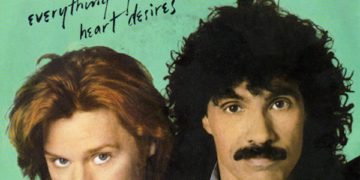
  • Daryl Hall & John Oates, “Everything Your Heart Desires”

Again, Daryl Hall & John Oates figure prominently here. “Dreamtime” was a blast of un-H&O-like power pop at a time when big-city Top 40 radio was becoming more dance-oriented. “Everything Your Heart Desires” sounded out-of-place, too, among the hair bands and new jack swing acts of 1988, but it was the duo’s first single on Arista, a label known for the strength of its radio promotion team, and managed to become No. 3 on the Hot 100 (in an era before monitored airplay) and the No. 72 song of the year. Even then, the industry regarded it as a “work record,” not a “real hit.”

Then there are the true “turntable hits,” usually not from core artists — up-tempo songs that just sounded good on the radio for a while. “Don’t Want to Fall In Love” by Jane Child, No. 2 in early 1990, is a definingly great radio record. It pains me that the album got only to No. 49 at the time. It also saddens me that it usually finishes at the bottom of any radio-station research now. And I’m clearly not the only one, because radio stations still want to include it in music testing; I never dissuade them, just in case.

Some Songs Bend Space and Time: A lot of the songs that endure now are helped by their presence in big movie soundtracks seen by people who might not have even lived through them as currents. Even then, it’s a relative handful — “Footloose” but not “Holding Out for a Hero.” (Then again, the former was a bigger hit to begin with.) It’s the same case with TV commercials and movie syncs in the last 15 or so years. Music supervisors anointed a lot of songs, but only a few became “Chasing Cars” or “How to Save a Life.”

Then there are those songs that are remakes or sound retro to begin with, which also confuse the time/space continuum. One common trait among songs on the Lost 100 is that they were throwbacks at the time — “Crying” by Don McLean, “This Little Girl” by Gary “U.S.” Bonds. Again, there are exceptions. “The Longest Time” by Billy Joel endures at radio; “An Innocent Man” makes the Lost 100.

There was a lot of love among ROR readers for “This Little Girl.” Even a decade ago, that song had a presence on WCBS-FM New York. For a while, it was the perfect song for an Oldies/Classic Hits programmer trying to make a station more contemporary — an ‘80s song that sounded like a ‘60s song. (Being written by Bruce Springsteen helped, too.) It was the same as PDs of the era embracing “The Lion Sleeps Tonight” by Robert John, so they didn’t have to play the bigger, but older, Tokens hit. It’s why “Kokomo” and not “God Only Knows” or “Good Vibrations” represents the Beach Boys at radio now.

In general, though, those are now the songs that radio programmers are trying to escape because “they sound old.” Being reissued as the result of hit movies in the ‘80s definitely gave “Twist and Shout,” “Stand by Me,” and “Do You Love Me” much more currency than other songs from the early ‘60s. Those songs might still test in music research, along with “What a Wonderful World” (recorded in 1968, but not an American hit until 1988 and Good Morning Vietnam), but radio wants to move on anyway.

Pop/Rock Has A Quorum: It’s been long noted that pop/rock crossovers are the songs that endure most, often disproportionate to their airplay at the time. Those songs have the advantage of airplay at Classic Rock, Classic Hits, “Adult Hits” stations like Bob- and Jack-FM, and often Adult Contemporary stations. Beyond that, many Classic Hits stations typically use their listener research to look at the strength of genres overall. Often, a ‘80s pop/rock grouping of songs and/or the ‘80s new wave/MTV/rock will do better than an “’80s pop” catch-all that often contains at least one Hall & Oates song used to signify the era.  So even when “Maneater” does well in a radio station’s music library testing, some Classic Hits stations are more likely to prioritize Bon Jovi over Hall & Oates, even if they play both.

Who Put Broadcast Radio in Charge? For a lot of readers, all these machinations are just making them glad to be SiriusXM subscribers or Spotify users. Having worked in the radio-research business for nearly two decades, I can only say that music research has generally borne itself out over the years. Stations that have had access to research have generally done better than those that do not. And for those Jack- or Bob-FM type stations that like to surprise and delight from time to time, knowing what the hits are in the first place makes it easier to take calculated chances.

Beyond that, even music lovers often like the hits, and can’t agree on the songs below them. As veteran newsman Peter King wrote, “Most of these should stay lost as far as I’m concerned, but many are on my iPod so what the hell.” It was typical for readers to agree that 80% of the Lost 100 were lost for cause. But there was no consensus on what should stay. One commenter gave a pass to three songs — Steve Winwood, “Don’t You Know What the Night Can Do”; Hall & Oates, “Family Man”; and Bob Seger, “Shame on the Moon.” If your own three “gimme” songs match, the two of you should chat.

Chances are, however, that your forgotten faves are different, which is why it’s hard for radio to go deeper. One favorite story is the Washington, D.C., councilman whose printed all-time top 10 was dominated by “Carry On Wayward Son”-level Classic Rock warhorses, with two exceptions: “Words” by the Monkees — a lost 1967 near-hit B-side — and Eddie Rabbitt’s yacht/country “Suspicions.” “Words” is an all-time favorite, while I might let “Suspicions” play once if I heard it, but I rarely do. 

It is certainly possible as time goes on, other audio outlets will do more to set the agenda, particularly by the time that Taylor Swift’s hits become oldies. As radio fragments, its competitors won’t be as able to create a shared experience, or need to. “Blueberry Faygo” and “The Box” and other hits that streaming helped create, are a shared experience among younger listeners now, and they may not need a quorum going forward. For now, how a song endures is a mix of not just your childhood memories, but those of everybody else who shares your radio station, including some listeners who have no memories of that song as a current hit at all.


Share This:

  • Share on LinkedIn (Opens in new window) LinkedIn
  • Share on Facebook (Opens in new window) Facebook
  • Share on X (Opens in new window) X
  • Share on Threads (Opens in new window) Threads
  • Share on Reddit (Opens in new window) Reddit
  • Print (Opens in new window) Print
  • Email a link to a friend (Opens in new window) Email
  • More
  • Share on Mastodon (Opens in new window) Mastodon
  • Share on Bluesky (Opens in new window) Bluesky
  • Share on Telegram (Opens in new window) Telegram
  • Share on WhatsApp (Opens in new window) WhatsApp
  • Share on Pocket (Opens in new window) Pocket
Sean Ross

Sean Ross

Sean Ross is a radio business researcher, programming consultant, conference speaker, and a veteran of radio trade journalism at Billboard, Radio & Records, M Street Journal, and others. For more than a decade, his weekly writings have been collected in the Ross On Radio newsletter; subscribe for free here. https://tinyurl.com/mhcnx4u

Comments

Log In

Join Now | Lost Password?

Comments 8

  1. jaxxalude's avatar jaxxalude says:
    6 years ago

    Question is: was there ever that much of a shared experience to begin with?
    I’m asking this, Sean, as you are a person who had close contact with R&B radio back in the day and, as you said countless times, witnessed the days when huge R&B (and later BET) smashes would end up virtually ignored by Top 40 radio – and MTV itself, which was the real “shared experience” for quite a lot of people in their days.

    Loading...
    Reply
    • StogieGuy's avatar StogieGuy says:
      6 years ago

      Not sure that I entirely agree with you on this. There were a ton of R&B hits that crossed over to Top 40, and I am not just referring to the obvious ones that “oldies” formats used to play to death. Look at old charts and listen to old airchecks from the 1960’s and 1970’s. While somewhat dependent on where you lived back then, a lot of the songs that you would have heard (and probably liked) are now only heard on urban ac formatted stations – and even then on throwback shows, like V-103’s Old School Sunday or WDAS-FM’s awesome “Wide Wonderful World of Butter”.

      As a kid, I lived in the suburbs of northern VA. In the Top 40 days, my locals were WPGC, WEAM and real local WEEL. I also used to seek out WOL and WEBB (James Brown’s AM in Baltimore) for deeper music. But all shared many of the same songs. Later on in time, the shared experience splintered with the descent of CHR in the late 70’s/early 80’s. Yes there was MTV, but for the longest time they NEVER touched anything that wasn’t rock or New Wave. IIRC, it was MJ and Prince that broke that barrier (and it still skewed heavily toward rock). But it was the closest thing to a shared experience at that time because everyone in high school or college watched it.

      I would argue that there really isn’t a similar shared experience for today’s teens. They may use the same technologies and the same social media, but cultural phenomena are only “shared” in terms of a social media “share”. Which is not the same thing. Sorry for rambling, but it’s hard to agree and disagree at the same time without an explanation.

      Loading...
      Reply
  2. radiomatt1's avatar radiomatt1 says:
    6 years ago

    The eras that produce the most lost hits often correlate with periods where popular music is transitioning between the relevance of two generations: During the early 80s, ACified CHR radio focused on Boomer adults, seemingly clueless about what emerging Generation X teens wanted to hear until MTV figured it out. The pre-Beatles 60s hits were primarily for the last of the Silent Generation kids sandwiched between the Boomers and the Greatest Generation. “Louie Louie” might have hinted at Rock’s future, but Johnny Angel did not. It wouldn’t surprise me at all to hear The Backstreet Boys or even The Spice Girls ultimately endure, as millennial youth drove their appeal, while all those quirky alt-pop titles form the late 90s geared towards Xers vanish.

    During these generational transition eras, it is almost always the older generation whose favored hits fade, even though that distinction is often hard to decipher when songs are currents. In 30 years, we might be discussing why Post Malone no longer tests, even if “tests” means parsing streaming data or scanning brain wave activity.

    Loading...
    Reply
  3. slimmons's avatar slimmons says:
    6 years ago

    Let’s take “Family Man” as an example. A concurrent hit with “Every Breath You Take”, “Electric Avenue”, “Faithfully”, “I’m Still Standing” and others still heard today. While not everyone listening remembers these songs in real time, most of those that do would hear “Family Man” and probably get a kick out of it. I understand the need for research and that there’s no consensus on what the 20% of lost songs that shouldn’t be are. But does playing something like “Did It In a Minute” once an hour or daypart really chase away more people than playing “I Love Rock N Roll” or Don’t You Want Me” for the millionth time?

    Loading...
    Reply
    • Sean Ross's avatar Sean Ross says:
      6 years ago

      I’m definitely a fan of the strategic use of “hits plus variety,” “art plus science,” etc. Increasingly, the enemy is familiarity. I remember “Did It in A Minute” as a hit on par with most of the others; I was surprised to see some FB comments from people who’d never heard it. It will be interesting to see what tradeoffs listeners make between hits and repetition when they go back to the office–have they listened to less radio, such that hit-after-hit will be okay again? Or will they have gotten in the habit of every day being no-repeat, at least musically?

      Loading...
      Reply
    • David @ USC's avatar David @ USC says:
      5 years ago

      Did It In a Minute is such a catchy Daryl Hall & John Oates track representative of their overhaul sound that it still befuddles me why it did not scale greater heights at the time when they were pop royalty, as well as now when it has sadly earned too much in lost factor metrics.

      Loading...
      Reply
  4. fedacct's avatar fedacct says:
    2 years ago

    I wonder why rock hits test better than pop/dance songs. Personally, I’d rather hear the dance/pop stuff.

    You are right on target with “Everything Your Heart Desires”. When I heard this song when it was first out, I thought “They’re done!” There are a lot bad songs out there that get pushed up by the momentum of an artist’s previous output. Most of the songs on Paula Abdul’s Spellbound fit that category. The follow-up to that, Head Over Heels, I thought was a good recording, but with that lost momentum she didn’t have a chance.

    Loading...
    Reply
    • Sean Ross's avatar Sean Ross says:
      2 years ago

      Right, Paula Abdul’s “Crazy Cool” was one of several examples of early ’90s artists deciding to give the audience their old sound once it was too late. (George Michael, too.)

      Loading...
      Reply

Leave a ReplyCancel reply

Recent Headlines

105.7 The Fan WJZ-FM Baltimore

Scott Jameson To Depart 105.7 The Fan Baltimore

January 21, 2026
Nielsen Audio Arbitron

Nielsen Fall & December 2025 Ratings Releases 1/21

January 21, 2026
Mason's Observations Liveline

Mason’s Observations on 2016 & “I Just Might”

January 21, 2026
B96 WBBM-FM Chicago

Sonic Moves To B96 Afternoons As Dash Departs

January 21, 2026
103.7 KSON San Diego

KSON Promotes Jessica Chenoweth To Music Director

January 21, 2026
JT Bosch 96.9 The Kat WKKT Charlotte

WKKT Debuts Mornings With Sarah Lee As Graham Bunn Moves To Middays

January 21, 2026
Load More

RadioInsight Daily

RadioInsight Daily

Get RadioInsight Headlines Direct To Your Inbox At 8pm Eastern Daily.

Please wait...

Thank you for sign up!

Why Hit Songs Become “Lost”

Sean Rossby Sean Ross
June 16, 2020

Why do hit songs become “lost” — songs you heard a lot at the time, but songs you don’t hear on broadcast radio now? It usually starts with radio stations asking listeners what they like. Often, the passage of time has claimed songs that people wanted to hear just a few years ago, but occasionally because not enough time has passed. Sometimes, those songs weren’t all that big in the first place. And even when music lovers wish that radio would go deeper, they can’t work up too much righteous indignation over not hearing some of the songs that did disappear from the airwaves.

Recently, I calculated a “lost factor” for the biggest chart hits of the 1980s, assigning them points based on their placement on Billboard’s year-end top 100, and the amount of spins they receive now in the U.S. and Canada. The resulting 100 Most Lost Songs of the ‘80s and other articles accompanying it were enthusiastically received. I wrote a column anticipating likely questions about methodology, but I realize there are a lot of questions that weren’t answered about why radio abandons some hits in the first place. The most flags were raised on behalf of Daryl Hall & John Oates. Many readers were surprised by how heavily represented the consistent ‘80s hitmakers were in the land-of-the-lost. But the duo tick a number of different boxes, beginning, ironically, with being such consistent hitmakers. For starters …

Why Would Everything Endure Equally? Hit songs aren’t symmetrical in their appeal at the time — some superstar titles spend 18 weeks on the charts, but spend most of that time in the top 5 and in power rotation at radio; some songs take 30 weeks, with only a few of those devoted to saturation airplay. It shouldn’t be any surprise that songs don’t endure evenly over time, but even in recent years, I’ve seen radio programmers try to put together a station’s gold library from chart books, not current listener research. I’ve been asked, “How can it not be a hit anymore? We played the hell out of it at the time.”

Even superstars see their catalogs whittled down to a handful of enduring radio songs. Retweets do not constitute endorsements here, but a decade ago, Stevie Wonder was represented mostly by “Superstition” and “Isn’t She Lovely,” then, as Oldies/Classic Hits radio moved its focus from the ‘70s to the ‘80s, by “Part-Time Lover” and “I Just Called to Say I Love You”

Olivia Newton-John is represented on the radio in the U.S., and even in Australia, primarily by “You’re the One That I Want.” “Physical” is a famous example of a song that didn’t endure, but the Lost 100 research has shown that “Twist of Fate” and “Make a Move on Me” were even more obscured by time.

Prince is a good example of an artist with a lot of songs represented at radio, but “U Got the Look” is less so, and “Batdance” has the No. 21 highest “lost factor” of the ‘80s. Billy Idol is a rare artist with a small catalog of hits that almost all endure now, including some like “Dancing With Myself” that weren’t hits at the time. But even Idol has his lost hits — e.g., “Eyes Without a Face” or “To Be a Lover.”

One issue for Hall & Oates is just that they had more hits than radio and listeners can still make room for. “Maneater” and “Kiss on My List” keep them prominent on the radio. “Out of Touch” still shows up sometimes just because PDs like how it sounds on the radio. Songs on our Lost 100 such as “Family Man” and “Did It in a Minute” are just further down in the pecking order.

Time Wounds All Hits, Then Heals Some Wounds: The passage of time, and particularly the movement of listeners through radio’s 25-to-54-year-old audience target, explains a lot. Top 40 programmers decided they were done with the Bee Gees by 1981. Adult Contemporary programmers brought them back in the mid-‘90s, but even then they played 4-5 songs, rather than an entire catalog. “Stayin’ Alive” was reanimated. “Tragedy” and “Nights on Broadway” were not.

There’s a similar pattern now with mid-to-late ‘90s teen pop. Most stations wouldn’t have even put Spice Girls’ “Wannabe” in their audience research five years ago. Now it’s a song that people love, bolstered by anybody who was 12 years old in 1996 and 36 now. I’ve even heard it on Top 40 stations a few times in recent weeks. But it’s not a deep pool of songs that are heard again. “Everybody (Backstreet’s Back)” by the Backstreet Boys is back. “I Want You Back” by ‘N Sync is not.

No matter how much Taylor Swift struggles at contemporary radio now, it is inevitable that her catalog will be a fixture on the radio again in a decade or so. Her music is a part of too many lives, and eventually the audience that grew up with her won’t care if their kids are still interested or not (and their kids won’t have any input, as they do at today’s CHR). It won’t be every song; probably a half-dozen. But radio and Taylor are almost certainly getting back together.

Time Strikes Twice: Just as contemporary radio turns away from artists after a few years, those stations that play older titles — Classic Hits, Adult Contemporary, even Classic Rock — also sour on titles eventually as listeners age out of the target audience. Disco, including the Bee Gees, came back to the radio in the mid-‘00s, then faded again when AC stations decided to stop playing the ‘70s. It wasn’t long ago that you could count on numerous songs by the Eagles or Fleetwood Mac to test. Increasingly, those catalogs become “Hotel California” and “Dreams” only for some stations.

Radio stations that play older songs tend to want to “cheat younger” when they research listener preferences. Increasingly, the listeners who matter to them are those who were teens in the mid-‘80s to late-‘90s. So a lot of ‘70s songs that were reliable testers a few years ago — say, “Baby Hold On” by Eddie Money — are harder to find on the radio now. Even the once unavoidable Steve Miller Band catalog. You probably haven’t noticed these songs getting scarcer yet. But there are also readers thinking, “’Baby Hold On?’ Do I know that?” Of the readers in their mid-30s commenting on the “Lost 100,” many said they weren’t familiar with every song. But many songs were older than they were.

Some Songs Just Weren’t Real Hits in the First Place: There are certainly midsize hits, or songs that weren’t initially hits at all, that have built and thus endured over time, but they’re the exceptions. There are also a few huge hits that radio and listeners chose to turn their back on over time. Some became instantly unhip (“You Light Up My Life”). Some seemed like pretty defining hit records of the time, and it’s hard to say why Andy Gibb’s “I Just Want to Be Your Everything” endures a little, while “Shadow Dancing,” the very definition of “hit record” and the Summer Song of 1978, is turgid or trifling to some people now.

But many of the lost hits on this list are songs that never spent a sustained amount of time in “power rotation” at radio in the first place. There’s not as much chance for listeners to remember them, much less fondly. One industry reader astutely commented that many of these songs were lesser titles from major artists “forced up the charts by promotion. [There are] a lot of follow-up cuts and duds by superstars.”  Many of the “Lost 100” titles were the first single by an act from a new project following a major hit album. Radio considered them disappointments, and didn’t play them in power rotation, but you can’t often tell from the charts. They include:

  • Men at Work, “Overkill”
  • Madonna, “Who’s That Girl”
  • Jacksons, “State of Shock”
  • Wham, “I’m Your Man”
  • Donna Summer, “Love Is in Control (Finger On The Trigger)
  • Huey Lewis & the News, “Perfect World.”
  • Daryl Hall, “Dreamtime”
  • Daryl Hall & John Oates, “Everything Your Heart Desires”

Again, Daryl Hall & John Oates figure prominently here. “Dreamtime” was a blast of un-H&O-like power pop at a time when big-city Top 40 radio was becoming more dance-oriented. “Everything Your Heart Desires” sounded out-of-place, too, among the hair bands and new jack swing acts of 1988, but it was the duo’s first single on Arista, a label known for the strength of its radio promotion team, and managed to become No. 3 on the Hot 100 (in an era before monitored airplay) and the No. 72 song of the year. Even then, the industry regarded it as a “work record,” not a “real hit.”

Then there are the true “turntable hits,” usually not from core artists — up-tempo songs that just sounded good on the radio for a while. “Don’t Want to Fall In Love” by Jane Child, No. 2 in early 1990, is a definingly great radio record. It pains me that the album got only to No. 49 at the time. It also saddens me that it usually finishes at the bottom of any radio-station research now. And I’m clearly not the only one, because radio stations still want to include it in music testing; I never dissuade them, just in case.

Some Songs Bend Space and Time: A lot of the songs that endure now are helped by their presence in big movie soundtracks seen by people who might not have even lived through them as currents. Even then, it’s a relative handful — “Footloose” but not “Holding Out for a Hero.” (Then again, the former was a bigger hit to begin with.) It’s the same case with TV commercials and movie syncs in the last 15 or so years. Music supervisors anointed a lot of songs, but only a few became “Chasing Cars” or “How to Save a Life.”

Then there are those songs that are remakes or sound retro to begin with, which also confuse the time/space continuum. One common trait among songs on the Lost 100 is that they were throwbacks at the time — “Crying” by Don McLean, “This Little Girl” by Gary “U.S.” Bonds. Again, there are exceptions. “The Longest Time” by Billy Joel endures at radio; “An Innocent Man” makes the Lost 100.

There was a lot of love among ROR readers for “This Little Girl.” Even a decade ago, that song had a presence on WCBS-FM New York. For a while, it was the perfect song for an Oldies/Classic Hits programmer trying to make a station more contemporary — an ‘80s song that sounded like a ‘60s song. (Being written by Bruce Springsteen helped, too.) It was the same as PDs of the era embracing “The Lion Sleeps Tonight” by Robert John, so they didn’t have to play the bigger, but older, Tokens hit. It’s why “Kokomo” and not “God Only Knows” or “Good Vibrations” represents the Beach Boys at radio now.

In general, though, those are now the songs that radio programmers are trying to escape because “they sound old.” Being reissued as the result of hit movies in the ‘80s definitely gave “Twist and Shout,” “Stand by Me,” and “Do You Love Me” much more currency than other songs from the early ‘60s. Those songs might still test in music research, along with “What a Wonderful World” (recorded in 1968, but not an American hit until 1988 and Good Morning Vietnam), but radio wants to move on anyway.

Pop/Rock Has A Quorum: It’s been long noted that pop/rock crossovers are the songs that endure most, often disproportionate to their airplay at the time. Those songs have the advantage of airplay at Classic Rock, Classic Hits, “Adult Hits” stations like Bob- and Jack-FM, and often Adult Contemporary stations. Beyond that, many Classic Hits stations typically use their listener research to look at the strength of genres overall. Often, a ‘80s pop/rock grouping of songs and/or the ‘80s new wave/MTV/rock will do better than an “’80s pop” catch-all that often contains at least one Hall & Oates song used to signify the era.  So even when “Maneater” does well in a radio station’s music library testing, some Classic Hits stations are more likely to prioritize Bon Jovi over Hall & Oates, even if they play both.

Who Put Broadcast Radio in Charge? For a lot of readers, all these machinations are just making them glad to be SiriusXM subscribers or Spotify users. Having worked in the radio-research business for nearly two decades, I can only say that music research has generally borne itself out over the years. Stations that have had access to research have generally done better than those that do not. And for those Jack- or Bob-FM type stations that like to surprise and delight from time to time, knowing what the hits are in the first place makes it easier to take calculated chances.

Beyond that, even music lovers often like the hits, and can’t agree on the songs below them. As veteran newsman Peter King wrote, “Most of these should stay lost as far as I’m concerned, but many are on my iPod so what the hell.” It was typical for readers to agree that 80% of the Lost 100 were lost for cause. But there was no consensus on what should stay. One commenter gave a pass to three songs — Steve Winwood, “Don’t You Know What the Night Can Do”; Hall & Oates, “Family Man”; and Bob Seger, “Shame on the Moon.” If your own three “gimme” songs match, the two of you should chat.

Chances are, however, that your forgotten faves are different, which is why it’s hard for radio to go deeper. One favorite story is the Washington, D.C., councilman whose printed all-time top 10 was dominated by “Carry On Wayward Son”-level Classic Rock warhorses, with two exceptions: “Words” by the Monkees — a lost 1967 near-hit B-side — and Eddie Rabbitt’s yacht/country “Suspicions.” “Words” is an all-time favorite, while I might let “Suspicions” play once if I heard it, but I rarely do. 

It is certainly possible as time goes on, other audio outlets will do more to set the agenda, particularly by the time that Taylor Swift’s hits become oldies. As radio fragments, its competitors won’t be as able to create a shared experience, or need to. “Blueberry Faygo” and “The Box” and other hits that streaming helped create, are a shared experience among younger listeners now, and they may not need a quorum going forward. For now, how a song endures is a mix of not just your childhood memories, but those of everybody else who shares your radio station, including some listeners who have no memories of that song as a current hit at all.

Share This:

  • Share on LinkedIn (Opens in new window) LinkedIn
  • Share on Facebook (Opens in new window) Facebook
  • Share on X (Opens in new window) X
  • Share on Threads (Opens in new window) Threads
  • Share on Reddit (Opens in new window) Reddit
  • Print (Opens in new window) Print
  • Email a link to a friend (Opens in new window) Email
  • More
  • Share on Mastodon (Opens in new window) Mastodon
  • Share on Bluesky (Opens in new window) Bluesky
  • Share on Telegram (Opens in new window) Telegram
  • Share on WhatsApp (Opens in new window) WhatsApp
  • Share on Pocket (Opens in new window) Pocket
Sean Ross

Sean Ross

Sean Ross is a radio business researcher, programming consultant, conference speaker, and a veteran of radio trade journalism at Billboard, Radio & Records, M Street Journal, and others. For more than a decade, his weekly writings have been collected in the Ross On Radio newsletter; subscribe for free here. https://tinyurl.com/mhcnx4u

Log In

Join Now | Lost Password?

Comments

Comments 8

  1. jaxxalude's avatar jaxxalude says:
    6 years ago

    Question is: was there ever that much of a shared experience to begin with?
    I’m asking this, Sean, as you are a person who had close contact with R&B radio back in the day and, as you said countless times, witnessed the days when huge R&B (and later BET) smashes would end up virtually ignored by Top 40 radio – and MTV itself, which was the real “shared experience” for quite a lot of people in their days.

    Loading...
    Reply
    • StogieGuy's avatar StogieGuy says:
      6 years ago

      Not sure that I entirely agree with you on this. There were a ton of R&B hits that crossed over to Top 40, and I am not just referring to the obvious ones that “oldies” formats used to play to death. Look at old charts and listen to old airchecks from the 1960’s and 1970’s. While somewhat dependent on where you lived back then, a lot of the songs that you would have heard (and probably liked) are now only heard on urban ac formatted stations – and even then on throwback shows, like V-103’s Old School Sunday or WDAS-FM’s awesome “Wide Wonderful World of Butter”.

      As a kid, I lived in the suburbs of northern VA. In the Top 40 days, my locals were WPGC, WEAM and real local WEEL. I also used to seek out WOL and WEBB (James Brown’s AM in Baltimore) for deeper music. But all shared many of the same songs. Later on in time, the shared experience splintered with the descent of CHR in the late 70’s/early 80’s. Yes there was MTV, but for the longest time they NEVER touched anything that wasn’t rock or New Wave. IIRC, it was MJ and Prince that broke that barrier (and it still skewed heavily toward rock). But it was the closest thing to a shared experience at that time because everyone in high school or college watched it.

      I would argue that there really isn’t a similar shared experience for today’s teens. They may use the same technologies and the same social media, but cultural phenomena are only “shared” in terms of a social media “share”. Which is not the same thing. Sorry for rambling, but it’s hard to agree and disagree at the same time without an explanation.

      Loading...
      Reply
  2. radiomatt1's avatar radiomatt1 says:
    6 years ago

    The eras that produce the most lost hits often correlate with periods where popular music is transitioning between the relevance of two generations: During the early 80s, ACified CHR radio focused on Boomer adults, seemingly clueless about what emerging Generation X teens wanted to hear until MTV figured it out. The pre-Beatles 60s hits were primarily for the last of the Silent Generation kids sandwiched between the Boomers and the Greatest Generation. “Louie Louie” might have hinted at Rock’s future, but Johnny Angel did not. It wouldn’t surprise me at all to hear The Backstreet Boys or even The Spice Girls ultimately endure, as millennial youth drove their appeal, while all those quirky alt-pop titles form the late 90s geared towards Xers vanish.

    During these generational transition eras, it is almost always the older generation whose favored hits fade, even though that distinction is often hard to decipher when songs are currents. In 30 years, we might be discussing why Post Malone no longer tests, even if “tests” means parsing streaming data or scanning brain wave activity.

    Loading...
    Reply
  3. slimmons's avatar slimmons says:
    6 years ago

    Let’s take “Family Man” as an example. A concurrent hit with “Every Breath You Take”, “Electric Avenue”, “Faithfully”, “I’m Still Standing” and others still heard today. While not everyone listening remembers these songs in real time, most of those that do would hear “Family Man” and probably get a kick out of it. I understand the need for research and that there’s no consensus on what the 20% of lost songs that shouldn’t be are. But does playing something like “Did It In a Minute” once an hour or daypart really chase away more people than playing “I Love Rock N Roll” or Don’t You Want Me” for the millionth time?

    Loading...
    Reply
    • Sean Ross's avatar Sean Ross says:
      6 years ago

      I’m definitely a fan of the strategic use of “hits plus variety,” “art plus science,” etc. Increasingly, the enemy is familiarity. I remember “Did It in A Minute” as a hit on par with most of the others; I was surprised to see some FB comments from people who’d never heard it. It will be interesting to see what tradeoffs listeners make between hits and repetition when they go back to the office–have they listened to less radio, such that hit-after-hit will be okay again? Or will they have gotten in the habit of every day being no-repeat, at least musically?

      Loading...
      Reply
    • David @ USC's avatar David @ USC says:
      5 years ago

      Did It In a Minute is such a catchy Daryl Hall & John Oates track representative of their overhaul sound that it still befuddles me why it did not scale greater heights at the time when they were pop royalty, as well as now when it has sadly earned too much in lost factor metrics.

      Loading...
      Reply
  4. fedacct's avatar fedacct says:
    2 years ago

    I wonder why rock hits test better than pop/dance songs. Personally, I’d rather hear the dance/pop stuff.

    You are right on target with “Everything Your Heart Desires”. When I heard this song when it was first out, I thought “They’re done!” There are a lot bad songs out there that get pushed up by the momentum of an artist’s previous output. Most of the songs on Paula Abdul’s Spellbound fit that category. The follow-up to that, Head Over Heels, I thought was a good recording, but with that lost momentum she didn’t have a chance.

    Loading...
    Reply
    • Sean Ross's avatar Sean Ross says:
      2 years ago

      Right, Paula Abdul’s “Crazy Cool” was one of several examples of early ’90s artists deciding to give the audience their old sound once it was too late. (George Michael, too.)

      Loading...
      Reply

Leave a ReplyCancel reply

Recent Headlines

105.7 The Fan WJZ-FM Baltimore

Scott Jameson To Depart 105.7 The Fan Baltimore

January 21, 2026
Nielsen Audio Arbitron

Nielsen Fall & December 2025 Ratings Releases 1/21

January 21, 2026
Mason's Observations Liveline

Mason’s Observations on 2016 & “I Just Might”

January 21, 2026
B96 WBBM-FM Chicago

Sonic Moves To B96 Afternoons As Dash Departs

January 21, 2026
103.7 KSON San Diego

KSON Promotes Jessica Chenoweth To Music Director

January 21, 2026
JT Bosch 96.9 The Kat WKKT Charlotte

WKKT Debuts Mornings With Sarah Lee As Graham Bunn Moves To Middays

January 21, 2026
Load More
  • Taylor University Broadcasting, Inc.

    Afternoon Drive Show Co-Host and Assistant Production Director 

    Taylor University Broadcasting, Inc.
    Fort Wayne, IN
    • Full Time
  • Eagle Communications, Inc.

    Sports and Production Director

    Eagle Communications, Inc.
    North Platte, NE
    • Full Time
  • Kansas Broadcast Company

    Morning Show Host / News Anchor/Sales

    Kansas Broadcast Company
    Goodland, KS
    • Full Time
  • SOUND Management, LLC.

    Morning Drive On-Air Personality/Duo

    SOUND Management, LLC.
    South Bend, IN
    • Full Time
  • Cox Media Group

    General Sales Manager

    Cox Media Group
    Tampa, FL
    • Full Time
  • NRG Media

    Operations Manager

    NRG Media
    Lincoln, NE
    • Full Time
  • About RadioInsight
  • Privacy Policy
  • Terms of Service

Copyright ©2025 RadioInsight / RadioBB Networks

Welcome Back!

Login to your account below

Forgotten Password? Sign Up

Create New Account!

Fill the forms below to register

*By registering into our website, you agree to the Terms & Conditions and Privacy Policy.
All fields are required. Log In

Retrieve your password

Please enter your username or email address to reset your password.

Log In
No Result
View All Result
  • Headlines
    • Format Changes
    • People & Places
    • Station Sales
    • FCC Applications
    • Domain Insight
  • Ratings
    • Nielsen Audio
    • Eastlan Ratings
  • Jobs
    • View Jobs
    • Submit A Job
    • Job Dashboard
  • Sean Ross
  • Subscriptions
    • Subscription Info
  • Contact Us
  • Login
  • Sign Up

Copyright ©2025 RadioInsight / RadioBB Networks

This website uses cookies. By continuing to use this website you are giving consent to cookies being used. Visit our Privacy Policy.
%d