




 I’ve been in this business long enough to have watched every trend come and go. New formats, new consultants, new research methodologies promising to crack the code of audience retention. But the one constant that never goes out of style, the one thing that separates shows that last from shows that fade, is authenticity.
Not the marketing version of authenticity, where a station slaps “real radio” on a billboard. I mean the actual, uncomfortable, unscripted kind. Hosts who share what’s really happening in their lives, good and bad. Shows built around real people instead of manufactured moments. That’s the stuff listeners can feel, even if they couldn’t tell you why.
The Trust Account
Think of the relationship between a host and a listener like a bank account. Every honest moment, every real story, every time a host admits they don’t have it all figured out, that’s a deposit. Trust builds slowly, one honest break at a time, and it’s worth more than any single great bit or perfectly produced segment.
Once that trust account has enough in it, something interesting happens. The listener stops thinking of the person on the radio as “the host.” They start thinking of them as friends. And people don’t abandon friends because a streaming app offers more songs per hour.
Real Callers, Real Stakes
There are services in this industry that offer stations professional actors to voice “callers.” Well produced, perfectly paced, always hitting their marks. I get the appeal. It’s tidy, it’s predictable, and I’m not here to tell anyone their approach is wrong.
But I’ll say this plainly: it’s not the same thing, and listeners know the difference, even when they can’t articulate it. A real caller stumbles over their words sometimes. They laugh at the wrong moment. They mention a detail nobody scripted because it actually happened to them an hour earlier. That imperfection is the tell. It’s proof of life on the other end of the phone.
A show built on real callers is making a bet that reality is more compelling than polish. Every day, that bet has to pay off live, with no safety net. It’s harder. It’s messier. And it’s exactly why it works.
Sharing the Life, Not Just the Job
The hosts who build the deepest connections with their audience aren’t the ones who show up, hit their marks, and go home. They’re the ones willing to let listeners in on the actual texture of their lives, the good days and the rough ones. A host who talks about a bad breakup, an engagement, a sick parent, a small personal win, is handing the audience a reason to care about what happens to them next. That’s not oversharing. That’s the job.
Two shows I work with lean into this in very different ways, but the principle underneath is identical. TJ, JBo, Kenny, and Heather on The TJ Show have built a genuine cast of characters that listeners follow the way they’d follow friends through a season of their lives. And on Liveline, Mason built his entire show around the premise that the caller is the star, not him, taking real people, live, every single night, no script, no safety net.
Neither show is chasing authenticity as a gimmick. It’s just how they operate, and the ratings and affiliate growth both shows have seen are the byproduct of that trust, not the goal of it.
Why This Matters More Now
Every station is competing with an algorithm that can curate a perfect, commercial-free listening experience in seconds. Radio can’t win a fight over convenience or catalog size. It was never going to. What radio can offer, what it has always offered, is a human being who actually knows what’s going on, who remembers your name, who’s had a bad day too.
That’s not a small advantage. It’s the only one that can’t be replicated by a playlist algorithm, no matter how good the recommendation engine gets.
The Bottom Line
Authenticity isn’t a programming tactic you can bolt onto a show that’s missing it. It has to be the foundation. Real hosts sharing real lives. Real callers with real stakes. Consistency, day after day, that slowly turns a listener into a friend.
That’s not the easy path. Scripted moments are predictable. Real ones aren’t. But predictable doesn’t build trust, and trust is the only thing keeping a listener from tapping over to a playlist. Build the trust, and the rest tends to take care of itself.
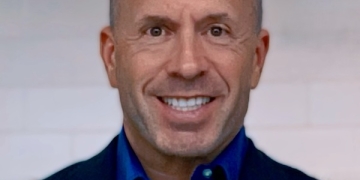
Scott Meyers is the VP of Entertainment for Radiocraft, LLC. He developed his career and reputation through the creation, building, and launch of nationally syndicated programming. He currently manages the syndication efforts of The TJ Show, Liveline, and other programs. Additionally, he is a radio station owner and a partner in “Star 94.3” in Kauai, Hawaii. He is featured in numerous books on radio syndication, including “Go Syndicate Yourself: From Local to National — Six Steps and Countless Secrets to Radio Syndication” by Randy “R-Dub!” Williams (2020), as well as in both John Tesh’s “Intelligence For Your Life” (2008) and “Relentless: Unleashing a Life of Purpose, Grit, and Faith” (2020). Reach out to him at [email protected]