




 “Radio and podcasting aren’t competitors. They’re the ultimate combination.”
That’s the opening brief for “The Audio One-Two Punch: How Radio and Podcasting Work Together,” set to open the second day of Radiodays North America. The fourth RDNA takes place in Toronto May 5-6.
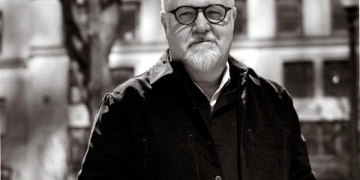
Sounds Profitable’s Tom Webster, who came to prominence in radio research before becoming one of podcasting’s chief authorities, is gearing the session to broadcasters who still treat podcasting as “the other,” rather than just another of their audio offerings. Here’s Webster’s preview of the panel, as well as his thoughts on the relationship between broadcasting and podcasting, radio’s opportunity to drive the long-delayed growth of music podcasting, and what radio has to offer to the medium.
ROR: What is this session going to show about the relationship between podcasting and radio?
 WEBSTER: I’m going to be focusing on a number of different categories of brand metrics: awareness, trust, attention, action. A lot of the research we put out is obviously very podcast-focused, but what I’m doing in this particular presentation is to pull out some podcast and radio metrics to show how they operate differently.
Podcasting is better at some things than radio — there’s an engagement and a trust that’s a bit higher, but radio is equally good at some things and better at other things. The premise of this isn’t a podcast rah-rah talk, but instead how a broadcast entity, which likely owns and operates podcasts as well, could package them both intelligently, not using podcasts as added value but treating them as separate components in an integrated audio campaign.
ROR: What are the valuable things that radio is bringing to podcasting?
WEBSTER: Reach is the big one. Reach has the largest gap. Also, attention. When you ask people if they can recall a specific ad, the number-one answer amongst 22 different other ad-supported media is podcasting, but both AM/FM/broadcast and streaming do very, very well.
[We also see] streaming AM/FM do a little better than broadcast AM/FM [on various metrics]; that’s not endemic to the technology or the platform. That’s more about the audience that’s aggregated around them, and [streaming’s] younger audience tends to be more positive.
ROR: Broadcast radio still has the power to help podcasts be found, but often those attempts take the form of lengthy stopsets that are one podcast ad after another. I can’t imagine that’s doing much to move the needle.
WEBSTER: Well, if it’s a 10-minute stopset with 10 podcast ads, you’re right, it doesn’t. Honestly, I think this is a case where the cobbler’s children have no shoes. If you were to ask a skilled marketer what to do there, it would be to pick a champion and put all your weight behind that. To pick one great on-ramp podcast to start to migrate people to the behavior. That’s one thing that iHeart did really well a few years ago with the Ron Burgundy podcast.
If there’s a lesson to be learned, it’s that you can’t promote everything at once, because then you’re trying to sell the behavior. At this point, [those who continue to choose radio] are not really [potential] converts to podcasting. They’re interested in the content that they like and the topics they already know they want.
That’s where the utility/catch-up radio usage of podcasting can really be sold. That’s someplace where Europe is far ahead of us, because that kind of catch-up radio usage is much more deeply cemented in most European markets than it is here in the States.
ROR: The few attempts at doing an “all-podcast” format on broadcast radio here have been relatively short-lived. Could they have done better with bigger-name shows or with better signals? Or is it solving a problem that doesn’t exist?
WEBSTER: I think it’s stupid, and you can quote me on that. A podcast is designed inherently to be an on-demand medium … The real answer is to make spoken-word content on broadcast radio more diverse. It’s currently confined to politics and personal finance and whatever brokered AM does these days with gardening and accounting.
The impulse to put more diverse topics on talk radio is the right one, but calling it a podcast sets up an expectation that just isn’t there. I think it’s gimmicky, and I think it’s destined to be just a tertiary thing.
ROR: Several years ago, at Country Radio Seminar, you put out the call for broadcasters to do more with music-themed podcasts. Has the industry made any progress on that?
WEBSTER: Not really. It’s still a tremendously underserved category. I think it would help if the battleships that lock horns on royalties would engage over fair use of music clips … There are some platforms that have an advantage. If something is a Spotify-native podcast or a YouTube-native podcast, those licensing deals are already in place.
Even without that, there are so many great music personalities. Rick Beatto has four million followers on YouTube, and nobody had heard of him before. He’s just a musician and a producer who does great content. Imagine if you could get musicians people had heard of to do that kind of work. There are some artists who, even in an audio podcast without music entirely, I would want to hear their stories, and those are relationships that radio has. Those are strings that radio can pull.
Part of that is going to involve continuing to explore video. Ultimately, even broadcast radio needs to have a video strategy.
ROR: Is there a final piece of advice for radio to be more effective in its podcasting efforts over the next year?
WEBSTER: I think there’s an awful lot of local storytelling content … When you’re in podcasting, you have a higher risk tolerance, while a lot of commercial radio stations are run by large groups that may not have the resources to take swings and risks like that on broadcast radio. But if you can grow your own original podcast, there is a pipeline to go from podcast to broadcast. That pipeline is a way to mitigate some of that risk, in the same way that the podcast to Hollywood IP pipeline has.
A special Ross on Radio readers rate is available for Radiodays North America registration. Click here and enter ROROFFER.