




This is first in a series about the future of digital content on radio.
 A couple weeks ago I had the privilege of speaking at the annual College Broadcasters Inc. convention on a panel regarding the best station websites and digital content strategies.
While I went in there with the expectation to discuss the types of content that college radio stations should be focusing on, as I prepped by looking back at all the sites I’ve worked with it quickly became frustratingly obvious how nothing has really changed in over two decades and if anything has gone backwards.
In addition to publishing RadioInsight, I have spent the past twenty years building platforms and content strategies for stations and shows across the radio industry and other companies associated with radio in some form. I was a wannabe Program Director with no interest in being on-air, so I took my passion for the medium and my digital proficiency to take the elements of programming a station into a visible form.
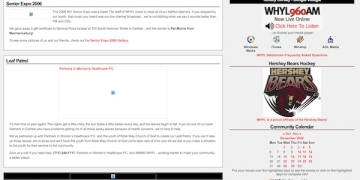
One of the first station sites I built was for a Full Service Oldies AM in 2006. Pulling it up on the Internet Archive, shows a site that outside of a few cosmetic tweaks and needing to make it responsive for mobile devices, could still work in 2026. In fact, there’s more on the 2006 site to be conducive for listeners and advertisers than the site the station currently uses.
I showed the students the stations in Denver where in 2018 we took them from a non-existent listener database to 10,000 on each station in three months and took website/stream revenue from zero to a few thousand dollars and growing each month along ways to convert the revenue generation strategies for a commercial station into marketing exposure for their college station. How I helped a station in 2022 have a news story about a Dominos Pizza franchise opening in town go viral locally with over 100,000 pageviews even though it was in a city known for some of the best local seafood restaurants in the country.
But none of that really matters now. We as an industry as a whole have mostly decided that web content and finding ways to engage listeners beyond the on-air product are not important. Even Townsquare Media, which led the path for how to drive listeners to a station’s website and app has cut back significantly along with cuts to the local on-air talent it used to write said content as their goal to convert those business leads into other digital marketing tools has been successful. Others were victims to station businesses losing their ways. Under Emmis, New York’s “Hot 97” was one of the top Hip Hop culture blogs in the country built off the radio brand. After the MediaCo cuts earlier this month, all of the content being produced for it and WBLS has the same one byline.
With external marketing budgets nearly non-existent, using all pieces of your brand to drive listeners and increase revenue should still be important. The problem is most of your content is not all being optimized to be shared and archived and that’s something I’ll address.
So how do we reinvent a station’s digital presence to catch up to where we are now? Upcoming installments will focus on metadata, stations and shows doing less with more, how to increase digital revenue, and spotlight some of the sites potentially leading the way. With that in mind, please share in the comments some examples of stations who you believe are leading the way digitally in 2026 and going forward and what they are doing.