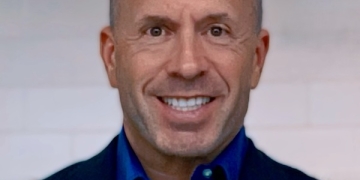





 Liveline with Mason Kelter recently celebrated its fifth anniversary. Currently, it’s at 65 affiliate stations. Earlier this year, the show, created by industry legend and former Open House Party host John Garabedian, moved to Gemini XIII’s United Stations Radio Networks for representation under syndication veteran Scott Meyers.
Last week, Garabedian, Gemini XIII, Meyers, and syndicated host TJ Taormina announced the formation of Radiocraft LLC, managing syndicated programming across multiple formats, platforms, and dayparts domestically and internationally. Now, Meyers shares his experiences with Liveline, as well as his thoughts about where syndication fits in on the programming landscape. Kelter’s column, Mason’s Observations, returns from vacation next week.
During radio’s “golden era,” live overnight shows and weekends were where programmers cultivated their pool of up-and-coming air talent for their stations. Then, deregulation and the debt incurred by consolidating broadcasters, led to a quarter-century of endless RIFs to trim expenses, impacting the quality of local programming.
In today’s climate of tightened budgets and reduced staff, stations are constantly asked to do more with less. Due to the scarcity of top-tier air talent within the limited budgets local stations have to work with, syndication has become a smart and scalable way to supercharge a station’s on-air product without compromising listener engagement or brand integrity.
Syndication isn’t a dirty word; it’s a tool. And like any tool, its value entirely depends on how it is used. When thoughtfully applied, syndication becomes a powerful asset, enabling local stations to maintain high-quality programming, stretch limited budgets, and stay competitive in an increasingly competitive audio landscape. And now, syndication matters more than ever.
Listeners come to radio for connection and companionship. If someone wants a music-only experience, they can log on to Spotify or YouTube for customized music selection and no commercials! Radio’s most compelling feature is that it is a companion. Compelling personalities, whether they’re local or syndicated, create appointment listening. They tell stories. They engage with callers. They entertain and inform. They give away prizes. They become a part of the listener’s daily life, and they CONNECT. That’s the real magic of radio. And it’s what great syndication delivers.
Local vs. syndicated is not an either/or. For more than two decades, I’ve helped build and place syndicated programming on hundreds of stations across the country. I’ve always said the same thing to local programmers. “If you can find a local talent who is as compelling as the nationally syndicated personalities that I’m offering–and you can produce that local show at the same or lower cost–then by all means, go local. If you can’t, a syndicated show is an outstanding option.”
 I’m fortunate to work with three such shows. The TJ Show (which is approaching 100 affiliates in under two and a half years), The Jubal Show, and Liveline, which has doubled its station count in just the past six months (and is about to sign its 65th affiliate). What do programmers like most about these three shows? The hosts are engaged. They don’t just deliver a great show–they actively work with affiliate programmers to localize content, brainstorm promotions, and build market-specific strategies.
About a year and a half after launching The TJ Show, I kept hearing from stations that show was excelling for them in the daytime, but they weren’t satisfied with the evening options they had explored. Coincidentally, around that time, I ran into John Garabedian at Morning Show Boot Camp. He told me about Liveline and suggested that when I got home, I should spend some time listening.
After a few days, I was sold—the excitement of a live night show, the energy—that was what evening radio was like when I was growing up! I drove to Boston to see the show live in the studio, and what normally would have taken 3- 1/2 hours ended up taking about six due to the inclement weather, but it was 100% worth it. I was amazed watching Mason perform his live-radio magic, taking listener calls while chopping up audio from previous calls, answering listeners’ questions about songs, all off the top of his head! Meanwhile, I’m Googling the answers, and he was spot-on every time!
Hearing the crowd in the studio cheer every time a caller won a contest was incredible. I’ll also add that he always has a bunch of friends in-studio, so when the listeners hear the cheers and noise-makers, Mason isn’t just pushing a button; those are actual real people. It was live, exciting, and it was real!
How many stations, big or small, still offer a truly live night show? One with phones, contests, giveaways, and real-time listener interaction? It’s rare these days. And yet Mason and Liveline provide exactly that–nightly energy and engagement, without the staffing costs of producing the same quality show locally.
It’s not about choosing syndication over local content. It’s about using syndication strategically – to deliver the most magnetic on-air product, protect what matters most and to significantly enhance your station’s overall appeal. Using a killer syndicated morning show can allow you to retain the legendary afternoon host who has been part of your station’s DNA for years. Or a proven syndicated afternoon (or night) program lets you allocate more resources to a strong, engaging local morning show. Either way, you’re making smart use of your assets to strengthen your station’s connection with listeners.
It’s not just the show. It’s the support. The best syndicated programs don’t just send audio files and call it a day. They partner with affiliates. They’re responsive, collaborative, and committed to helping your station win.
When a station submits liners or custom local promo requests to a syndicated program, turnaround shouldn’t take weeks. It shouldn’t even take more than a day or two. Stations deserve support. Any syndicator worth their salt knows this and prioritizes prompt, consistent service to help every affiliate maximize the partnership. If a program isn’t supporting its affiliates with that level of service, a station would be wise to consider other options.
Syndication isn’t a compromise. It’s an opportunity to add greatness to your lineup, an opportunity to elevate your sound, optimize your budget, and provide your audience with genuinely compelling content. The best syndicated programs aren’t generic. They’re dynamic, customizable, and dedicated to making your station sound as local and engaging as possible.
Used wisely, syndication doesn’t endanger local radio. It’s a lifeline.
Scott Meyers is the VP of Entertainment for Gemini XIII Media and a partner in Radiocraft LLC.
Mr. Meyers developed his career and reputation through the creation, building, and launch of nationally syndicated programming. He currently manages the syndication efforts of The TJ Show, Liveline, and other programs. Additionally, he is a radio station owner and a partner in “Star 94.3” in Kauai, Hawaii. He is featured in numerous books on radio syndication, including “Go Syndicate Yourself: From Local to National – Six Steps and Countless Secrets to Radio Syndication” by Randy “R-Dub!” Williams (2020), as well as in both John Tesh’s “Intelligence For Your Life” (2008) and “Relentless: Unleashing a Life of Purpose, Grit, and Faith” (2020). Reach out to him at Scott@MeyersMedia.com









TJ is in a league all his own qualitatively and quantifiably.
I’m such a huge fan, because I discovered his show on an affiliate and was shocked and surprised how much I loved the show. I knew about his history in Boston, and when I heard about the expansion, I thought, oh another top 40 show.Oh great, where is the second date update, celebrity gossip,and the unjustified narcissism? He has none of that, he talks about things that adults go through on a daily basis and it feels like it’s the easiest thing to do.
I’m rooting for TJ, he broke out of the CHR mold and became successful, it’s kind of like one of us actually won. Definitely a nice break from the Ijocks.
Yes.. COMPANIONSHIP and shared experiences.. that’s what makes the connection !
Scott Meyers’ reflections on syndication are thoughtful and clearly rooted in deep experience. There’s no question that some syndicated programming can add value when used strategically. In certain cases, these shows bring energy and consistency that stations might struggle to replicate with limited resources. But the bigger conversation—the one we need to have more honestly—is about what’s been lost when syndication becomes the default rather than the exception.
What’s often overlooked is the disconnect between content and commerce. If stations were to take a fresh look at their bottom line—asking not just how well a syndicated show sounds, but whether it’s truly converting into local revenue—they might find the return doesn’t quite match the pitch. Syndication often seems inexpensive because it fills time without requiring a paycheck, but it also consumes valuable ad inventory, limits local flexibility, and can dull the station’s unique identity.
There are experienced professionals out there—people who have lived this business, built formats, connected with audiences, and sold spots—who are ready and willing to be part of something local again. People like me, who aren’t looking for a stepping stone or a resume builder. We’re looking for a home. We want to contribute to a station, raise our families in one place, and pour our experience into building something sustainable. We’re not hard to find, but we’re often overlooked in favor of what feels like a safer, simpler solution.
Of course, it’s understandable that stations need to stretch dollars. But if the books were opened and sales teams were encouraged to be candid about which programs truly generate local business, a more accurate picture of a station’s financial health might emerge. That could change how programmers approach their content lineup—and open doors to reintroducing authentic, local voices.
It’s also worth acknowledging—respectfully—that Mr. Meyers has a direct business interest in the success of syndicated shows. That’s not a criticism; it’s simply context. The programs he references are, after all, the very ones he’s charged with promoting. Framing their success as a broad industry solution can, understandably, sound more like a sales pitch than a neutral industry analysis.
Radio was never meant to be generic. Its magic has always been in the local, the live, the human. Syndication can play a supporting role, but it cannot replace the connection a station builds when it invests in people who live, work, and care about the community they serve. The talent is out there. Sometimes, all it takes is the courage to look past the spreadsheet and take a chance on it.