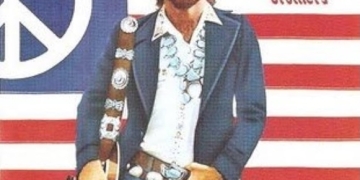





 The WAKY Louisville sale first came to my attention as an e-mail whose preview pane read only as “WAKY Sold To … ” until I clicked through. I was glad the sentence ended with “a group of investors headed by Randy Michaels,” since that’s not always how such teasers end. (The last major sale, after all, was Tampa’s the Shark going from Beasley to K-Love.)
The last time I was moved to comment on the broader landscape of radio, it was during the first year of COVID, when just hanging in there was an accomplishment. The extinction event is more a steady trickle of disheartening news — a station sold or turned off this week, a retirement or a passing of a radio friend the next (or the next day). It only makes me more determined to say the things that need to be said as we head into the July 4 weekend.
If you’ve read any Ross on Radio column before, you might already know where I stand on some of these issues. I hope you haven’t heard all of this before, but even if you have, there are things here that need to keep being said. This is just the wide-angle look at radio itself. In the weeks to follow, look for one-pagers on the state of programming and streaming.
Despite the weekly discouragements, I still hear radio that I enjoy. Beyond that …
I am optimistic that people will always want what radio does. People will always want companionship, showmanship, and music curation. As Matt Bailey has said, if radio did go away, a future generation would invent it again.
The “radio” franchise is not promised to broadcasters. After more than a decade, most of our competitors still don’t see the value in what we know as “radio,” although sometimes they like the name more than we do. But they have the resources to challenge our franchise if they want to, and broadcasters are clearly challenged in their ability to deliver “radio,” too.
Radio isn’t demolished, but “diminished” has been just as demoralizing. Together, radio still commands a greater share of the audio landscape than individual competitors. The issue is that broadcasters weren’t budgeted to deliver radio on anything less than 1998 budgets. We haven’t yet found the best product we can deliver within our existing capacities, so we do everything a little less well. If that doesn’t work, we hand back our licenses.
There is a model for doing “radio” within our capabilities. The “faux-local” radio we deliver now in many cases would be greatly improved by becoming either truly national, with the power of offering a better shared experience, or truly local, able to protect you from severe weather at times other than morning and afternoon drive. With the right allocation of resources, most communities could have both.
Personality is the way forward, but not the only way, and spotload will defeat our best efforts. Knowing that personality separates us from streaming does not eliminate the need for better music curation or reduced spotload. Chances are that you have boundaries with even your best friends, or wish you did, and there is a limit to how much you would want them to talk about their accident attorney.
Personality is defined by quality, not quantity, of content. It’s not all two-person afternoon shows. There are lot of successful Mainstream AC stations where “personality” still happens in brush strokes over a song intro. Conversely, there are a lot of hosts now empowered to stop the music for “content breaks” without much content.
We need to be honest with ourselves. We deflect the spotload question by saying that we should improve the quality of commercials, but don’t do that either. We have spent the last 25 years promoting “better living through voicetracking,” and pointing out, when challenged, that “live and local” doesn’t always win. Sometimes people are sincere in that belief. More often, we should finally stop positioning a budget issue as an aesthetic one. That goes for the use of AI in radio, too.
I hope your best friend is not a chatbot. Two years later, we seem to understand that an AI personality is not a substitute for the real companionship that can still be our calling card, although I suppose it’s possible that I’m hearing really great AI personality and just don’t know it. (AI DJs have not yet allowed Spotify to strip away radio’s companionship franchise.) AI’s best use has proven to be on the radio station back end, and the best thing it could do for us is make it possible to hire more talent.
Radio needs to take control of the technology we have. The specter of AI is even more frightening when simple automation regularly frustrates programmers. Streaming stopset replacement has been a problem for 20+ years. I live near Springfield, N.J., but my favorite streaming platform thinks I live near Eugene/Springfield, Ore., based on an ad I’m often served. Streaming degrades even the 14-units-an-hour FM experience. It is, in particular, an example of doing everything a little worse.
Radio needs to offer a better streaming product. What that might look like will be a column unto itself later this month. (Radioinsight’s Lance Venta has some thoughts on Audacy joining iHeart Radio this week, however.) There are encouraging developments, but for the most part, our response to the irresistibility of our competitors has been just to run more “download our app” and smart-speaker promos.
Broadcasters need to protect “radio,” not just AM. Automakers took aim at all of radio, not just AM, which makes our legislative interest in only demanding “AM in every car” baffling, particularly as broadcasters turn off AM stations every week. If we are sincere about the importance of AM, we would come up with a national plan that covers both engineering and content to make them more viable for the broadcasters who remain. A refurbished AM is hard to imagine, but so, once, was a revitalized downtown.
Commitment is a great starting place, but only that. I am heartened by the sale of Bell Media’s Canadian medium-market stations to smaller groups who want to be in those markets. I was happy about the WAKY news as well. That said, as Stephen King’s and Delilah’s moves away from ownership shows us, there’s not a lot that even the most committed broadcasters can do without resources and industry unity.
Deregulation has not been the fix for the last 30 years. As such, it is hard not to be dubious when the industry’s only hopes for revitalization are pinned to having more of it. If your six-station cluster has achieved any economies of scale that allow it greater viability, why are you still broadcasting from the sponsored studios of 1-800-INJURED?
Radio needs to come to an understanding with the music industry. Over the last decade, music companies have used the streaming model to circumvent radio while still hocking it on an annual basis for a performance royalty. I am not in favor of that. If you had discretionary funds, I’d urge spending them on the radio/music research that I offer for a living, although doing more marketing or rehiring on-air talent would be fine, too. I would, however, consider a holistic package that includes the streaming and music licensing royalties that radio already pays in return for an improved stream of product from the labels. (More about that later this month as well.)
Radio needs to stop being ashamed of being radio. It is hard to let our feelings about our medium not be defined by a steady stream of bad news and the presence of so many new choices that are sexier (to somebody). It is also disheartening to hear the sparse, affectless, and often anonymous content meant to mimic the tenor of podcasting or DSPs’ minimal content. Radio’s problems won’t be fixed by hitting the post again, but they also won’t be solved by not hitting the post. Entertainment is part of our difference.
Still to come: the Ross on Radio declarations of principles on music and streaming.








Thanks Sean. This has been one of the best articles I’ve read on how the current state of radio *should* be. Or, put simply – Keep Calm, Carry On.
Thank you, Joe. I think “keep calm and carry on” is table stakes!
Great post and points. I listened with great interest to Rewound Radio’s “WLS/WCFL” rewind over Labor Day the past couple of years. Some hours were just reminiscing of days long ago. But what jumped out at me was the personalities were bigger than life. The stations were out and about. The commercial breaks were short and sweet. In fact they were listenable as an adult today (probably not so much as a kid). And this was music on AM radio.
Satellite radio is a better listening experience than terrestrial radio today. And terrestrial can compete with HD.
There are lessons to be learned here. And you bring some of them up here.