
• Latest
Dave Bethell: A Love Letter To Radio

Dave Bethell: A Love Letter To Radio

29 seconds ago
Civic Media Sage Weil

Civic Media Shuts Down Multiple Stations & Cuts Staffers

14 minutes ago
New Jersey 101.5 WKXW Trenton 94.5 WPST 94.3 The Point WJLK

Lou Russo & Michele Pilenza Move To New Jersey 101.5; Chris Rollins & Joe Hyer To Expand To WJLK & WSJO

2 hours ago
560 WVOC 103.5 Columbia

Kelly Nash Moves To Mornings On WVOC & WSCC

5 hours ago
ADVERTISEMENT
94.7 WQDR Raleigh Durham

Amanda Daughtry Exits Mornings At WQDR-FM

17 hours ago
iHeartMedia

Comprehensive List Of Those Affected By iHeartMedia’s Cuts This Week (Sunday Update)

18 hours ago
Eastlan Ratings

Eastlan Ratings To Add Surveys For Seven Top 50 Markets

3 days ago
Nielsen Audio Arbitron

Nielsen May 2026 Ratings Releases 6/26

3 days ago
102.7 WEBN Cincinnati

KiddChris Show Comes To An End At WEBN

3 days ago
Friends of Georgia Radio Hall of Fame

Dallas McCade & Greg Street Lead 2026 Georgia Radio Hall Of Fame Inductees

3 days ago
KATO Hits Launches After Macarena Stunt In Mankato

Lisa Kaye Exits Radio Mankato After 29 Years

3 days ago
Got News? Let us know at [email protected]
RadioInsight
No Result
View All Result
  • Login
  • Register
  • Headlines
    • Format Changes
    • People & Places
    • Station Sales
    • FCC Applications
    • Domain Insight
  • Ratings
    • Nielsen Audio
    • Eastlan Ratings
  • Jobs
    • View Jobs
    • Submit A Job
    • Job Dashboard
  • Sean Ross
  • Subscriptions
    • Subscription Info
  • Contact Us
SUBSCRIBE
NEWSLETTER
RadioInsight
  • Headlines
    • Format Changes
    • People & Places
    • Station Sales
    • FCC Applications
    • Domain Insight
  • Ratings
    • Nielsen Audio
    • Eastlan Ratings
  • Jobs
    • View Jobs
    • Submit A Job
    • Job Dashboard
  • Sean Ross
  • Subscriptions
    • Subscription Info
  • Contact Us
No Result
View All Result
RadioInsight
No Result
View All Result

Dave Bethell: A Love Letter To Radio

Dave Bethellby Dave Bethell
June 29, 2026

Dave BethellI’ve been thinking a lot about radio this week.

Not the business of radio. Not the quarterly earnings calls. Not the strategy decks, the restructures, the synergistic alignment or whatever phrase is being used this month to explain why fewer people are being asked to do more work.

I’ve been thinking about actual radio.

The radio that gave so many of us the bug in the first place.

The radio that woke you up for school. The radio that made you late for work because you wanted to hear the end of a bit, a song, a contest, a call, a story. The thing that somehow knew how to be ridiculous at 7:20 in the morning and deeply human by 7:23.

Radio has always been more than transmitters, towers, spots and songs. At its best, it’s companionship. The voice in the dark when you can’t sleep. The person who tells you the weather is turning, the roads are closing, the world is just a bit broken right now, and somehow makes you feel less alone while it happens.

Radio has saved lives during wars, storms, fires and floods. It has built trust over generations. It has kept lonely people company at 3am. It has made people laugh when they really needed to. It has made people unexpectedly cry when a song or story landed in exactly the right way. It has told us what music mattered, what artists were breaking, what everyone would be talking about tomorrow.

And behind all of that, always, are people.

That’s what makes the latest wave of cuts so hard to watch. Not just one company. Not just one market. The pattern has been slowly playing out across the industry for years now. Restructures, consolidations, reductions, reorgs. Each round takes something with it that doesn’t show up in the press releases.

The names matter. The shows matter. The producers, programmers, imaging people, promotions teams, traffic reporters, digital editors, sellers, board ops, weekenders, APDs, music directors and local voices matter. These are not “positions impacted.” These are people who gave years, sometimes decades, to an industry they loved before it ever properly loved them back.

And that’s the thing about radio people. Most of us didn’t get into this because it looked safe. We didn’t choose it because it promised normal work hours, predictable career paths or even serious money. We chose it because we were obsessed.

Some of us grew up dreaming of being the next Rick Dees, Delilah, Howard Stern, Ryan Seacrest, Elvis Duran, Kidd Kraddick. Whoever the voice was that made us think: I want to do that. Some of us were kids with cassette decks making pretend radio shows in our bedrooms before we could properly spell the word “radio.” Some of us accidentally fell into it and discovered, to our own surprise, that we were naturally really good at it.

However we got here, we stayed because there is nothing quite like it.

There is no normal industry where people get this excited about a jingle, a format flip, a perfect segue, a great excitable caller who says something so good it creates radio gold, a client remote that somehow becomes a story you tell for 20 years, or a song that tests through the roof even though every programming person in the building was sure it was dead on arrival.

Radio is silly. Radio is serious. Radio is chaos with a clock. Radio is local fame and national impact. Radio is a producer eating a cold sandwich at 9:46am while trying to find audio from a sports team manager saying that controversial comment and get it on air first. A morning host setting that 3:45am alarm clock with a smile on their face. A PD making impossible decisions with incomplete information and nothing but a gut feeling. A promotions person standing in a parking lot in a mascot costume wondering how their life ended up here.

And most of us, if we’re being honest, have loved every ridiculous minute of it.

That passion is radio’s superpower. It has also, at times, been used against the very people who keep the industry alive.

Because radio people care, they stay late, they take the call, they cover the shift, fix the promo, rewrite the liner, update the website, post the video, answer the listener, help the client, show up for the charity event, and smile through the fact that their department has quietly gone from six people to two.

For years, some corners of the industry have asked extraordinary passion from its people while giving too many of them very ordinary treatment in return.

That is not just one company’s issue. It is a media issue. It is the result of a long road that didn’t start last quarter.

It started with The 1996 Telecommunications Act that changed the ownership landscape and allowed for consolidation on a scale nobody had planned for. Local groups became regional groups. Regional groups became national groups. Local decisions moved further from local buildings. Then came growth, scale, private equity, public trading, digital disruption, debt, bankruptcies, audience fragmentation and a constant pressure to make radio operate more like a spreadsheet than a living, breathing service.

None of that happened overnight. None of it is simple. And it would be unfair to put it all on one company, one executive or one strategy.

But it is also fair to say this: radio gets into trouble when it forgets the listener.

Putting shareholders first might buy you a quarter. Putting the listener first can buy you a generation.

Listeners know when a station still cares about them. They may not know the technical jargon. They may not know who got cut, which show is voice tracked, which promo was made centrally, or which local decision is no longer local. But they sense it. They hear it. They know when a station is part of their life. And they know when the listener is no longer the priority.

Radio survived television. It survived music videos. It survived CDs, Napster, iPods, SiriusXM, Pandora, Spotify, podcasts, TikTok, YouTube, smart speakers, pandemics, recessions, wars, terrorism, consolidation and every “radio is dead” headline ever written.

Radio is still here. Why?

Because of the radio people.

Because talent still matters. Local still matters. Passion and skill still matters. A trusted voice still matters when the weather threatens life, when the freeway shuts down, when the city wins, when the city grieves, when a kid hears their name on the radio, or someone hears a song for the first time and feels their whole life shift in three minutes and thirty seconds.

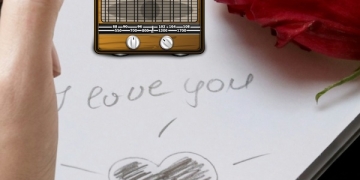
So this is my love letter to radio. But really, it’s a love letter to the people in radio.

To everyone who just lost a job: this was not about your talent. This was not about your worth. This was not the industry voting on whether you mattered. You did and you still do.

To the people still inside the buildings, trying to hold everything together while saying goodbye to friends and colleagues, I see you. Survivor’s guilt is real. Exhaustion is real. Trying to sound upbeat while the hallway gets quieter is real.

To the independent owners, small and medium market operators, programmers, talent, sellers and creators who are still proving every day that radio can be local, profitable, creative and deeply connected to its audience: keep going. You are not the past. You truly may have the blueprint.

Because radio’s future will not be won by stripping the soul out of it.

It will be won by giving talent room to actually be talent. By making local and community matter again. By using technology to support creativity rather than replace the people who have it. By building stations that sound like they belong to the cities they serve, not just serve the companies that own them.

And somehow, even after everything, I still believe.

I believe in the kid making fake shows in their bedroom, in the morning host who made someone laugh on the worst day of their life, I believe in the producer who knows the show sounds better because of a detail nobody else even noticed. I believe in the PD still fighting for the song, the bit, the talent, the listener. I believe in the small-town station that still shows up when the community needs it most. I believe in the big personalities, the local voices, the weird creative people, the lifers, the dreamers and the ones who still get goosebumps when the top of hour fires.

To the people of radio: Thank you for fighting the good fight. Thank you for believing in better days. Thank you for being underpaid, underappreciated and still somehow emotionally overinvested in a medium that has given all of us more highs, lows and stories than we could ever explain to someone who hasn’t lived it.

You are what makes radio great.

And as long as radio still has people like you in it, it still has a future worth fighting for.

Dave Bethell is the C.O.O. Of TM Studios.
Share This:

  • Share on LinkedIn (Opens in new window) LinkedIn
  • Share on Facebook (Opens in new window) Facebook
  • Share on X (Opens in new window) X
  • Share on Bluesky (Opens in new window) Bluesky
  • Share on Threads (Opens in new window) Threads
  • Share on Reddit (Opens in new window) Reddit
  • Print (Opens in new window) Print
  • Email a link to a friend (Opens in new window) Email
  • More
  • Share on Mastodon (Opens in new window) Mastodon
  • Share on Telegram (Opens in new window) Telegram
  • Share on WhatsApp (Opens in new window) WhatsApp
Dave Bethell

Dave Bethell

Dave Bethell has built a career around understanding what makes radio sound, feel and connect. Starting in the UK, he worked across imaging, production, voiceover and every kind of airshift before becoming one of the most heard imaging voices in British commercial radio, voicing almost every major commercial radio station in the country and ultimately becoming the official voice of the London 2012 Olympic Games. In 2010, Dave founded Beds & Beats, a radio production company and music library later acquired by BMG in 2016. He moved permanently to California in 2014 and, in 2020, acquired the legendary TM Studios from Cumulus Media and Westwood One, where he now serves as Co-Owner and COO. A lifelong radio obsessive, Dave brings a rare mix of presenter instinct, production craft, brand strategy and commercial radio experience, and shares that passion with nearly 100,000 followers on Instagram at @voicedave.

Comments

Log In

Join Now | Lost Password?

Leave a ReplyCancel reply

Recent Headlines

Civic Media Sage Weil

Civic Media Shuts Down Multiple Stations & Cuts Staffers

June 29, 2026
New Jersey 101.5 WKXW Trenton 94.5 WPST 94.3 The Point WJLK

Lou Russo & Michele Pilenza Move To New Jersey 101.5; Chris Rollins & Joe Hyer To Expand To WJLK & WSJO

June 29, 2026
560 WVOC 103.5 Columbia

Kelly Nash Moves To Mornings On WVOC & WSCC

June 29, 2026
94.7 WQDR Raleigh Durham

Amanda Daughtry Exits Mornings At WQDR-FM

June 28, 2026
iHeartMedia

Comprehensive List Of Those Affected By iHeartMedia’s Cuts This Week (Sunday Update)

June 28, 2026
Eastlan Ratings

Eastlan Ratings To Add Surveys For Seven Top 50 Markets

June 26, 2026
Load More

RadioInsight Daily

GET RADIOINSIGHT HEADLINES DIRECT TO YOUR INBOX EVERY EVENING.

Newest Jobs

  • Riverfront Broadcasting

    Multiple Positions

    Riverfront Broadcasting
    Rapid City, SD
    • Full Time
  • Baltimore Public Media

    Environmental Reporter

    Baltimore Public Media
    Baltimore, MD
    • Full Time
  • Eagle Communications, Inc.

    News and Sports Reporter/Broadcaster

    Eagle Communications, Inc.
    Manhattan, KS
    • Full Time
  • Mid-West Family La Crosse

    Account Executive

    Mid-West Family La Crosse
    La Crosse, WIL
    • Full Time
  • Saga Communications - Spencer Media Group

    Full-time News Reporter/Play-by-Play Announcer

    Saga Communications - Spencer Media Group
    Spencer, IA
    • Full Time
  • N/A

    Imaging Voice

    N/A
    Remote
    • Freelance

Dave Bethell: A Love Letter To Radio

Dave Bethellby Dave Bethell
June 29, 2026

Dave BethellI’ve been thinking a lot about radio this week.

Not the business of radio. Not the quarterly earnings calls. Not the strategy decks, the restructures, the synergistic alignment or whatever phrase is being used this month to explain why fewer people are being asked to do more work.

I’ve been thinking about actual radio.

The radio that gave so many of us the bug in the first place.

The radio that woke you up for school. The radio that made you late for work because you wanted to hear the end of a bit, a song, a contest, a call, a story. The thing that somehow knew how to be ridiculous at 7:20 in the morning and deeply human by 7:23.

Radio has always been more than transmitters, towers, spots and songs. At its best, it’s companionship. The voice in the dark when you can’t sleep. The person who tells you the weather is turning, the roads are closing, the world is just a bit broken right now, and somehow makes you feel less alone while it happens.

Radio has saved lives during wars, storms, fires and floods. It has built trust over generations. It has kept lonely people company at 3am. It has made people laugh when they really needed to. It has made people unexpectedly cry when a song or story landed in exactly the right way. It has told us what music mattered, what artists were breaking, what everyone would be talking about tomorrow.

And behind all of that, always, are people.

That’s what makes the latest wave of cuts so hard to watch. Not just one company. Not just one market. The pattern has been slowly playing out across the industry for years now. Restructures, consolidations, reductions, reorgs. Each round takes something with it that doesn’t show up in the press releases.

The names matter. The shows matter. The producers, programmers, imaging people, promotions teams, traffic reporters, digital editors, sellers, board ops, weekenders, APDs, music directors and local voices matter. These are not “positions impacted.” These are people who gave years, sometimes decades, to an industry they loved before it ever properly loved them back.

And that’s the thing about radio people. Most of us didn’t get into this because it looked safe. We didn’t choose it because it promised normal work hours, predictable career paths or even serious money. We chose it because we were obsessed.

Some of us grew up dreaming of being the next Rick Dees, Delilah, Howard Stern, Ryan Seacrest, Elvis Duran, Kidd Kraddick. Whoever the voice was that made us think: I want to do that. Some of us were kids with cassette decks making pretend radio shows in our bedrooms before we could properly spell the word “radio.” Some of us accidentally fell into it and discovered, to our own surprise, that we were naturally really good at it.

However we got here, we stayed because there is nothing quite like it.

There is no normal industry where people get this excited about a jingle, a format flip, a perfect segue, a great excitable caller who says something so good it creates radio gold, a client remote that somehow becomes a story you tell for 20 years, or a song that tests through the roof even though every programming person in the building was sure it was dead on arrival.

Radio is silly. Radio is serious. Radio is chaos with a clock. Radio is local fame and national impact. Radio is a producer eating a cold sandwich at 9:46am while trying to find audio from a sports team manager saying that controversial comment and get it on air first. A morning host setting that 3:45am alarm clock with a smile on their face. A PD making impossible decisions with incomplete information and nothing but a gut feeling. A promotions person standing in a parking lot in a mascot costume wondering how their life ended up here.

And most of us, if we’re being honest, have loved every ridiculous minute of it.

That passion is radio’s superpower. It has also, at times, been used against the very people who keep the industry alive.

Because radio people care, they stay late, they take the call, they cover the shift, fix the promo, rewrite the liner, update the website, post the video, answer the listener, help the client, show up for the charity event, and smile through the fact that their department has quietly gone from six people to two.

For years, some corners of the industry have asked extraordinary passion from its people while giving too many of them very ordinary treatment in return.

That is not just one company’s issue. It is a media issue. It is the result of a long road that didn’t start last quarter.

It started with The 1996 Telecommunications Act that changed the ownership landscape and allowed for consolidation on a scale nobody had planned for. Local groups became regional groups. Regional groups became national groups. Local decisions moved further from local buildings. Then came growth, scale, private equity, public trading, digital disruption, debt, bankruptcies, audience fragmentation and a constant pressure to make radio operate more like a spreadsheet than a living, breathing service.

None of that happened overnight. None of it is simple. And it would be unfair to put it all on one company, one executive or one strategy.

But it is also fair to say this: radio gets into trouble when it forgets the listener.

Putting shareholders first might buy you a quarter. Putting the listener first can buy you a generation.

Listeners know when a station still cares about them. They may not know the technical jargon. They may not know who got cut, which show is voice tracked, which promo was made centrally, or which local decision is no longer local. But they sense it. They hear it. They know when a station is part of their life. And they know when the listener is no longer the priority.

Radio survived television. It survived music videos. It survived CDs, Napster, iPods, SiriusXM, Pandora, Spotify, podcasts, TikTok, YouTube, smart speakers, pandemics, recessions, wars, terrorism, consolidation and every “radio is dead” headline ever written.

Radio is still here. Why?

Because of the radio people.

Because talent still matters. Local still matters. Passion and skill still matters. A trusted voice still matters when the weather threatens life, when the freeway shuts down, when the city wins, when the city grieves, when a kid hears their name on the radio, or someone hears a song for the first time and feels their whole life shift in three minutes and thirty seconds.

So this is my love letter to radio. But really, it’s a love letter to the people in radio.

To everyone who just lost a job: this was not about your talent. This was not about your worth. This was not the industry voting on whether you mattered. You did and you still do.

To the people still inside the buildings, trying to hold everything together while saying goodbye to friends and colleagues, I see you. Survivor’s guilt is real. Exhaustion is real. Trying to sound upbeat while the hallway gets quieter is real.

To the independent owners, small and medium market operators, programmers, talent, sellers and creators who are still proving every day that radio can be local, profitable, creative and deeply connected to its audience: keep going. You are not the past. You truly may have the blueprint.

Because radio’s future will not be won by stripping the soul out of it.

It will be won by giving talent room to actually be talent. By making local and community matter again. By using technology to support creativity rather than replace the people who have it. By building stations that sound like they belong to the cities they serve, not just serve the companies that own them.

And somehow, even after everything, I still believe.

I believe in the kid making fake shows in their bedroom, in the morning host who made someone laugh on the worst day of their life, I believe in the producer who knows the show sounds better because of a detail nobody else even noticed. I believe in the PD still fighting for the song, the bit, the talent, the listener. I believe in the small-town station that still shows up when the community needs it most. I believe in the big personalities, the local voices, the weird creative people, the lifers, the dreamers and the ones who still get goosebumps when the top of hour fires.

To the people of radio: Thank you for fighting the good fight. Thank you for believing in better days. Thank you for being underpaid, underappreciated and still somehow emotionally overinvested in a medium that has given all of us more highs, lows and stories than we could ever explain to someone who hasn’t lived it.

You are what makes radio great.

And as long as radio still has people like you in it, it still has a future worth fighting for.

Dave Bethell is the C.O.O. Of TM Studios.

Share This:

  • Share on LinkedIn (Opens in new window) LinkedIn
  • Share on Facebook (Opens in new window) Facebook
  • Share on X (Opens in new window) X
  • Share on Bluesky (Opens in new window) Bluesky
  • Share on Threads (Opens in new window) Threads
  • Share on Reddit (Opens in new window) Reddit
  • Print (Opens in new window) Print
  • Email a link to a friend (Opens in new window) Email
  • More
  • Share on Mastodon (Opens in new window) Mastodon
  • Share on Telegram (Opens in new window) Telegram
  • Share on WhatsApp (Opens in new window) WhatsApp
Dave Bethell

Dave Bethell

Dave Bethell has built a career around understanding what makes radio sound, feel and connect. Starting in the UK, he worked across imaging, production, voiceover and every kind of airshift before becoming one of the most heard imaging voices in British commercial radio, voicing almost every major commercial radio station in the country and ultimately becoming the official voice of the London 2012 Olympic Games. In 2010, Dave founded Beds & Beats, a radio production company and music library later acquired by BMG in 2016. He moved permanently to California in 2014 and, in 2020, acquired the legendary TM Studios from Cumulus Media and Westwood One, where he now serves as Co-Owner and COO. A lifelong radio obsessive, Dave brings a rare mix of presenter instinct, production craft, brand strategy and commercial radio experience, and shares that passion with nearly 100,000 followers on Instagram at @voicedave.

Log In

Join Now | Lost Password?

Comments

Leave a ReplyCancel reply

Recent Headlines

Civic Media Sage Weil

Civic Media Shuts Down Multiple Stations & Cuts Staffers

June 29, 2026
New Jersey 101.5 WKXW Trenton 94.5 WPST 94.3 The Point WJLK

Lou Russo & Michele Pilenza Move To New Jersey 101.5; Chris Rollins & Joe Hyer To Expand To WJLK & WSJO

June 29, 2026
560 WVOC 103.5 Columbia

Kelly Nash Moves To Mornings On WVOC & WSCC

June 29, 2026
94.7 WQDR Raleigh Durham

Amanda Daughtry Exits Mornings At WQDR-FM

June 28, 2026
iHeartMedia

Comprehensive List Of Those Affected By iHeartMedia’s Cuts This Week (Sunday Update)

June 28, 2026
Eastlan Ratings

Eastlan Ratings To Add Surveys For Seven Top 50 Markets

June 26, 2026
Load More
  • About RadioInsight
  • Privacy Policy
  • Terms of Service

Copyright ©2025 RadioInsight / RadioBB Networks

Welcome Back!

Login to your account below

Forgotten Password? Sign Up

Create New Account!

Fill the forms below to register

*By registering into our website, you agree to the Terms & Conditions and Privacy Policy.
All fields are required. Log In

Retrieve your password

Please enter your username or email address to reset your password.

Log In
No Result
View All Result
  • Headlines
    • Format Changes
    • People & Places
    • Station Sales
    • FCC Applications
    • Domain Insight
  • Ratings
    • Nielsen Audio
    • Eastlan Ratings
  • Jobs
    • View Jobs
    • Submit A Job
    • Job Dashboard
  • Sean Ross
  • Subscriptions
    • Subscription Info
  • Contact Us
  • Login
  • Sign Up

Copyright ©2025 RadioInsight / RadioBB Networks

This website uses cookies. By continuing to use this website you are giving consent to cookies being used. Visit our Privacy Policy.