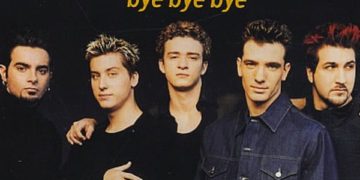





 In 2024, Deadpool & Wolverine became a worldwide box office smash. It also reignited the popularity of NSYNC’s biggest hit, “Bye Bye Bye” which came out in 2000 and hit #1 for weeks. Years later, it remained a staple of Hot AC radio and even continued getting lots of requests on Liveline. Shortly after the movie blew up and the song got back into the Spotify Top 50 where it stayed for over a month, I made this Facebook post on August 10:
I hope every Hot AC and Top 40 is playing NSYNC’s “Bye Bye Bye” as a Gold in high rotation right now. In addition to its already-iconic status as an anthem and eternal pop classic, two things have revived its popularity. The new Deadpool and Wolverine movie which uses the song, and Netflix’ new INCREDIBLE documentary Dirty Pop: The Boy Band Scam which details the life and business practices of Lou Pearlman who managed NSYNC until they left and sued him, which “Bye Bye Bye” was inspired by. The song has been top 30 on Spotify and Shazam in America and the Global charts for two weeks now.
The reactions from radio’s own were mixed, with some saying how a then-23-year-old song didn’t belong on a current-based format. Others said it was okay to sprinkle in as an “event record”, not unlike Christmas music. Then there was the 37-year-old “Running Up That Hill” by Kate Bush, which had eventually become a radio hit two years earlier as a result of Stranger Things. Significantly, that song was a hit with younger people, as that was the show’s target audience. Very few older people requested or even knew the song or why it was popular.
During the first few months of Liveline in 2020, we immediately noticed that Top 40 listeners were generally calling for older songs. Like now, current hit music was weak. That was at the height of the pandemic. In-car listening was way down; TikTok was exploding and played a major role in what radio was playing. As more Liveline affiliates signed on and our request base broadened, it was clear to us that COVID-enhanced streaming had a side effect which altered which songs people favored. Younger listeners spent more time streaming than with radio and discovered many songs from before 2010 which they loved.
Today, more than 70% of the requests we get are for throwbacks, surprisingly with the average era spanning 2005-2013. But at the time, the Top 40 and Hot AC formats were current/recurrent-based and the general feeling was that old songs would drive younger people away. Then again, the songs in question weren’t really the ones you would expect from an AC. We weren’t talking about “3AM” by Matchbox 20 or “You Say” by Lauren Daigle.
I used to DJ weddings every weekend for two years and, like any experienced DJ, came to know which songs get what types of people on the floor. In general, more 18-30 year olds ask for newer songs than older listeners do. On the radio, we generally get more calls from people aged 30-50 than 18-30 because of radio’s current listener base. The important programming point is the common ground between the two demos, the throwbacks they ask for, which were all massive hits years ago and are still loved by the original fans, as well as now the younger ones who recently discovered them.
There are exceptions, of course. Some songs have become so universally loved that they seem to cross every generation. It doesn’t matter if you’re 16 or 60. We can say with certainty that an equal balance of younger and older people still ask for “Ice Ice Baby,” “Waterfalls,” “Baby Got Back,” “No Scrubs,” “Low,” “Mr. Brightside,” and “Bye Bye Bye“, all of which are among our top 50 throwback requests. At the end of every year, we share that whole list and I’m already excited by what will be on it for 2026.
Once you get beyond those mega-hits is when people start to show their age. Notably, some of the biggest songs of all time “Bohemian Rhapsody”, “Smells Like Teen Spirit”, “I Will Always Love You” and “Piano Man” don’t get any requests on Liveline. That’s how you know people have limits and the listener expectation is that we’d never play stuff like that. Very rare exceptions are still big streaming hits today like “Dreams” (1977), “Don’t Stop Believin” (1981), “Iris” (1998) and lately many of Michael Jackson’s biggest hits, four of which have been in our weekly Top 20 requests since the biopic came out two months ago.
In an era of weak current releases, a lot of the same programmers who once doubted that anyone under 30 wanted to hear something older than 2015 have changed their tune and now embrace the universal throwbacks that everyone loves.
Younger listeners have become incredibly good at discovering music. Streaming, social media, video games, TV shows, and recommendation algorithms have completely erased the idea that music belongs to one generation. Now, a great song is simply a great song, whether it came out last Friday or thirty years ago. Ironically, the people who lived through those decades often seem more interested in hearing today’s hits or simply aren’t making requests as frequently. Maybe they’ve heard those songs enough over the years. Maybe they associate them with a specific time in life and don’t think to ask for them anymore. Whatever the reason, it’s fascinating to hear. Classic hit music isn’t surviving just because the original audience refuses to let it go. In many cases, it’s thriving because a completely new generation has adopted it.