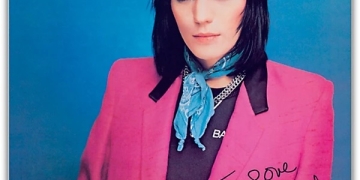





 This week “Take on Me” by a-Ha, “Eye of the Tiger” by Survivor, and “I Love Rock ‘N Roll” by Joan Jett & the Blackhearts are among Mediabase’s top 10 most-played songs at Classic Hits radio. Those three songs usually are. They are clearly enduring hits, but they are also songs that some people in the Ross on Radio audience really hate.
I’ve asked Facebook friends in the recent past to tell me the songs they found irritating. This year, I went for a stronger pejorative: “obnoxious.” I generally save that one for songs with a certain combination of elements — repetition, highly stylized singing (often of the squeaky variety, but sometimes sing-songy, or both), something that pokes the listener sonically, such as a constantly repeated sample.
The song I had in mind when I posed this question was “Misery” by Pupsies, a TikTok phenomenon that ticks most of the above boxes. In this week’s Hit Momentum Report, Matt Bailey sees it as a harbinger of “Generation Z’s future tastes.” I find it obnoxious, but many people felt that way about “Dance Monkey” by Tones & I at the time. I also find it fascinating, and I’m struggling with whether radio should try to acknowledge it.
The dictionary definition of “obnoxious” goes beyond my sense of something aggressively or abrasively irritating to anything found “extremely unpleasant, offensive, or annoying.” Many of the songs people named were the ones typically found atop any worst songs list — “Seasons in the Sun,” “You Light Up My Life,” “I’ve Never Been to Me,” and now “Disco Duck,” seemingly getting an extra boost after topping a Rolling Stone poll earlier this year.
But about two dozen songs that have gone on to become staples of Classic Hits or Adult R&B (and some newer ones still heard in the CHR/Hot AC/AC world) got mentions as well. Some are songs that were polarizing at the time: Europe’s “The Final Countdown,” Chumbawamba’s “Tubthumping,” Minnie Riperton’s “Lovin’ You,” Blue Swede’s “Hooked on a Feeling.” In those cases, the surprise was that those songs stayed.
But reader Clint Smith also hears the mostly-beloved-these-days “Fast Car” by Tracy Chapman (or Luke Combs) as “fingernails on chalkboard.” “Hated that mumbly, low, miserable-sounding voice,” adds Guy Aoki. “Too many syllables to fit the melody and they varied from verse to verse, meaning she was a lazy songwriter, too.”
“Edge of Seventeen” “makes me want to claw off my ears every single time,” says Bob O’Brien. That song became Stevie Nicks’s enduring solo hit, unlike “Stand Back” (universally loved by radio people and seemingly forgotten by anybody else). With prompting, I can hear its irritants — a strident vocal, the “ooh baby ooh” hook — plus it crosses the 4:30 mark. “She sings it like a goat,” says Dave Hoeffel.
In winter ’82, “Edge of Seventeen” and “I Love Rock ‘N Roll” were two of the best songs on Top 40 in a largely miserable period. But for Jeanne Ashley, the latter is a song she “can’t turn off fast enough,” while acknowledging that it’s still a hit for many. “It’s not a rock anthem. It’s a nursery rhyme with amplifiers,” says Wray Ellis.
Bob Smolarek says Bon Jovi’s “You Give Love a Bad Name” “screams at you out of the box.” Mark Pooley mentions “Girls Just Want to Have Fun,”, but most listeners seem to have gotten past how polarizing Cyndi Lauper’s voice was in 1983. Perhaps that’s because so many of the listeners who made that song an all-ages party anthem were not even around for that original discussion.
“’Take on Me’ and ‘Come on Eileen’ make me nauseous,” says Kevin Malvey. The a-Ha hit only seems to have grown in listener esteem over the decades. I suppose you could be irritated by the sustained note that ends it. But several readers chime in to trash “Eileen,” and there were certainly people who didn’t like its “too-ra-loo-ra” chant at the time.
There are several mentions of 4 Non Blondes’ “What’s Up.” That one was controversial too at the time, but it has become an unlikely ’90s consensus title at Classic Hits. Personally, I still groan over the repetition, the screechiness, and the length, but listeners seem far less polarized than they were in 1983. That’s odd to me, since listeners were equally split over “Mmm Mmm Mmm Mmm” by Crash Test Dummies at the time, and they had no problem leaving that one behind.
Ashley doesn’t like hearing “Under the Bridge” by the Red Hot Chili Peppers either. That band has many detractors, especially at Alternative, where their 30-year catalog remains unavoidable. I’ve always been personally surprised that a nearly five-minute dirge about drug addiction was one of the first ’90s songs that fit with “good times, great classic hits.” But I feel that way about “Iris” by the Goo Goo Dolls, too, and nobody disliked that one.
Tom Lawler’s most-obnoxious ’80s candidate is Survivor’s “Eye of the Tiger.” I find that one and Cutting Crew’s “(I Just) Died in Your Arms” hard to sit through these days, but more because of overplay. I also resent how those songs have become records for the ages, when R&B at Classic Hits is often reduced to Prince, Michael Jackson, and one Whitney Houston song.
That said, there were several complaints this time about that body of enduring Classic Hits as a whole. “I don’t know about obnoxious but I’m just tired of all the ’80s hits over and over again. Bon Jovi, Eddie Money, a-Ha, Cutting Crew,” writes Phil Hamburger. “It’s like they are all currents.”
More recent provocations for some readers include Aaliyah’s “Are You That Somebody” with its sampled baby’s cry, Outkast’s “Hey Ya,” Usher’s “Yeah,” Justin Timberlake’s “Can’t Stop the Feeling,” Daft Punk’s “Get Lucky,” and particularly Pharrell Williams’ “Happy.” That song “made my skin crawl after I heard it twice,” says Radioanalyzer’s Mikkel Ottesen Lonstrup, and other readers chime in to second him.
Complaints about recent songs were relatively few in this group. If you’re not seeking out current music on the radio, and that includes many younger listeners, there’s less chance of being subjected to a new megahit without a skip button. Then again, judging from the appearance of “Honey” by Bobby Goldsboro in every list of this sort, some songs that haven’t been on the radio for generations still have the power to provoke.
One recent song that did get mentions is Benson Boone’s “Beautiful Things,” seemingly one of the few ’20s songs that the audience did agree on. Paxton Guy doesn’t like either that or Hozier’s “Too Sweet.” Don Beno appreciates it musically but now admits that it “grated on my nerves” eventually. I do hear “obnoxious” in the stridency of the vocal and the grinding dub-steppy riff in the chorus. Most listeners would probably just go for the other O-word, “overplayed.”
I’ve learned over the last five years that every song has its defenders, both by participating in a Saturday afternoon “American Top 40” group listening session and by the response to my “Lost Factor” columns about how hits endure or fade. Even “Disco Duck,” the most-cited obnoxious song, had an attempted defense. It follows that every song would have its detractors, and it is certainly possible that they’re being given disproportionate weight here.
That said, there were also songs from the Classic Hits safelist that nobody described as obnoxious, including some that are just as burnt for me personally. No reader was provoked by “Don’t Stop Believin’” or “Everybody Wants to Rule the World.” Personally, I’m more turned off by anodyne than aggressive these days, but that wasn’t the question.
Conversely, “obnoxious” isn’t always a stopper for me. The chanting and repetition in “Mickey” by Toni Basil were what I liked on the first listen, but I understood if you didn’t. For a moment in 1982, many of the songs that saved CHR sounded off-putting to somebody, but that turned out to be a problem more for program directors than the audience.
New sounds are supposed to rankle older generations. I’m torn whether the Pupsies song and “hyperpop” in general are indeed the galvanizing music of a new audience. “Misery” does also bear a certain resemblance to this 1962 hit, which was not the Beatles but the thing that the Beatles and Motown saved us from. In the meantime, the most obnoxious thing about “I Love Rock ‘N Roll” or “Yeah!” is that we rarely have hit songs that galvanize the same way now.





“Norman” is definitely one of the all-time worst, and one for my own list. But the songs I have really hated usually are not obnoxious, in-your-face novelties but wretched ballads: “Honey” and “Molly” by Bobby Goldsboro, “Roses Are Red” by Bobby Vinton, etc. Or bathetic bubblegum in the same vein, like “Rocky” by Austin Roberts, which turned up on an old WLNG aircheck I recently found online.
Yeah, these really date me, I guess. If you don’t know these because they’re too old, consider yourself lucky.
The songs I’ve truly disliked over the year–“Never Be the Same” by Christopher Cross or “Looks Like We Made It” by Barry Manilow–are songs I find oppressively boring. It’s mostly ballads, but it can happen with an uptempo hit too, like Justin Timberlake’s “Can’t Stop the Feeling” if it’s generic enough. Those songs often show up at a particularly bad time for pop music, too, so I resent them for taking up space.
Before “Rocky” Austin Roberts Did “Something’s Wrong With Me” which I have always loved as a true “lost hit” After it’s initial chart run no station has played it except the “old” WCBS-FM which played it in the Top 20 count downs for the end of 1972 and once, by my request to the late Bob Shannon!
“Something’s Wrong With Me” may be the biggest song that I was unaware of as a current. I didn’t know Austin Roberts had a hit before “Rocky” until 1977 when I was going through old Billboard charts at a nearby college library. But at that time, my top 40 station was WABC and it was easy to miss songs, even others that they played for a few weeks. I only knew about “My Ding-A-Ling” at the time (but I did know about it) because of kids at school. In the streaming age, I wonder if there’s any kid in the NYC area who’s unaware of “Choosin’ Texas” because Z100 won’t play it.
Charlene’s “I’ve Never Been to Me” – which I thought was a really long airline commercial the first time I heard it on radio – deserves mention here, especially as it was a worldwide phenomenon during that soft early 80s era. And I’ll be the first (maybe only) to admit it was a guilty pleasure.
That song had plenty of advocates–Scott Shannon, John Lander–who often helped break much cooler records as well. I was bugged by that song in 1977 and I didn’t like it coming back at a moment that was already all “Key Largo” and “’65 Love Affair” level hokey. I also didn’t like what we would now call the trad-wife lyric, a man writing about how a woman’s only real choices were “regimented wife” or international harlot, and giving it to his (now ex-) wife to sing. Then again, enough female artists loved it at the time to make it a three-way cover battle. And I consider myself outvoted by the audience, at least until they heard “Don’t You Want Me” and “Tainted Love.”