
• Latest
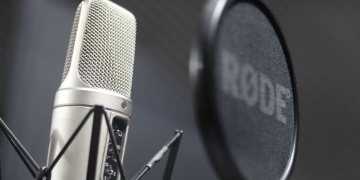
studio microphone for live streaming

Live interaction without lag for call-ins and remotes

8 months ago
560 WVOC 103.5 Columbia

Kelly Nash Moves To Mornings On WVOC & WSCC

2 hours ago
94.7 WQDR Raleigh Durham

Amanda Daughtry Exits Mornings At WQDR-FM

14 hours ago
iHeartMedia

Comprehensive List Of Those Affected By iHeartMedia’s Cuts This Week (Sunday Update)

14 hours ago
ADVERTISEMENT
Eastlan Ratings

Eastlan Ratings To Add Surveys For Seven Top 50 Markets

3 days ago
Nielsen Audio Arbitron

Nielsen May 2026 Ratings Releases 6/26

3 days ago
102.7 WEBN Cincinnati

KiddChris Show Comes To An End At WEBN

3 days ago
Friends of Georgia Radio Hall of Fame

Dallas McCade & Greg Street Lead 2026 Georgia Radio Hall Of Fame Inductees

3 days ago
KATO Hits Launches After Macarena Stunt In Mankato

Lisa Kaye Exits Radio Mankato After 29 Years

3 days ago
680 93.7 The Fan WCNN Atlanta Xtra 106.3 WFOM

John Kinkade To Return To 680 The Fan Atlanta Following Philadelphia Departure

3 days ago
Rob Scorpio Kid Jay 99.1 KGGI Jamn 95.7 KSSX San Diego

KGGI Loses All Three Local Personalties In Cuts

3 days ago
Got News? Let us know at [email protected]
RadioInsight
No Result
View All Result
  • Login
  • Register
  • Headlines
    • Format Changes
    • People & Places
    • Station Sales
    • FCC Applications
    • Domain Insight
  • Ratings
    • Nielsen Audio
    • Eastlan Ratings
  • Jobs
    • View Jobs
    • Submit A Job
    • Job Dashboard
  • Sean Ross
  • Subscriptions
    • Subscription Info
  • Contact Us
SUBSCRIBE
NEWSLETTER
RadioInsight
  • Headlines
    • Format Changes
    • People & Places
    • Station Sales
    • FCC Applications
    • Domain Insight
  • Ratings
    • Nielsen Audio
    • Eastlan Ratings
  • Jobs
    • View Jobs
    • Submit A Job
    • Job Dashboard
  • Sean Ross
  • Subscriptions
    • Subscription Info
  • Contact Us
No Result
View All Result
RadioInsight
No Result
View All Result

Live interaction without lag for call-ins and remotes

Guest Contributorby Guest Contributor
October 20, 2025

studio microphone for live streaming
In the world of radio, live streaming latency is not a vanity metric. It shapes how natural conversation feels, and whether those involved are able to speak in turn or if they will find themselves continually interrupting each other. For phone-ins and street hits, the practical target is a glass-to-glass round trip near 300 to 500 milliseconds. Above about half a second, hosts tend to talk over callers, and echo paths become distracting.

The tech used to facilitate the stream is very important. If all the dialog goes only one way and the host is talking to a passive audience, then a HLS-style distribution with delays that can stretch into the seconds is usually tolerable, but for real conversation, this isn’t going to be sufficient. WebRTC is built for sub-second paths but generally struggles with large audiences, while low-latency HLS is the compromise that scales well to large audiences without having as much delay as regular HLS.

WebRTC vs LL HLS for radio interaction

LL HLS over CMAF commonly reaches about three to seven seconds when tuned carefully. That is excellent for second screen or simulcast video, but still mismatched for talkback. 

WebRTC routinely delivers well under one second when networks are clean and TURN or SFU infrastructure is in place. Still, there are tradeoffs required for this increase. While HLS uses global CDNs and caches, WebRTC demands tighter control of contribution links, NAT traversal, and packet loss concealment. This can make it a lot harder to scale up. A common solution used by many radio stations is to implement a hybrid approach. They use WebRTC for collaboration, call screening, and talent return, while using LL HLS for downstream listeners.

Interface structure reduces join delay

Optimizing transport is half the story. The other half is how quickly users can find the content they are looking for. Gone are the days of slowly rotating an analog dial to tune in to a specific frequency; many users now select their content by tapping on an icon from a selection of options. Still, even with this extra convenience, it’s important for sites providing content of any kind to make sure that their content hub/station page/homepage is intuitive and user-friendly.

Entertainment portals have refined fast-loading grids with consistent entry points, which reduce cognitive delay. Category tiles with intuitive labels often present single-tap starts, clear states for live versus on demand, and predictable navigation flow.

Even when the audio chain is optimized technically, latency can still be introduced by the platform that delivers the experience. This is where radio can learn from other real-time digital industries—not by copying their layouts, but by studying how they manage performance. 

Casino platforms that host online slots know that if a game takes more than a second or two to start, users drop off. To prevent this, they prioritize low-latency asset loading, prefetch animations, reduce handshake requests, and even implement WebRTC or WebSocket connections for instant responses. 

This is performance tuning at the user level, not just the server level. Live dealer games go further, synchronizing video, audio, and player input with sub-second delay using adaptive bitrate and packet-loss concealment. 

Radio sites can apply the same mindset: make the “go live” feed instantly available, reduce buffer inflation on key interaction pages, and ensure the device handshake happens before the moment of engagement. When online slots load fast and respond in real time, users feel “in sync”—the same perception radio needs during live call-ins and remote hits. For a neutral example of performance-focused design, this homepage is a useful reference: the online slots at Slots.lv load quickly and minimize friction, illustrating how speed shapes user confidence.   

In parallel, it’s important to set expectations with listeners. A short explanation to your audience that studio talkback will be in real time but that the public stream runs a few seconds behind will help avoid confusion when callers react on air. This framing helps keep everyone understanding of any delays, especially first-time participants who are juggling a phone, player, and mic permission prompts.

Build a millisecond budget and stick to it

Quantify your target budget end-to-end. A realistic split for a sub-second round-trip is:

  1. Mic to encoder 20 to 40 ms
  2. Codec encode 10 to 30 ms
  3. Transport WebRTC or SFU hop 50 to 150 ms
  4. Optional CDN or cache if hybrid 50 to 200 ms
  5. Player buffer 100 to 250 ms
  6. Return feed to caller 50 to 100 ms

Make sure the final total sums up to less than 500 ms round-trip if possible. Use Opus for two-way paths since it handles loss and jitter gracefully. Keep sample rates locked across consoles, drivers, and browser apps to prevent resampling penalties. When you must serve a large external audience, LL HLS in the three-to-seven second range is realistic on modern stacks, but you should still maintain an always-on WebRTC bus for talkback and IFB-style returns.

Caller audio sync and remote jitter fixes

  1. Prefer wired Ethernet or enterprise-grade Wi-Fi for remotes. Cellular is improving, but variable RF conditions still spike jitter.
  2. Use Opus with forward error correction and packet loss concealment for talkback. It masks micro dropouts better than AAC at similar bitrates.
  3. Pin browser audio devices and sample rates in advance for talent. That avoids surprise resyncs.
  4. Test echo cancellation with the actual IFB return feed. Changes in bus routing can reintroduce howling feedback.
  5. Record and graph round-trip delay per segment. Drift often signals a mis-tuned player buffer or a congested segment of the path.

Closing thoughts

One of radio’s biggest challenges is timing. The best results come from treating latency as an experience, rather than a single metric. Pick the right transport for the job, design the interface so callers click the correct link instantly, and manage a tight millisecond budget. That combination makes high-pressure moments feel easy and keeps your station sounding locked in when it matters most. Of course, once you’ve dealt with the latency issues, you’ll still want to check out some of the current trends in the world of radio so you can make sure your content is engaging and fun for audiences.


Share This:

  • Share on LinkedIn (Opens in new window) LinkedIn
  • Share on Facebook (Opens in new window) Facebook
  • Share on X (Opens in new window) X
  • Share on Bluesky (Opens in new window) Bluesky
  • Share on Threads (Opens in new window) Threads
  • Share on Reddit (Opens in new window) Reddit
  • Print (Opens in new window) Print
  • Email a link to a friend (Opens in new window) Email
  • More
  • Share on Mastodon (Opens in new window) Mastodon
  • Share on Telegram (Opens in new window) Telegram
  • Share on WhatsApp (Opens in new window) WhatsApp
Guest Contributor

Guest Contributor

Comments

Log In

Join Now | Lost Password?

Leave a ReplyCancel reply

Recent Headlines

560 WVOC 103.5 Columbia

Kelly Nash Moves To Mornings On WVOC & WSCC

June 29, 2026
94.7 WQDR Raleigh Durham

Amanda Daughtry Exits Mornings At WQDR-FM

June 28, 2026
iHeartMedia

Comprehensive List Of Those Affected By iHeartMedia’s Cuts This Week (Sunday Update)

June 28, 2026
Eastlan Ratings

Eastlan Ratings To Add Surveys For Seven Top 50 Markets

June 26, 2026
Nielsen Audio Arbitron

Nielsen May 2026 Ratings Releases 6/26

June 26, 2026
102.7 WEBN Cincinnati

KiddChris Show Comes To An End At WEBN

June 26, 2026
Load More

RadioInsight Daily

GET RADIOINSIGHT HEADLINES DIRECT TO YOUR INBOX EVERY EVENING.

Newest Jobs

  • Riverfront Broadcasting

    Multiple Positions

    Riverfront Broadcasting
    Rapid City, SD
    • Full Time
  • Baltimore Public Media

    Environmental Reporter

    Baltimore Public Media
    Baltimore, MD
    • Full Time
  • Eagle Communications, Inc.

    News and Sports Reporter/Broadcaster

    Eagle Communications, Inc.
    Manhattan, KS
    • Full Time
  • Mid-West Family La Crosse

    Account Executive

    Mid-West Family La Crosse
    La Crosse, WIL
    • Full Time
  • Saga Communications - Spencer Media Group

    Full-time News Reporter/Play-by-Play Announcer

    Saga Communications - Spencer Media Group
    Spencer, IA
    • Full Time
  • N/A

    Imaging Voice

    N/A
    Remote
    • Freelance

Live interaction without lag for call-ins and remotes

Guest Contributorby Guest Contributor
October 20, 2025

studio microphone for live streaming
In the world of radio, live streaming latency is not a vanity metric. It shapes how natural conversation feels, and whether those involved are able to speak in turn or if they will find themselves continually interrupting each other. For phone-ins and street hits, the practical target is a glass-to-glass round trip near 300 to 500 milliseconds. Above about half a second, hosts tend to talk over callers, and echo paths become distracting.

The tech used to facilitate the stream is very important. If all the dialog goes only one way and the host is talking to a passive audience, then a HLS-style distribution with delays that can stretch into the seconds is usually tolerable, but for real conversation, this isn’t going to be sufficient. WebRTC is built for sub-second paths but generally struggles with large audiences, while low-latency HLS is the compromise that scales well to large audiences without having as much delay as regular HLS.

WebRTC vs LL HLS for radio interaction

LL HLS over CMAF commonly reaches about three to seven seconds when tuned carefully. That is excellent for second screen or simulcast video, but still mismatched for talkback. 

WebRTC routinely delivers well under one second when networks are clean and TURN or SFU infrastructure is in place. Still, there are tradeoffs required for this increase. While HLS uses global CDNs and caches, WebRTC demands tighter control of contribution links, NAT traversal, and packet loss concealment. This can make it a lot harder to scale up. A common solution used by many radio stations is to implement a hybrid approach. They use WebRTC for collaboration, call screening, and talent return, while using LL HLS for downstream listeners.

Interface structure reduces join delay

Optimizing transport is half the story. The other half is how quickly users can find the content they are looking for. Gone are the days of slowly rotating an analog dial to tune in to a specific frequency; many users now select their content by tapping on an icon from a selection of options. Still, even with this extra convenience, it’s important for sites providing content of any kind to make sure that their content hub/station page/homepage is intuitive and user-friendly.

Entertainment portals have refined fast-loading grids with consistent entry points, which reduce cognitive delay. Category tiles with intuitive labels often present single-tap starts, clear states for live versus on demand, and predictable navigation flow.

Even when the audio chain is optimized technically, latency can still be introduced by the platform that delivers the experience. This is where radio can learn from other real-time digital industries—not by copying their layouts, but by studying how they manage performance. 

Casino platforms that host online slots know that if a game takes more than a second or two to start, users drop off. To prevent this, they prioritize low-latency asset loading, prefetch animations, reduce handshake requests, and even implement WebRTC or WebSocket connections for instant responses. 

This is performance tuning at the user level, not just the server level. Live dealer games go further, synchronizing video, audio, and player input with sub-second delay using adaptive bitrate and packet-loss concealment. 

Radio sites can apply the same mindset: make the “go live” feed instantly available, reduce buffer inflation on key interaction pages, and ensure the device handshake happens before the moment of engagement. When online slots load fast and respond in real time, users feel “in sync”—the same perception radio needs during live call-ins and remote hits. For a neutral example of performance-focused design, this homepage is a useful reference: the online slots at Slots.lv load quickly and minimize friction, illustrating how speed shapes user confidence.   

In parallel, it’s important to set expectations with listeners. A short explanation to your audience that studio talkback will be in real time but that the public stream runs a few seconds behind will help avoid confusion when callers react on air. This framing helps keep everyone understanding of any delays, especially first-time participants who are juggling a phone, player, and mic permission prompts.

Build a millisecond budget and stick to it

Quantify your target budget end-to-end. A realistic split for a sub-second round-trip is:

  1. Mic to encoder 20 to 40 ms
  2. Codec encode 10 to 30 ms
  3. Transport WebRTC or SFU hop 50 to 150 ms
  4. Optional CDN or cache if hybrid 50 to 200 ms
  5. Player buffer 100 to 250 ms
  6. Return feed to caller 50 to 100 ms

Make sure the final total sums up to less than 500 ms round-trip if possible. Use Opus for two-way paths since it handles loss and jitter gracefully. Keep sample rates locked across consoles, drivers, and browser apps to prevent resampling penalties. When you must serve a large external audience, LL HLS in the three-to-seven second range is realistic on modern stacks, but you should still maintain an always-on WebRTC bus for talkback and IFB-style returns.

Caller audio sync and remote jitter fixes

  1. Prefer wired Ethernet or enterprise-grade Wi-Fi for remotes. Cellular is improving, but variable RF conditions still spike jitter.
  2. Use Opus with forward error correction and packet loss concealment for talkback. It masks micro dropouts better than AAC at similar bitrates.
  3. Pin browser audio devices and sample rates in advance for talent. That avoids surprise resyncs.
  4. Test echo cancellation with the actual IFB return feed. Changes in bus routing can reintroduce howling feedback.
  5. Record and graph round-trip delay per segment. Drift often signals a mis-tuned player buffer or a congested segment of the path.

Closing thoughts

One of radio’s biggest challenges is timing. The best results come from treating latency as an experience, rather than a single metric. Pick the right transport for the job, design the interface so callers click the correct link instantly, and manage a tight millisecond budget. That combination makes high-pressure moments feel easy and keeps your station sounding locked in when it matters most. Of course, once you’ve dealt with the latency issues, you’ll still want to check out some of the current trends in the world of radio so you can make sure your content is engaging and fun for audiences.


Share This:

  • Share on LinkedIn (Opens in new window) LinkedIn
  • Share on Facebook (Opens in new window) Facebook
  • Share on X (Opens in new window) X
  • Share on Bluesky (Opens in new window) Bluesky
  • Share on Threads (Opens in new window) Threads
  • Share on Reddit (Opens in new window) Reddit
  • Print (Opens in new window) Print
  • Email a link to a friend (Opens in new window) Email
  • More
  • Share on Mastodon (Opens in new window) Mastodon
  • Share on Telegram (Opens in new window) Telegram
  • Share on WhatsApp (Opens in new window) WhatsApp
Guest Contributor

Guest Contributor

Log In

Join Now | Lost Password?

Comments

Leave a ReplyCancel reply

Recent Headlines

560 WVOC 103.5 Columbia

Kelly Nash Moves To Mornings On WVOC & WSCC

June 29, 2026
94.7 WQDR Raleigh Durham

Amanda Daughtry Exits Mornings At WQDR-FM

June 28, 2026
iHeartMedia

Comprehensive List Of Those Affected By iHeartMedia’s Cuts This Week (Sunday Update)

June 28, 2026
Eastlan Ratings

Eastlan Ratings To Add Surveys For Seven Top 50 Markets

June 26, 2026
Nielsen Audio Arbitron

Nielsen May 2026 Ratings Releases 6/26

June 26, 2026
102.7 WEBN Cincinnati

KiddChris Show Comes To An End At WEBN

June 26, 2026
Load More
  • About RadioInsight
  • Privacy Policy
  • Terms of Service

Copyright ©2025 RadioInsight / RadioBB Networks

Welcome Back!

Login to your account below

Forgotten Password? Sign Up

Create New Account!

Fill the forms below to register

*By registering into our website, you agree to the Terms & Conditions and Privacy Policy.
All fields are required. Log In

Retrieve your password

Please enter your username or email address to reset your password.

Log In
No Result
View All Result
  • Headlines
    • Format Changes
    • People & Places
    • Station Sales
    • FCC Applications
    • Domain Insight
  • Ratings
    • Nielsen Audio
    • Eastlan Ratings
  • Jobs
    • View Jobs
    • Submit A Job
    • Job Dashboard
  • Sean Ross
  • Subscriptions
    • Subscription Info
  • Contact Us
  • Login
  • Sign Up

Copyright ©2025 RadioInsight / RadioBB Networks

This website uses cookies. By continuing to use this website you are giving consent to cookies being used. Visit our Privacy Policy.