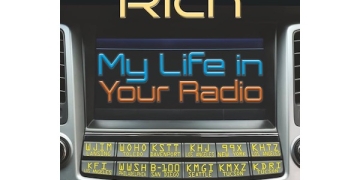





 When Bobby Rich decided to share “My Life In Your Radio,” he enlisted his former morning co-host Pat Gaffey. Rich’s 60-year-career is mostly told as reportage, allowing not just the legendary PD/morning man but other co-workers to weigh in. The story follows Rich to the present day, including the decision that reader favorite KDRI (The Drive) Tucson, Ariz., could never become viable as a standalone station, its eventual sale, and Rich’s radio retirement.
Gaffey’s narrative is punctuated by first-person interludes from Rich ranging from his decision to go into radio to why he loves Tucson (no matter what Linda Ronstadt might have said about her hometown) to stories about all his nine firings. After retiring from the Drive, Rich became an advisor to several friends’ radio stations. Here’s a stylebook he created for on-air personalities, acknowledging the content creator age, in late 2023.
 Being on the air is not the only important content creation position at a radio station. Somebody must also be in charge of setting up the format, determining the music library, and clocking turnover times so the same songs don’t get played too often or not enough.
Someone (the boss a/k/a the program director) has to make big decisions, provide directives to the staff, and make sure they’re followed through properly. I’m talking about philosophical direction, station image, and brand representation (both on air and in the community). The PD has additional responsibility for coaching the DJs for better performance, growth, and improvement.
As in any business, an effective boss needs to understand and be able to handle sensitive employees and members of the public. (By the way, all radio employees and listeners are sensitive!) The PD is accountable for getting the right talent for each air shift, encouraging camaraderie among the staff, often being their cheerleader, and delivering both good news and bad news as necessary. Yes, it’s true, ultimately everything starts at the top.
All those stations where I was the person making those decisions or had a boss who believed in me and trusted me had certain common characteristics.
Many of the things that I tell programmers today not to do are the very same things that I did when I had my biggest successes. Yes, embracing change is a thing.
Here is my never-before-revealed list of do and don’t suggestions for DJs:
- Don’t talk over the intro of every song you play all the way to the vocal. Every jock of a certain age has done this in the past and some are still talking up to the vocal in the 2020s. It’s really hard to stop doing because it’s so damn much fun. But frankly, only other radio people think it’s cool.
- Do talk over some of the intros some of the time, when appropriate. You can still “hit the post” but not the primary lead vocal. It sounds twice as good to the listener because they’re hearing parts of the song that they rarely hear without the DJ talking up every intro.
- Do talk to your listeners as if it were a one–to-one conversation. Avoid “ladies and gentlemen” or “hey everybody.” Steer clear of phrases such as “hi guys” that are overused by YouTube video creators and social media influencers. If you feel the need to identify who you’re talking to, just use “you,” but for the most part, that’s not necessary. Just say what you would if you were talking to someone face-to-face.
- Do know who your target audience is. If you don’t know or aren’t sure, double-check with your manager, program director, operations manager, or station consultant. And if they don’t know either, get out of there fast.
- Don’t go to work for someone who is unaware of radio’s history. While there’s always room for fresh new ideas, every operation needs someone who knows tried and true elements of programming.
- Do love the music you are playing. If you must fake it, at least be believable. Listeners love the music you are playing, that’s why they’re listening! No one wants to hear you copping an attitude. For a jock to say “I hate this song but we have to play it because it’s in power rotation” is self-serving and has no place on a music radio station.
- Do be nice to your listeners. They are your listeners! Without them, you are totally irrelevant. Treat them, all of them, even the difficult and annoying ones, like they are the most important aspect of what you do, because they are! Whether you’re responding to a text, email, or a conversation, they are your customers and you wouldn’t be here without them. If you treat them poorly, they’re going to tell everyone you’re a jerk. Said another way, people won’t necessarily remember exactly what you did or said, but they will always remember how you made them feel. It’s your job to make them feel great! This is especially true when you meet them at an event or a live broadcast.
- Do know what the songs are about, who the artists are, and in the case of oldies even if you’re not old, when they were popular. It helps to know what the lyrics were intended to mean, and how to present the song on the air.
- Do listen to each of the jocks and shows on your station. Get to know them as the listener does so you can effectively cross-promote their shows and convey your positive relationship with them. Listeners love camaraderie between DJs. It makes them feel like you are all friends. Many years ago, a very talented PD taught me the concentric circle theory of cross-promotion. If your listeners really like and relate to you, let them know that you really like and relate to your on-air colleagues, then they will like the other DJs too—because you do!
- Don’t spend a lot of time listening to the station or jocks that are your direct competition. It can do one of two things: make you feel superior to them because you’re so good or make you insecure because they are so good and better than you. Either way, it’s not helpful or authentic. Instead, make it your goal to sound great and fresh and better than yesterday, every day that you’re on the radio.
And, oh, by the way, don’t eat all the food that listeners give you. It’s not that will all make you sick—but most of it will make you fat!
Order My Life In Your Radio here.









Number 7 particularly strikes a chord with me. Our industry We spend tens of thousands of dollars through marketing and product improvement to attract people to our stations through contests, remotes et al, yet deride them as “contest pigs” or laugh at their dedication to what we do. We “BLAST” them with emails, not communicate with them. Imagine if McDonalds treated their best customers as a joke. Has bothered me for years. I reply to every email, send a personal note with any physical prize (or even when I e-transfer tickets) and respond on socials. It seems the least we can do for their engagement.
i wish they were spending thousands of dollars on that