
• Latest
Iyaz Replay

Music On The ‘00s, Part V: Like A Melody On Replay

7 years ago
Nashville Public Radio 90.3 WPLN 91.1 The One WNXP

August 2026 (7/23 – 8/19) Nielsen Audio PPM Ratings Day 4: New High For WPLN

10 hours ago
99.3 WNMF Savannah

Domain Insight 9/11: New Station In Savannah; 101.7 Reasons To Change For Townsquare

13 hours ago
X107.5 Xtreme Radio KXTE Las Vegas Alt Dave Mahoney

KXTE Sets Plans For Move To 107.9

14 hours ago
ADVERTISEMENT
Sunny 106.1 WBBX Pocomoke City

Station Sales Week of 9/11

16 hours ago
550 WGR 107.7 WGR-FM 104.7 Buffalo

WGR To Debut New Lineup

18 hours ago
106.7 The Eagle KTKX San Antonio

August 2026 (7/23 – 8/19) Nielsen Audio PPM Ratings Day 3: Cox Goes 5 For 5 In San Antonio

1 day ago
Hot 97 97.1 WQHT New York MediaCo

Radio Remembers Timothy ‘Buc Wild’ Joseph

1 day ago
95.7 Big-FM WRIT Milwaukee

Green Bay Packers Extend With iHeartMedia Milwaukee

1 day ago
WEBE 108 Westport Bridgeport

Storm N Norman & Paul Pacelli Exit Connoisseur Connecticut

1 day ago
680 104.5 KNBR San Francisco

Greg Papa Returns To KNBR After Last Month’s Cut While Recovering From Cancer

1 day ago
Got News? Let us know at News@RadioInsight.com
RadioInsight
No Result
View All Result
  • Login
  • Register
  • Headlines
    • Format Changes
    • People & Places
    • Station Sales
    • FCC Applications
    • Domain Insight
  • Ratings
    • Nielsen Audio
    • Eastlan Ratings
  • Jobs
    • View Jobs
    • Submit A Job
    • Job Dashboard
  • Sean Ross
  • Subscriptions
    • Subscription Info
  • Contact Us
SUBSCRIBE
NEWSLETTER
RadioInsight
  • Headlines
    • Format Changes
    • People & Places
    • Station Sales
    • FCC Applications
    • Domain Insight
  • Ratings
    • Nielsen Audio
    • Eastlan Ratings
  • Jobs
    • View Jobs
    • Submit A Job
    • Job Dashboard
  • Sean Ross
  • Subscriptions
    • Subscription Info
  • Contact Us
No Result
View All Result
RadioInsight
No Result
View All Result

Music On The ‘00s, Part V: Like A Melody On Replay

Sean Rossby Sean Ross
February 19, 2020


January 2, 2010

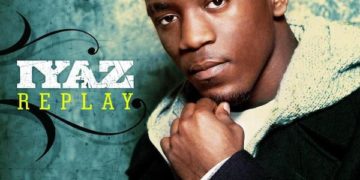
  1. Iyaz, “Replay”
  2. Ke$ha, “Tik Tok”
  3. Owl City, “Fireflies”
  4. Lady Gaga, “Bad Romance”
  5. Jason Derulo, “Whatcha Say”

Iyaz ReplayThe turn of the decade is supposed to be a doldrum in pop music, and a downturn in the fortunes of Top 40. That pattern holds up, more or less, in most of the ’00 years we’ve been looking at since 1960, but the cycles theory is severely challenged by pop music in 2010.

Pop music is awash in party-rock anthems, but still varied — below the top five are Beyoncé, Taylor Swift, Kings of Leon, Kelly Clarkson, Jay-Z, David Guetta, Rihanna, Onerepublic, and Black Eyed Peas. Justin Bieber and Miley Cyrus are both represented — although Bieber is a few years from true pop acceptance. American Idol still matters: Both Adam Lambert and Kris Allen have chart songs.

Top 40 radio is on its biggest building boom of the last 15 years. Arbitron’s PPM metered ratings methodology is being deployed and cume-driven formats are thriving: A format with a mother/daughter coalition like CHR that can be detected by multiple meters in a household is particularly advantaged. For a decade, Top 40 has been largely the province of Clear Channel/iHeart Media. Now both CBS and Cumulus are rapidly deploying second and third CHRs in top 50 markets.

Pandora’s explosion has already started, the release of its iPhone app making it the first serious online-only radio contender. But parents are enjoying sharing music with their kids again, and continuing to model radio usage for them. (And yet, music breaking online is now a decade old phenomenon and Owl City is the latest example.) Parents are probably also in a good mood because America isn’t experiencing a second Great Depression — although pop music’s comeback was in process well before the downturn of 2008-09.

If you were looking for musical signs of trouble in January 2010, perhaps you could look at two co-produced hits in the top five — “Replay” and “Whatcha Say.” Other producers will go far further with this formula than J.R. Rotem, but those songs herald pop music becoming more ethereal and less energetic over the next decade. Imogen Heap was Jason DeRulo’s inspired sample choice. Soon she was Taylor Swift’s collaborator and chilled out pop was in “Style.” (“Replay” was also proof that lyrical repetition—the cheesy, delicious secret weapon in an uptempo song—could be far more unbearable with less tempo.)

The Top 40s that launched in 2009-10 often positioned themselves between Mainstream and Rhythmic — that was a narrow place to begin with. Much of the rhythmic pop that became their center lane sound was music not shared with R&B radio, a precedent established by iHeart’s Kiss-FM stations of a decade earlier. As with the ratings dominance and chart influence of those stations in 2000, the format wars tended to make CHR music narrower, as incumbent stations resolved not to be out-jammed by their new rivals.

Rock had experienced a relatively healthy representation at pop radio in the ‘00s, because of pop/punk. By 2010, that genre was starting to be affected by dance/pop — Cobra Starship, 3Oh!3. For its own part, dance/pop was taking on a more aggressive EDM flavor. What began with “Boom Boom Pow” the year before was becoming what this column dubbed “turbo-pop” and becoming busier and less melodic. In a few years, the frothiness of “Tik Tok” would give way to the joylessness of Ke$ha’s “Blow.” By then, EDM’s superstar DJs were often the lead artists, rather than merely the superstars’ producers.

The end of the late ‘00s/early ‘10s boom was neither on schedule—ending usually about the time in the decade when the good times began—or particularly symmetrical. There were the usual articles about the cycles theory, but I remember thinking that rather than the format peak being consumed in extremes, followed by a reactionary period that led to a doldrums, what we had was an extreme doldrums—more aggressive EDM pop, but also piano ballads and the brief period of Lumineers folksiness. Certainly, the music of the late ‘10s—slow but sludgy and noisy—can be described as “extreme doldrums.”

February 10, 2020

  1. Post Malone, “Circles”
  2. Maroon 5, “Memories”
  3. Dua Lipa, “Don’t Stop Now”
  4. Selena Gomez, “Lose You to Love Me”
  5. Arizona Zervas, “Roxanne”

By mid-2019, pop music was again inspiring optimism, partially because it had reached a place of such unlistenability over the previous few years that the only way left was up. Toward the end of the year, I actually had a medium-market PD tell me he was out of slots for new music, mind-boggling because CHR had tightened to about 15 true currents in many places due to a surfeit of product. But that was speeding up again — in part because labels were willing to work more than one song at a time from certain artists, and because streaming services had so sped up the music discovery process that it simply didn’t make sense to wait five months to decide if a song was a hit.

Whether we are escaping the doldrums or mired in them will take a while to play out, of course. Post Malone may feel a little more up-tempo thanks to “Circles,” but Arizona Zervas is waiting to romance-the-drone in his place. Billie Eilish and Tones and I are creating pop records that are cool to younger listeners, but not yet entirely acceptable to their parents; they may as well still be Roddy Ricch. And teens are hardly thinking out of “The Box” yet.

One thing that became clear to me when looking at “Music on the ‘00s” is the extent to which radio’s internal issues impact the musical landscape. Radio’s internal issues now are being filtered through streaming. Going forward, they will also certainly be shaped by iHeart’s announced intention to rely more heavily on data mining. iHR is promising more local differentiation as a result. Will that be offset by fewer decision makers? There aren’t that many program and music directors practicing music enterprise now.

The cycles theory is seen as a referendum on available product, but how radio reacts has always determined what music is made available. The question now is whether it’s radio or streaming that will shape what the labels offer. After five decades, programmers decided not to participate in a format downturn in 2010, at least for a few years. Now is that their decision to make?

I hope you’ve enjoyed the “Music on the ‘00s” series. Be sure to check out our earlier articles on:

  • 1960 and 1970
  • 1980
  • 1990
  • 2000

Share This:

  • Share on LinkedIn (Opens in new window) LinkedIn
  • Share on Facebook (Opens in new window) Facebook
  • Share on X (Opens in new window) X
  • Share on Bluesky (Opens in new window) Bluesky
  • Share on Threads (Opens in new window) Threads
  • Share on Reddit (Opens in new window) Reddit
  • Print (Opens in new window) Print
  • Email a link to a friend (Opens in new window) Email
  • More
  • Share on Mastodon (Opens in new window) Mastodon
  • Share on Telegram (Opens in new window) Telegram
  • Share on WhatsApp (Opens in new window) WhatsApp
Sean Ross

Sean Ross

Sean Ross is a radio business researcher, programming consultant, conference speaker, and a veteran of radio trade journalism at Billboard, Radio & Records, M Street Journal, and others. For more than a decade, his weekly writings have been collected in the Ross On Radio newsletter; subscribe for free here. https://tinyurl.com/mhcnx4u

Comments

Log In

Join Now | Lost Password?

Comments 3

  1. jaxxalude's avatar jaxxalude says:
    7 years ago

    Remember when MTV became an opportuinity for Top 40 radio to rejuvenate itself? That’s what should have already happened with streaming, I think.
    Just my (admittedly very simplistic) two cents.

    Loading...
    Reply
  2. jaxxalude's avatar jaxxalude says:
    7 years ago

    Remember when MTV became an opportunity for Top 40 radio to rejuvenate itself? That’s what should have already happened with streaming, I think.
    Just my (admittedly very simplistic) two cents.

    Loading...
    Reply
  3. jaxxalude's avatar jaxxalude says:
    7 years ago

    Sorry for the double post!

    Loading...
    Reply

Leave a ReplyCancel reply

Recent Headlines

Nashville Public Radio 90.3 WPLN 91.1 The One WNXP

August 2026 (7/23 – 8/19) Nielsen Audio PPM Ratings Day 4: New High For WPLN

September 11, 2026
99.3 WNMF Savannah

Domain Insight 9/11: New Station In Savannah; 101.7 Reasons To Change For Townsquare

September 11, 2026
X107.5 Xtreme Radio KXTE Las Vegas Alt Dave Mahoney

KXTE Sets Plans For Move To 107.9

September 11, 2026
Sunny 106.1 WBBX Pocomoke City

Station Sales Week of 9/11

September 11, 2026
550 WGR 107.7 WGR-FM 104.7 Buffalo

WGR To Debut New Lineup

September 11, 2026
106.7 The Eagle KTKX San Antonio

August 2026 (7/23 – 8/19) Nielsen Audio PPM Ratings Day 3: Cox Goes 5 For 5 In San Antonio

September 10, 2026
Load More

RadioInsight Daily

GET RADIOINSIGHT HEADLINES DIRECT TO YOUR INBOX EVERY EVENING.

Newest Jobs

  • Cox Media Group

    Morning Show Co-Host

    Cox Media Group
    Athens, GA
    • Full Time
  • Audacy

    On Air Host (95.7 The Fan)

    Audacy
    Houston, TX
    • Full Time
  • iHeartMedia

    Program Director KFBK

    iHeartMedia
    Sacramento, CA
    • Full Time
  • Crawford Broadcasting

    Full-Time 4-7 PM On-Air Host

    Crawford Broadcasting
    Detroit, MI
    • Full Time
  • Byrne Media

    Director of Business Development

    Byrne Media
    Roanoke Rapids, NC
    • Full Time
  • Rubber City Radio Group

    WQMX Evening On-Air Personality

    Rubber City Radio Group
    Akron, OH
    • Full Time

Music On The ‘00s, Part V: Like A Melody On Replay

Sean Rossby Sean Ross
February 19, 2020


January 2, 2010

  1. Iyaz, “Replay”
  2. Ke$ha, “Tik Tok”
  3. Owl City, “Fireflies”
  4. Lady Gaga, “Bad Romance”
  5. Jason Derulo, “Whatcha Say”

Iyaz ReplayThe turn of the decade is supposed to be a doldrum in pop music, and a downturn in the fortunes of Top 40. That pattern holds up, more or less, in most of the ’00 years we’ve been looking at since 1960, but the cycles theory is severely challenged by pop music in 2010.

Pop music is awash in party-rock anthems, but still varied — below the top five are Beyoncé, Taylor Swift, Kings of Leon, Kelly Clarkson, Jay-Z, David Guetta, Rihanna, Onerepublic, and Black Eyed Peas. Justin Bieber and Miley Cyrus are both represented — although Bieber is a few years from true pop acceptance. American Idol still matters: Both Adam Lambert and Kris Allen have chart songs.

Top 40 radio is on its biggest building boom of the last 15 years. Arbitron’s PPM metered ratings methodology is being deployed and cume-driven formats are thriving: A format with a mother/daughter coalition like CHR that can be detected by multiple meters in a household is particularly advantaged. For a decade, Top 40 has been largely the province of Clear Channel/iHeart Media. Now both CBS and Cumulus are rapidly deploying second and third CHRs in top 50 markets.

Pandora’s explosion has already started, the release of its iPhone app making it the first serious online-only radio contender. But parents are enjoying sharing music with their kids again, and continuing to model radio usage for them. (And yet, music breaking online is now a decade old phenomenon and Owl City is the latest example.) Parents are probably also in a good mood because America isn’t experiencing a second Great Depression — although pop music’s comeback was in process well before the downturn of 2008-09.

If you were looking for musical signs of trouble in January 2010, perhaps you could look at two co-produced hits in the top five — “Replay” and “Whatcha Say.” Other producers will go far further with this formula than J.R. Rotem, but those songs herald pop music becoming more ethereal and less energetic over the next decade. Imogen Heap was Jason DeRulo’s inspired sample choice. Soon she was Taylor Swift’s collaborator and chilled out pop was in “Style.” (“Replay” was also proof that lyrical repetition—the cheesy, delicious secret weapon in an uptempo song—could be far more unbearable with less tempo.)

The Top 40s that launched in 2009-10 often positioned themselves between Mainstream and Rhythmic — that was a narrow place to begin with. Much of the rhythmic pop that became their center lane sound was music not shared with R&B radio, a precedent established by iHeart’s Kiss-FM stations of a decade earlier. As with the ratings dominance and chart influence of those stations in 2000, the format wars tended to make CHR music narrower, as incumbent stations resolved not to be out-jammed by their new rivals.

Rock had experienced a relatively healthy representation at pop radio in the ‘00s, because of pop/punk. By 2010, that genre was starting to be affected by dance/pop — Cobra Starship, 3Oh!3. For its own part, dance/pop was taking on a more aggressive EDM flavor. What began with “Boom Boom Pow” the year before was becoming what this column dubbed “turbo-pop” and becoming busier and less melodic. In a few years, the frothiness of “Tik Tok” would give way to the joylessness of Ke$ha’s “Blow.” By then, EDM’s superstar DJs were often the lead artists, rather than merely the superstars’ producers.

The end of the late ‘00s/early ‘10s boom was neither on schedule—ending usually about the time in the decade when the good times began—or particularly symmetrical. There were the usual articles about the cycles theory, but I remember thinking that rather than the format peak being consumed in extremes, followed by a reactionary period that led to a doldrums, what we had was an extreme doldrums—more aggressive EDM pop, but also piano ballads and the brief period of Lumineers folksiness. Certainly, the music of the late ‘10s—slow but sludgy and noisy—can be described as “extreme doldrums.”

February 10, 2020

  1. Post Malone, “Circles”
  2. Maroon 5, “Memories”
  3. Dua Lipa, “Don’t Stop Now”
  4. Selena Gomez, “Lose You to Love Me”
  5. Arizona Zervas, “Roxanne”

By mid-2019, pop music was again inspiring optimism, partially because it had reached a place of such unlistenability over the previous few years that the only way left was up. Toward the end of the year, I actually had a medium-market PD tell me he was out of slots for new music, mind-boggling because CHR had tightened to about 15 true currents in many places due to a surfeit of product. But that was speeding up again — in part because labels were willing to work more than one song at a time from certain artists, and because streaming services had so sped up the music discovery process that it simply didn’t make sense to wait five months to decide if a song was a hit.

Whether we are escaping the doldrums or mired in them will take a while to play out, of course. Post Malone may feel a little more up-tempo thanks to “Circles,” but Arizona Zervas is waiting to romance-the-drone in his place. Billie Eilish and Tones and I are creating pop records that are cool to younger listeners, but not yet entirely acceptable to their parents; they may as well still be Roddy Ricch. And teens are hardly thinking out of “The Box” yet.

One thing that became clear to me when looking at “Music on the ‘00s” is the extent to which radio’s internal issues impact the musical landscape. Radio’s internal issues now are being filtered through streaming. Going forward, they will also certainly be shaped by iHeart’s announced intention to rely more heavily on data mining. iHR is promising more local differentiation as a result. Will that be offset by fewer decision makers? There aren’t that many program and music directors practicing music enterprise now.

The cycles theory is seen as a referendum on available product, but how radio reacts has always determined what music is made available. The question now is whether it’s radio or streaming that will shape what the labels offer. After five decades, programmers decided not to participate in a format downturn in 2010, at least for a few years. Now is that their decision to make?

I hope you’ve enjoyed the “Music on the ‘00s” series. Be sure to check out our earlier articles on:
  • 1960 and 1970
  • 1980
  • 1990
  • 2000

Share This:

  • Share on LinkedIn (Opens in new window) LinkedIn
  • Share on Facebook (Opens in new window) Facebook
  • Share on X (Opens in new window) X
  • Share on Bluesky (Opens in new window) Bluesky
  • Share on Threads (Opens in new window) Threads
  • Share on Reddit (Opens in new window) Reddit
  • Print (Opens in new window) Print
  • Email a link to a friend (Opens in new window) Email
  • More
  • Share on Mastodon (Opens in new window) Mastodon
  • Share on Telegram (Opens in new window) Telegram
  • Share on WhatsApp (Opens in new window) WhatsApp
Sean Ross

Sean Ross

Sean Ross is a radio business researcher, programming consultant, conference speaker, and a veteran of radio trade journalism at Billboard, Radio & Records, M Street Journal, and others. For more than a decade, his weekly writings have been collected in the Ross On Radio newsletter; subscribe for free here. https://tinyurl.com/mhcnx4u

Log In

Join Now | Lost Password?

Comments

Comments 3

  1. jaxxalude's avatar jaxxalude says:
    7 years ago

    Remember when MTV became an opportuinity for Top 40 radio to rejuvenate itself? That’s what should have already happened with streaming, I think.
    Just my (admittedly very simplistic) two cents.

    Loading...
    Reply
  2. jaxxalude's avatar jaxxalude says:
    7 years ago

    Remember when MTV became an opportunity for Top 40 radio to rejuvenate itself? That’s what should have already happened with streaming, I think.
    Just my (admittedly very simplistic) two cents.

    Loading...
    Reply
  3. jaxxalude's avatar jaxxalude says:
    7 years ago

    Sorry for the double post!

    Loading...
    Reply

Leave a ReplyCancel reply

Recent Headlines

Nashville Public Radio 90.3 WPLN 91.1 The One WNXP

August 2026 (7/23 – 8/19) Nielsen Audio PPM Ratings Day 4: New High For WPLN

September 11, 2026
99.3 WNMF Savannah

Domain Insight 9/11: New Station In Savannah; 101.7 Reasons To Change For Townsquare

September 11, 2026
X107.5 Xtreme Radio KXTE Las Vegas Alt Dave Mahoney

KXTE Sets Plans For Move To 107.9

September 11, 2026
Sunny 106.1 WBBX Pocomoke City

Station Sales Week of 9/11

September 11, 2026
550 WGR 107.7 WGR-FM 104.7 Buffalo

WGR To Debut New Lineup

September 11, 2026
106.7 The Eagle KTKX San Antonio

August 2026 (7/23 – 8/19) Nielsen Audio PPM Ratings Day 3: Cox Goes 5 For 5 In San Antonio

September 10, 2026
Load More
  • About RadioInsight
  • Privacy Policy
  • Terms of Service

Copyright ©2025 RadioInsight / RadioBB Networks

Welcome Back!

Login to your account below

Forgotten Password? Sign Up

Create New Account!

Fill the forms below to register

*By registering into our website, you agree to the Terms & Conditions and Privacy Policy.
All fields are required. Log In

Retrieve your password

Please enter your username or email address to reset your password.

Log In
No Result
View All Result
  • Headlines
    • Format Changes
    • People & Places
    • Station Sales
    • FCC Applications
    • Domain Insight
  • Ratings
    • Nielsen Audio
    • Eastlan Ratings
  • Jobs
    • View Jobs
    • Submit A Job
    • Job Dashboard
  • Sean Ross
  • Subscriptions
    • Subscription Info
  • Contact Us
  • Login
  • Sign Up

Copyright ©2025 RadioInsight / RadioBB Networks

This website uses cookies. By continuing to use this website you are giving consent to cookies being used. Visit our Privacy Policy.
%d