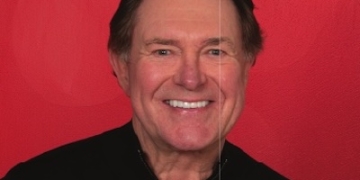





 Fearless: The Life and Times of a Media Maverick is veteran broadcaster Dan Mason’s look back on a radio career that began as the teenager who dared to send WAKY Louisville programming notes to two stints as president of CBS Radio. Fearless was published June 15. It covers everything from favorite promotions to his dealings with Howard Stern and Don Imus to why he still wants to do a guest shift on your station. Here are his thoughts on the state of radio today, and 65 years of “radio is dead” pronouncements.
In 1960, I walked by a small appliance store on my way to school and saw my first color television set in the window! I really didn’t connect television viewing to radio listening. Listening to the radio was magic to me with the disc jockeys, the contests, the cool jingles and the whole package.
Even in 1960, the “radio is dead” haters were alive and well. Television was crowned the new king, and the radio was the red headed stepchild. Radio was still such a young technology but still pronounced DOA!
Well, guess what? Life went on and radio listening continued to grow because the radio was like a companion. Not because it was an appliance, but because of the people on the air and the magic the people created. Over the years, much audience research has been done about why people listen to the radio and decade after decade it comes down to companionship.
In the 1970’s, cassettes made their way to the dashboard and CDs followed. The cassettes became obsolete. It’s hard to find either in the car today but the radio is still there.
Perhaps the biggest threat to radio listening came when SiriusXM was born. The radio haters were out in full force fueled by a damned good marketing onslaught from SiriusXM. I remember a specific presentation I made with my bosses at CBS Corporation. They wanted an emergency explanation of how CBS Radio could survive this shiny new technology. Sirius had just crossed the $100 million mark in revenue. I pointed out that our New York group of CBS radio stations did that number, not even counting the rest of the country.
At the time, Sirius was like a whale swimming near the shoreline. That’s how they appeared to the radio industry. Little did anyone know that the bigger whales were right behind like Apple Car Play and a series of apps that would soon be known as “the connected car.” These new applications made satellite radio look like a minnow.
Radio has always been a local business from day one. Clear Channel (now iHeart) had a “hub and spoke” business plan with a centralized location providing programming that was innovative but never will work in the long run. The magic of radio listening is local people in their communities endearing themselves to the audience with relevant content. It’s all about companionship.
There are radio personalities that have cut through to have a national platform but in the history of radio listening. I can think of only four: Arthur Godfrey, the late Rush Limbaugh, Howard Stern, and even Dr. Laura in her day.
Our industry has screwed up many times over the years. An example of excellence was the launch of KUBE Seattle in the 1980s. My dear friend and colleague Michael O’Shea was adamant that the station would carry no more than 6 minutes of commercials per hour. It is now common to hear radio stations playing eight minutes of commercials in a 15-minute block. Now ask yourself, would you even listen to this? I don’t care if Jesus is on the air. I’m tuning out.
Thirty years ago, most radio stations did a terrific job within their local markets programming with good mornings shows and marketing using billboard and television. The were multiple sellers on the street for each station. No five people can cover 8 stations!
At about that same time, a few music research companies arrived on the scene claiming that listeners really didn’t care much for the personality of the station, it was all about the music. Some even touted that giving the title and artist of the songs were not important. By the late 1990’s, it wasn’t easy being a DJ.
There was rapid change on the technological side within the car. Now we have pictures, graphics, titles and artist information, and even commercials that show up on the screen in the auto. It will be important for all radio stations to include new technologies for the station to look good on the dash. My parents bought all my clothes at Sears back in the 60’s. They were OK back then, but I wouldn’t go out of my house in them today. Same for how radio shows up in the car.
On PPM
In 2006, Arbitron (now Nielsen) introduced the Portable People Meter to the radio industry. PPM was incredibly expensive for the radio industry. I truly believe the only winner in that was Arbitron as it cost the radio industry dearly. I regret supporting it and being an early adopter. It was supposed to be the answer for actual radio listening versus perceived listening. The little meter that the listener would wear (huh?) with an early 2000’s technology was supposed to measure any radio listening that it came in contact with. How stupid could I be? There were issues with the meter right from the start.
At about the time that I was jumping on the PPM bandwagon, the late Roy Shapiro, who headed up our research, warned me over and over that bad things would happen with PPM. He was so right. Roy said if we took the same amount of money and put it into diary distribution that we would have a better product. Of course, I didn’t listen, and we struggled through years and years of PPM flaws. Radio listening sharply decreased.
The irony is that now Nielsen is moving to e-mail diaries. That could have been done 20 years ago instead of recreating the wheel.
Radio’s older demo:
There is no denying that radio listening is getting older, but the radio industry seems to run away from that trying to sell 18-34s [to advertisers]. My advice would be to live for today, live in your own shoes and talk about the older demos who buy products instead of their kids that are broke and can barely pay rent.
Another case in point: in this past Presidential election, 70 percent of the votes were cast by folks over 50 but only 5% of ad dollars are spent against this group. My assumption is that voters are the most active and present the best pool of people that will spend money. For the record, it was about 11 percent of 18–34-year-olds that cast votes, but the bulk of ad dollars are spent there. Those are the ones that are asking their parents for money. When I was 18, the only money I had was for a tank of gas. I guess there is an argument that would say “we are advertising for the future” but they have no money for about 20 more years. I guess that is a good strategy if you want to wait that long to sell your product.
Radio is a local retail business
Twenty years ago, I would estimate that the average successful major market station’s revenue base was 75 percent local and 25 percent national. That has changed dramatically over the years with national business dwindling every year. So that points to one overwhelming fact. Radio is a local retail business.
I point to the recent sale of the Cox Radio stations in Tulsa that to a local doctor. This is perfect. The doctor had advertised on the stations for years and was a big fan of radio and what it could do as an advertising vehicle. I’m sure this individual will do well. I was also impressed that the doctor hired a 22-year programming veteran to lead his new stations. I’m also pretty sure that the new team will have more than five salespeople. Funny how there is a theory out there that you can cover a market with 5 or 6 salespeople. I think I will ask for an invitation to visit that Tulsa cluster to see how radio management is done right.
In Conclusion: I am so proud to have been in the radio business. I still love being on the radio, even at my age. Just this week, I did a radio interview on WPHT Philadelphia on NPR defunding. It really doesn’t matter what market size. I go on the morning show from time to time at WOCM in Ocean City, MD. Basically, if you have a tower and a microphone, then I’m there. Nothing makes me happier than talking to folks on a radio station. I don’t believe I’d get that connectivity talking on a podcast.
Over 50 years in the radio business, I’ve encountered thousands of jocks, I’ve listened to them complain about anything and everything. In fact, I don’t think there is one complaint that I haven’t heard. I always respond the same way: respect any radio station that has a stick in the air and a microphone attached to it. It is an opportunity.
There will be peaks and valleys in your career and life in general. Never get too high on your highs or too low on your lows. If people tell you how great you are just say thank you and move on but don’t believe it.






Bravo! Great article, Dan. This industry targets Google, Facebook and “big tech” as the enemy, but in doing so, we eviscerate the singular advantage we possess–LOCAL PEOPLE in LOCAL markets–programming and sales–by gutting staffs. Grow the staff, blanket the market and deliver great content for YOUNG and old alike